


More news on this day
Air travel to and from Buenos Aires faced fresh disruption this week, with more than 40 delayed departures and several cancellations affecting routes to Puerto Iguazú, Santiago del Estero, Rio de Janeiro, Mendoza and other key regional destinations.
Get the latest news straight to your inbox!
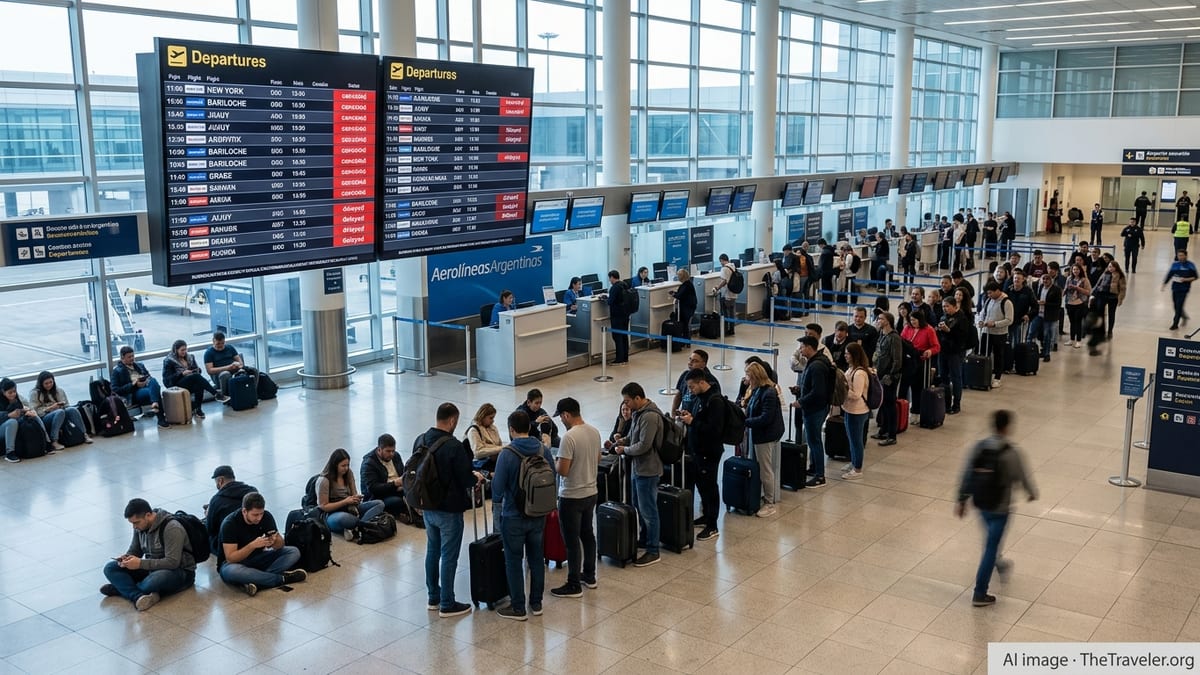
Delays and Cancellations Concentrated at Buenos Aires Airports
Flight tracking data and local media reports indicate that operations at Buenos Aires’ main airports have been under renewed strain, with 41 flights delayed and 8 canceled over a short window. The disruption has particularly affected domestic services linking the capital with tourist and provincial hubs such as Puerto Iguazú, Santiago del Estero and Mendoza, as well as international services to Brazil.
Publicly available information shows that affected services include departures from Aeroparque Jorge Newbery and Ezeiza International Airport, which together handle the bulk of Argentina’s domestic and regional traffic. When operations slow or aircraft are taken out of rotation, knock-on effects often cascade through the tightly scheduled networks of multiple airlines.
In this latest episode, passengers bound for popular winter-break and business destinations reported extended waits at departure gates, boarding holds on the tarmac and last-minute reprogramming of itineraries. Disruption has been most visible on short-haul sectors of under three hours, where aircraft typically fly several legs a day, leaving little spare capacity when a single rotation is delayed.
The situation comes after a period of heightened operational stress in Argentina’s aviation market, where a combination of maintenance backlogs, tight fleets and infrastructure constraints has translated into punctuality challenges for carriers serving the capital.
Flybondi Under Scrutiny as Operational Strains Deepen
Low cost airline Flybondi is again at the center of attention, as publicly available punctuality data and recent coverage highlight a pattern of recurring delays and cancellations. Industry analyses over the past year have pointed to a sharp reduction in the number of flights operated by the carrier and a corresponding fall in transported passengers, coinciding with aircraft taken out of service for major maintenance.
Reports indicate that Flybondi has, at times, been operating with only a fraction of its nominal fleet available, leaving little resilience when technical issues arise. On busy travel dates, a single grounded aircraft has been enough to trigger multiple cancellations and hours-long delays on routes linking Buenos Aires with cities such as Mendoza and Puerto Iguazú, where Flybondi has marketed aggressive low fares.
Consumer complaints circulating in national and regional outlets describe passengers facing overnight waits, rebookings far from original travel times and difficulties in securing refunds. Independent monitoring projects tracking the airline’s daily performance have also drawn attention to its delay rates compared with other carriers active in the Argentine market.
Regulatory documents and earlier government communications show that Argentina’s civil aviation authorities have already demanded corrective plans from Flybondi in response to past episodes involving dozens of cancellations in a single weekend. The current wave of disruption is likely to renew scrutiny of the airline’s ability to sustain a stable schedule with its present fleet.
Aerolíneas Argentinas, LATAM Brasil and Others Caught in the Ripple Effect
Although Flybondi’s operational challenges are prominent, the latest disruptions in Buenos Aires have also involved flights operated by other carriers. Data from recent days show delays on services flown by Aerolíneas Argentinas, LATAM Brasil and additional regional airlines serving the capital’s domestic and international terminals.
According to published airport departure boards and local aviation coverage, Aerolíneas Argentinas has experienced schedule stretches on several domestic routes, including links from Buenos Aires to interior provinces and key tourist gateways. While the flag carrier’s overall punctuality remains higher than that of some low cost rivals, even modest delays on trunk routes can quickly propagate through a busy daily program.
LATAM Brasil’s services between Buenos Aires and Brazilian cities, including Rio de Janeiro, also feature among flights affected by schedule adjustments and slower operations. The interconnected nature of regional networks means that a delay departing the Argentine capital can affect onward connections in Brazil and beyond, particularly at large hubs where passengers transfer to long-haul services.
Other regional operators with smaller footprints in Argentina have reported comparatively fewer cancellations but are not immune to congestion or weather-related slowdowns at Buenos Aires airports. Industry observers note that during peak travel periods, runway capacity, ground handling and airspace flow management can all become pressure points, impacting even airlines with otherwise robust operations.
Impact on Travellers Heading to Key Tourist and Provincial Destinations
The disruption has immediate consequences for travelers bound for destinations that rely heavily on air access. Puerto Iguazú, gateway to the Iguazu Falls, is in high demand among international visitors and domestic tourists alike, and delays from Buenos Aires can shorten already tight itineraries or force last-minute changes to hotel bookings and tours.
In Santiago del Estero and other provincial capitals, where alternative transport options involve lengthy road journeys, cancellations or long delays can upend business trips, family visits and medical travel. Local media in several provinces have highlighted cases of passengers waiting hours in terminals for updated departure times, sometimes with limited information on revised schedules.
On international routes, travelers flying from Buenos Aires to Rio de Janeiro and other Brazilian cities risk missing onward connections or arriving significantly later than planned for events and holiday stays. In some instances, rebookings through different hubs or carriers extend travel times by many hours, adding to fatigue and incidental expenses.
Travel industry commentators note that repeated episodes of disruption may influence booking behavior in the medium term, with some passengers opting for airlines perceived as more reliable or adjusting itineraries to allow wider connection windows. However, on many domestic and regional routes, competition remains limited, leaving travelers with few practical alternatives when schedules unravel.
Passenger Rights and What Travellers Can Do
Publicly available regulatory information indicates that air passenger rights in Argentina are framed by international agreements alongside national rules that define carrier obligations in the event of delays, reprogrammings and cancellations. These frameworks generally require airlines to provide assistance such as meals, accommodation and rebooking options, depending on the length and cause of the disruption.
Consumer advocacy organizations and legal guides advise affected travelers to retain boarding passes, booking confirmations and receipts for additional expenses incurred while stranded. Documentation can be important when filing claims for compensation or reimbursement once travel is completed, particularly in cases of significant schedule changes or non-provision of contracted services.
Travel experts also recommend that passengers monitor their flight status through both airline channels and independent tracking tools. In recent Buenos Aires disruptions, several travelers have reported learning about extended delays or cancellations first through flight tracking platforms or social media updates, before official notifications were issued.
For upcoming trips involving Buenos Aires, especially on multi-leg itineraries that connect to or from Puerto Iguazú, Mendoza, Rio de Janeiro or other regional cities, planning more generous connection times and confirming schedules close to departure may help mitigate the impact of potential further disruptions as airlines work to stabilize their operations.