


More news on this day
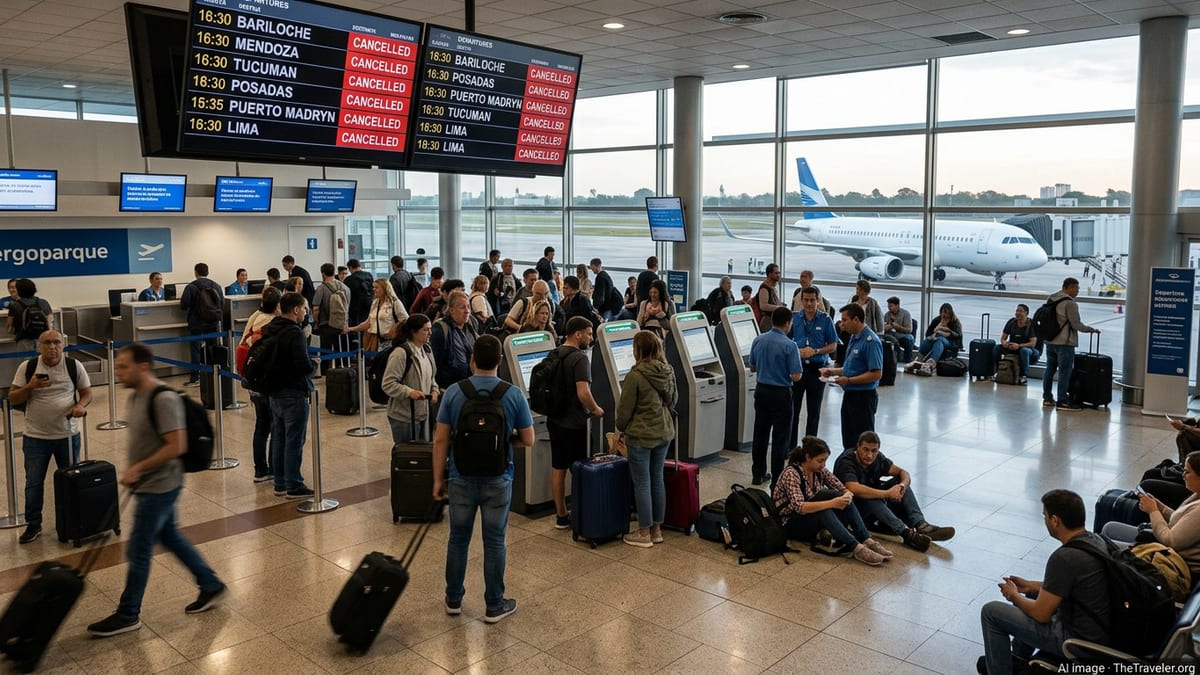
Dozens of passengers flying through Buenos Aires on June 30 faced extended waits and missed connections as a fresh wave of delays and cancellations disrupted services to Posadas, Rio de Janeiro, Asunción, Lima and other regional destinations.
Get the latest news straight to your inbox!
Chain reaction from Buenos Aires hubs
Publicly available tracking data for June 30 shows at least 22 delayed departures and arrivals and five cancellations across Buenos Aires’ main airports, affecting services operated by Aerolineas Argentinas, LATAM Brasil, Flybondi and other regional carriers. The disruption has been concentrated on short and medium haul links that connect the Argentine capital with neighbouring countries and northern provinces.
Flights from Buenos Aires to Posadas, a key domestic route to Misiones province, showed rolling schedule changes through the afternoon, with some departures pushed back more than two hours. Connections to Rio de Janeiro and Asunción saw similar knock-on effects as late-arriving aircraft forced airlines to retime subsequent legs.
International services between Buenos Aires and Lima were also hit by operational delays, with several departures from Jorge Newbery Airport reported as running late. For travellers relying on onward long haul connections from Lima or Rio de Janeiro, these setbacks increased the risk of missed links and additional overnight stays.
While the total number of affected flights represents a small share of the day’s overall schedule, the concentration on regional routes means the impact has been widely felt across multiple South American capitals and secondary cities.
Domestic links to Posadas and other Argentine cities
Argentina’s busy winter travel period has left little slack in the domestic network, magnifying the impact of each delayed departure from Buenos Aires. Services to Posadas and other northeastern cities are heavily used by both local travellers and international visitors connecting from Buenos Aires to reach Iguazu Falls and nearby destinations.
Flight status boards on Monday showed extended delays on some evening services between Buenos Aires and Posadas, with aircraft arriving well behind schedule and turnarounds taking longer than planned. In several cases, this led to last minute gate or timing changes that added further uncertainty for passengers already at the airport.
Regional carriers have in recent months contended with congested schedules, high load factors and limited spare aircraft. Under these conditions, even minor technical checks or weather-related slowdowns early in the day can cascade into multiple late flights by evening, particularly on high-demand domestic routes.
For travellers heading on to border crossings or bus connections in Misiones and Corrientes, the latest round of delays has highlighted the importance of building extra buffer time into itineraries that depend on short domestic hops from Buenos Aires.
Strains on Buenos Aires links to Rio de Janeiro and Asunción
Services linking Buenos Aires with Rio de Janeiro and Asunción form part of a dense regional network served by Aerolineas Argentinas, LATAM Brasil, Flybondi and other operators. On June 30, several of these flights experienced schedule disruptions, producing a ripple effect across both ends of the routes.
Flights between Buenos Aires and Rio de Janeiro, including services into Galeao, reported late departures and arrivals as aircraft rotations ran behind plan. Passengers connecting from these flights onto domestic Brazilian services, including onward links to São Paulo and the northeast, faced tighter transit windows and, in some cases, rebooking onto later departures.
Connections between Buenos Aires and Asunción were also affected. Schedule data and user reports in recent weeks already pointed to a fragile balance on this corridor, with airlines operating high load factors and limited capacity to absorb irregular operations. Monday’s delays and cancellations added to that strain, forcing some travellers to shift to alternative dates or carriers.
Because most itineraries between Argentina and Paraguay or Brazil rely on only a handful of daily frequencies, any cancellation on these routes can leave passengers with few same day options and higher hotel and transfer costs.
Lima services hit as regional carriers juggle capacity
The Buenos Aires to Lima corridor has become an important bridge between the Southern Cone and long haul services to North America and Europe. On June 30, publicly accessible flight trackers showed several departures on this route operating behind schedule, including services marketed by LATAM and operated in coordination with partner airlines.
These delays proved particularly disruptive for travellers using Lima as a hub, where missed evening connections can result in lengthy rebookings and additional overnight stays. With aircraft cycles tightly planned, late arrivals into Lima also complicated the next day’s schedules, adding further pressure on regional operations.
Airlines serving the route have been juggling strong demand, aircraft maintenance requirements and weather related constraints in recent weeks. Industry coverage has highlighted how narrow operational margins in the region leave carriers with limited room to recover once delays begin to accumulate across multiple city pairs.
The latest disruptions have reinforced advice frequently shared by travel specialists for South America, who recommend avoiding tight same day intercontinental connections out of Lima when arriving from Buenos Aires during busy periods.
Flybondi, Aerolineas Argentinas and LATAM under scrutiny
While Monday’s disruptions affected several airlines, attention has again focused on the performance of key regional players. Aerolineas Argentinas, the state owned flag carrier and the largest operator in the country, runs a dense domestic and regional network from Buenos Aires that leaves it particularly exposed when operations slow across multiple routes on the same day.
Flybondi, Argentina’s main ultra low cost carrier, has faced recurring criticism from passengers in recent months over schedule reliability. Prior coverage and online complaint threads have documented last minute cancellations and significant delays on some of its routes, including services to Posadas, Rio de Janeiro and Asunción. The latest wave of disruptions is likely to renew debate over how low cost operators in the region balance aggressive pricing with operational resilience.
LATAM Brasil and other members of the LATAM group are also managing complex cross border schedules that rely on aircraft and crew rotations across several South American hubs. When delays build up at one hub, it can quickly affect flights across the network, including codeshare services operated on behalf of partner airlines.
For travellers planning itineraries through Buenos Aires in the coming weeks, recent patterns suggest that leaving generous connection times, monitoring flight status closely and considering travel insurance that covers missed connections may help reduce the practical and financial impact of days like June 30, when a relatively small number of disrupted flights can have an outsized effect across the region.