


More news on this day
A routine drive through Lebanon County turned into a life‑or‑death emergency when a truck became stuck on railroad tracks and bystanders, joined by local firefighters, rushed in to free the driver just before a train slammed into the stranded vehicle.
Get the latest news straight to your inbox!
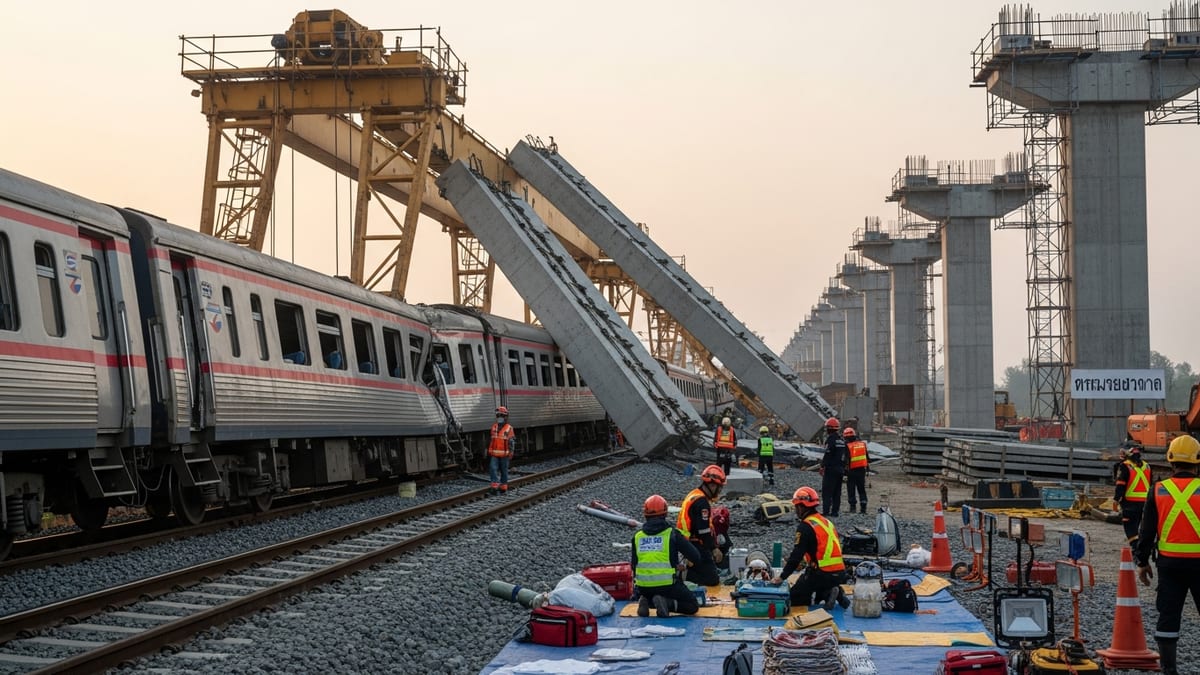
Split-Second Rescue on a Central Pennsylvania Rail Crossing
Reports indicate the incident occurred at a rail crossing in Lebanon County, Pennsylvania, when a truck became disabled on the tracks with an oncoming train approaching. Witnesses described a chaotic scene as the crossing signals activated and the train closed in on the immobilized vehicle.
Publicly available information shows that several bystanders rushed toward the truck after realizing the driver appeared unable to get out on their own. At nearly the same time, local fire personnel arriving on scene joined the effort, working together to pull the driver from the cab and move them to safety beside the right of way.
Moments later, the train struck the truck, destroying the vehicle but narrowly avoiding what could have been a fatal collision with an occupied cab. Early accounts from the scene suggest the driver escaped with non‑life‑threatening injuries, while no injuries were reported among the train crew or passengers.
Images and video shared through local media and social platforms show crumpled metal scattered along the tracks, underscoring how little time separated a successful rescue from a potential tragedy.
How the Truck Became Stuck on the Tracks
The exact cause of the truck becoming stranded on the crossing is still being reviewed, but patterns from similar incidents across the region offer possible clues. In many cases, larger vehicles such as tractor‑trailers or loaded trucks can “hang up” where the roadway surface meets the rails, particularly at raised or uneven crossings.
Transportation safety summaries from recent years point to ground clearance issues, driver misjudgment of crossing profiles, and slow approach speeds as recurring factors in trucks becoming immobilized on tracks. In some events, vehicles stall mechanically while crossing, leaving drivers with only seconds to react as warning bells and lights activate.
In this Lebanon County case, published coverage suggests the driver attempted to move the vehicle off the rails but was unable to clear the crossing before the train approached. The combination of a stuck vehicle, active warning systems and an approaching train set the stage for the rapid rescue that followed.
Investigative reviews typically examine the condition of the crossing, the visibility of signage, and the time interval between signal activation and train arrival to determine whether any infrastructure or procedural changes might reduce future risk.
Role of Bystanders and Firefighters in the Near Miss
The Lebanon County incident highlights how quickly ordinary drivers and pedestrians can become first responders in rail emergencies. Witnesses who saw the truck stuck on the rails and heard the train’s horn appear to have made split‑second decisions to intervene rather than simply back away from the crossing.
Fire crews arriving from nearby stations brought training and specialized equipment, but the initial moments of the rescue depended heavily on bystander action. Reports indicate that these civilians helped open doors, unfasten restraints, and assist the driver out of the cab even as warning bells and lights continued to sound.
Emergency response guidelines for highway‑rail incidents emphasize that personal safety comes first, advising people to leave stalled vehicles immediately and move away from the tracks at a 45‑degree angle in the direction of an oncoming train. Yet, the Lebanon County event shows that when conditions allow and extra seconds remain, coordinated action between bystanders and arriving firefighters can save a trapped driver’s life.
Local accounts suggest that, after the collision, firefighters conducted a rapid assessment of the driver, checked for fuel leaks or fire risk from the wrecked truck, and coordinated with rail personnel to secure the scene while train traffic was halted.
Rail Safety Lessons for Drivers and Communities
High‑profile near misses such as the Lebanon County rescue often prompt fresh discussion about grade‑crossing safety, especially in regions where roads and rail lines intersect frequently. National rail safety data show that incidents at crossings continue to occur each year, despite improvements in warning systems, signage and public education.
Transportation safety campaigns urge drivers who find their vehicles stuck or stalled on tracks to exit immediately and move to a safe distance, even before contacting emergency services. Many crossings display emergency notification signs with a phone number and a location identifier that can be used to alert rail dispatchers to stop or slow approaching trains.
For communities, the Lebanon County event underscores the value of clear sightlines at crossings, well‑maintained road surfaces between rails and pavement, and ongoing outreach to commercial drivers about the risks of low‑clearance trailers and heavy loads. Municipal planning discussions often focus on whether particularly problematic crossings can be re‑graded, upgraded with additional signals or, in rare cases, replaced with bridges or underpasses.
In areas where signature trains or increased rail traffic draw more people trackside, safety advocates stress that both residents and visitors should treat every active crossing as potentially hazardous, never stopping on the rails and avoiding any attempt to “beat” a train.
Ongoing Review and Impact on Local Travel
Following events of this kind, transportation and emergency management agencies typically review timelines, communications and on‑scene coordination to determine whether any procedures require adjustment. In Lebanon County, that process is expected to consider how quickly information moved between local dispatchers, fire and medical responders, and rail operators.
For travelers in the region, the immediate effect of the collision centered on temporary delays. Train operations in the area were reportedly paused while crews inspected tracks and equipment, and nearby roads experienced congestion as traffic detoured around the blocked crossing and emergency vehicles staged in the vicinity.
Although disruptions are usually short‑lived, the visual impact of a demolished truck beside intact railcars tends to linger in the public mind. Residents and visitors may pass the same crossing in the days that follow, newly aware of the speed and power of trains that move through what are otherwise quiet stretches of Lebanon County.
As the community digests the close call, the Lebanon County rescue is likely to be cited in future safety presentations and driver education programs as an example of how quick thinking and cooperation between bystanders and firefighters can turn a potential disaster into a story of survival.