


More news on this day
Amid mounting geopolitical tensions and shifting airspace restrictions, Malaysia’s aviation regulator is urging passengers to check their flight status directly with airlines before heading to the airport, highlighting how rapidly changing conditions are rippling through global travel plans.
Get the latest news straight to your inbox!
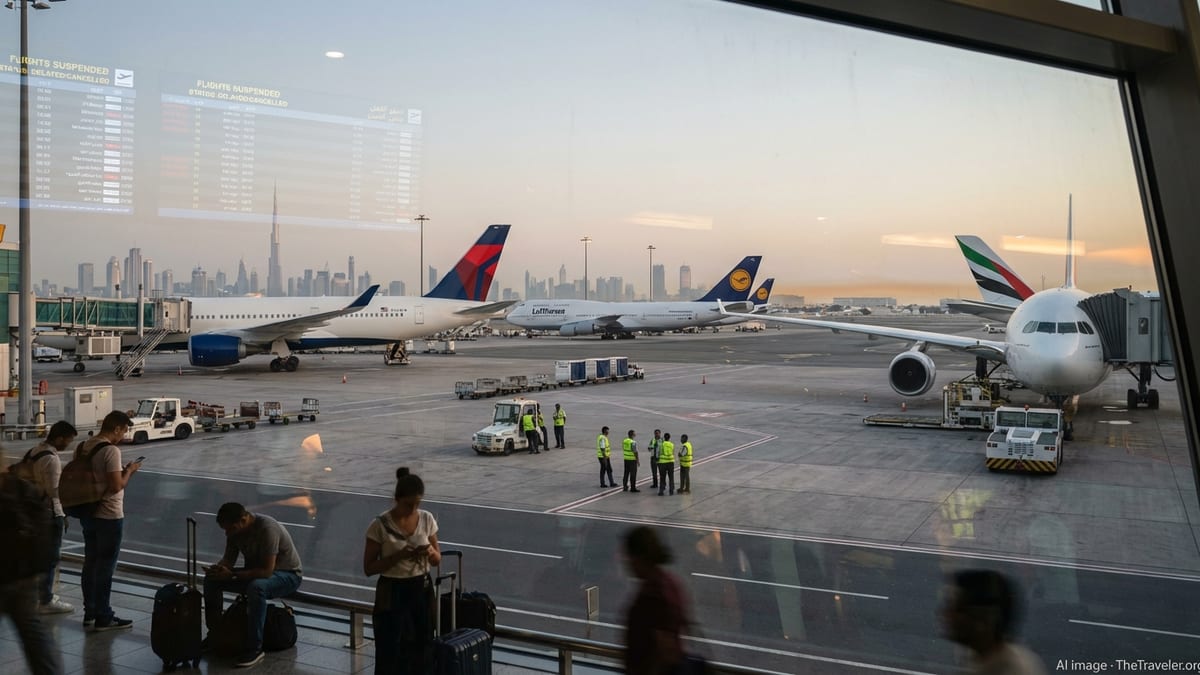
Middle East Airspace Closures Trigger Fresh Travel Disruptions
Recent airspace closures in parts of the Middle East have emerged as a major catalyst for flight cancellations, rerouting and delays across Asia and beyond. Publicly available statements from the Civil Aviation Authority of Malaysia (CAAM) indicate that international services overflying affected corridors face potential disruption, particularly for routes linking Southeast Asia with Europe, the Middle East and parts of Africa.
Coverage from Malaysian and regional news outlets shows that thousands of flights worldwide have been adjusted or grounded as airlines respond to safety and operational constraints. While Malaysia’s main hub at Kuala Lumpur International Airport has generally remained orderly, a portion of long-haul and transit traffic has been subject to last-minute schedule changes.
Reports indicate that CAAM has advised passengers traveling to, from or transiting through the affected region to verify their flight status directly with their airline before departing for the airport. The regulator’s messaging reflects concern that traditional assumptions about fixed schedules no longer hold when overflight permissions and airspace availability can change within hours.
Airport operators and airlines in Malaysia have echoed similar guidance, stressing that online and app-based status checks, along with updated contact details, are now essential parts of pre-travel planning whenever geopolitical tensions impact regional air corridors.
Global Uncertainty Extends Beyond Conflict Zones
The turbulence facing air travelers is not confined to conflict-affected regions. Economic headwinds, supply chain constraints and fluctuating fuel prices continue to shape airline networks and capacity decisions worldwide. Analytical documents published by CAAM and local economic research houses highlight global uncertainty as a key downside risk for Malaysia’s aviation recovery through 2026.
Airlines operating in and out of Malaysia are still fine-tuning route structures built up after the pandemic, while also confronting higher operating costs and evolving demand patterns. Network adjustments can lead to thinner frequencies on some routes, seasonal suspensions or aircraft swaps, all of which may translate into changes for passengers even on flights that do not cross volatile airspace.
Industry commentary from travel and tourism associations in the region also points to knock-on effects from the Middle East disruptions, including tighter connection windows, longer alternative routings and a greater reliance on secondary hubs. In this environment, a booking that appears confirmed weeks in advance can still be reshaped as carriers recalibrate capacity or respond to new constraints.
As a result, checking flight status has shifted from a day-of-travel precaution to an ongoing process, with passengers encouraged to monitor their itineraries in the days leading up to departure as well as on the day itself.
Malaysia Positions Itself as a Resilient but Cautious Hub
Despite the external shocks, CAAM and Malaysia’s airport operators emphasize that the country’s airspace and infrastructure remain resilient. Recent public updates describe stable operations at Kuala Lumpur International Airport even during periods of heightened global disruption, with most departures serving regional destinations across Southeast and East Asia.
At the same time, regulatory and policy measures introduced by the Ministry of Transport and CAAM aim to support industry stability. Reports on targeted interventions, including temporary relief on certain aviation charges and infrastructure fees, suggest an effort to preserve connectivity while airlines absorb cost pressures linked to geopolitical uncertainty.
Malaysia’s aviation plans for 2026 also include a focus on managing rising traffic volumes and enhancing airspace efficiency within key flight information regions. CAAM’s technical publications describe efforts to optimize routes and procedures to accommodate more flights safely, even as some long-haul corridors are periodically constrained by external events.
These initiatives, however, do not eliminate the risk of disruption when global conditions deteriorate. Instead, they form part of a broader strategy in which operational resilience is paired with clear messaging to passengers about the need to stay informed and flexible.
What Passengers Are Being Urged To Do
Current advisories from CAAM and airport operators place strong emphasis on direct communication between passengers and airlines. Publicly available guidance consistently highlights airline websites, mobile applications, customer service channels and airport information counters as primary sources for the latest status updates.
Travel industry groups in Malaysia and neighboring countries have reinforced that message, recommending that passengers check their flight status repeatedly in the 24 hours before travel, confirm terminal and gate assignments, and pay close attention to notifications about re-timed or rerouted services. For those connecting through Middle East hubs, the advice is to be prepared for longer layovers, possible overnight stays or rebooked segments if airspace restrictions tighten.
Passengers are also being nudged to update their contact details in airline bookings so carriers can push real-time alerts by text or email. Consumer protection frameworks referenced in local reporting, such as Malaysia’s aviation consumer protection code, outline entitlements in cases of significant delay or cancellation, but these rights are easier to exercise when travelers respond quickly to schedule changes.
For now, Malaysia’s skies remain busy and its main airports largely orderly, yet the repeated calls to “check before you go” reflect a new normal in which global uncertainty can intrude on travel plans with little warning.
Outlook for the Coming Months
Forecasts released by Malaysian authorities project continued growth in passenger traffic through 2026, albeit tempered by external risks. Economic notes linked to CAAM’s planning documents underline that geopolitical flashpoints, energy price volatility and supply chain issues could all influence flight schedules and ticket prices in the short to medium term.
Industry analysts suggest that airlines may respond with more conservative capacity deployment, flexible scheduling and a greater reliance on digital tools to manage disruption. For travelers, that translates into a landscape where flexibility and vigilance are almost as important as passports and boarding passes.
Regional news coverage indicates that aviation regulators across Asia are coordinating on contingency planning for airspace closures and major operational shocks. Malaysia’s stance fits within this wider pattern, pairing reassurances about the robustness of its airspace systems with clear reminders that individual passengers bear a role in safeguarding their own journeys by staying informed.
Against this backdrop, CAAM’s call for passengers to check their flight status is less a one-off warning than an emerging rule of thumb for international travel in uncertain times.