


More news on this day
Air travel across Asia faced severe disruption today as thousands of flights were cancelled in Thailand, the United Arab Emirates, Japan, Hong Kong, Malaysia and China, with reports indicating that at least 691 services were scrapped in some markets and more than 3,400 within mainland China alone, affecting operations at major hubs and creating cascading delays for global carriers.
Get the latest news straight to your inbox!
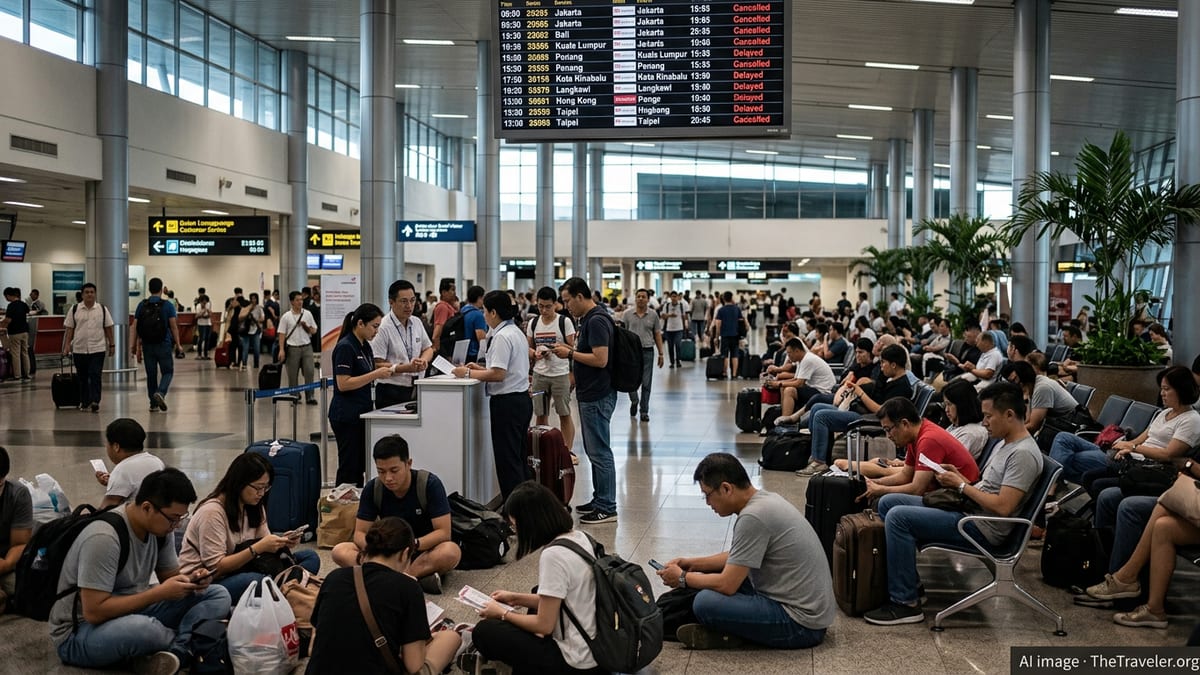
Major Asian Hubs Struggle With Mass Cancellations
Data from live flight monitoring platforms shows that airports across Asia are experiencing elevated levels of cancellations, with Bangkok, Dubai, Beijing and other key transit points among the hardest hit. Aggregated statistics indicate that hundreds of flights have been grounded in regional hubs such as Bangkok and Kuala Lumpur, while China’s extensive domestic network is seeing several thousand cancellations in a single day.
Publicly available dashboards tracking day-of-travel disruption suggest that the most acute impact is being felt in China, where the total number of cancelled flights has climbed into the low thousands, and in a separate cluster of markets that includes Thailand, the UAE, Japan, Hong Kong and Malaysia, where an additional several hundred services have been removed from schedules. These figures place Asia among the most disrupted regions worldwide for today’s operations.
While specific causes vary by country and airport, the pattern of cancellations is consistent with broader operational stress, including local weather issues, airspace constraints and ongoing resource challenges within some carriers and airports. The concentration of disruption in large hubs is amplifying the effect, as each grounded or significantly delayed departure can translate into missed connections and knock-on schedule adjustments across multiple continents.
For passengers, the immediate consequence has been crowded terminals, longer waiting times at rebooking desks and heightened competition for remaining seats on alternative services. Travel platforms and airline status pages are advising customers to verify flight status frequently and arrive early at airports, as gate changes and schedule adjustments continue throughout the day.
China Leads Global Tally With Thousands Of Scrapped Flights
Within Asia, China stands out for the sheer scale of cancellations. Real time statistical feeds indicate that mainland Chinese airports account for more than 3,400 cancelled flights today, a figure that encompasses both domestic routes and some international services. This positions China at or near the top of the global ranking for daily disruption.
The high volume reflects the size and density of China’s internal network, where large trunk routes between cities such as Beijing, Shanghai, Guangzhou and Shenzhen support hundreds of daily frequencies. When large numbers of sectors on those corridors are removed, the nationwide impact is magnified, affecting feeder traffic from secondary cities and reducing onward international connectivity.
Operational data suggests that some of the heaviest disruption is concentrated in major aviation hubs, where runway capacity, air traffic control flow restrictions or localized weather can trigger broad schedule adjustments. Even modest slowdowns in takeoff and landing rates can force airlines to cancel flights outright to prevent wider gridlock later in the day.
Passengers connecting through Chinese hubs are among the most exposed, particularly those relying on tight transfer windows or multi segment itineraries involving different airlines. Travel advisors are recommending that affected travelers contact their carriers or booking agents as early as possible to secure seats on later departures or to consider routing through less affected hubs if feasible.
Impact On Carriers Including Cathay Pacific, Emirates, JAL And Etihad
The cancellation wave is reverberating through the networks of several prominent airlines active in Asia. Cathay Pacific, based in Hong Kong, is facing particular pressure as disruptions in both Hong Kong and nearby East Asian markets ripple across its long haul and regional schedules. Live tracking tools show a mix of delayed and cancelled departures on various Hong Kong routes as the carrier adjusts to changing conditions.
In the Gulf, Emirates and Etihad are managing irregular operations at their respective hubs in Dubai and Abu Dhabi in the context of wider regional disruption. Publicly accessible status pages and third party trackers indicate that while many services continue to operate, a notable number of flights touching Asian destinations are either cancelled or subject to significant delays, complicating connections for passengers traveling between Asia, Europe, Africa and the Americas.
Japanese carriers, including Japan Airlines, are also exposed, particularly on routes linking Tokyo with other Asian cities experiencing difficulties. Irregular operations data shows heightened levels of schedule change and some cancellations, with the potential to affect both business traffic and the current wave of leisure travel into and out of Japan.
Although most airlines are keeping core long haul routes in place where possible, the combination of aircraft rotations, crew duty limits and airport level restrictions is forcing network planners to trim frequencies and, in some cases, temporarily suspend certain flights for the day. This is leading to uneven service patterns across Asia, where some city pairs remain well served while others see only a fraction of their usual capacity.
Dubai, Bangkok, Hong Kong And Kuala Lumpur Feel The Strain
Key international hubs in the affected countries are reporting some of the most visible disruption. In Dubai, where Emirates and other carriers operate extensive connecting banks, real time boards show clusters of altered departure and arrival times, reflecting both upstream cancellations and local schedule changes. Travelers using Dubai as a transit point are experiencing longer layovers and, in some cases, unplanned overnight stays.
Bangkok, a central gateway for Southeast Asia, is also contending with a significant number of grounded flights. Data from regional flight information services highlights cancellations on both regional and medium haul routes, reducing options for travelers heading to neighboring countries or using Bangkok as a base for multi stop itineraries.
Hong Kong’s airport, traditionally one of Asia’s busiest international hubs, is managing a mix of cancellations and delays as carriers such as Cathay Pacific adjust their operations. The constrained schedule is having knock on effects for cargo movements as well, since many passenger flights in and out of Hong Kong carry substantial belly hold freight.
In Malaysia, publicly accessible boards at Kuala Lumpur International show a series of cancelled services interspersed with on time and delayed flights. This patchwork pattern underscores how disruption can vary significantly by airline, route and time of day, even within a single airport.
Travelers Face Rebookings, Compensation Questions And Longer Journeys
The widespread cancellations across Asia are leaving many travelers seeking new itineraries and clarifying their rights to refunds or compensation. Consumer facing advisory services note that eligibility for monetary compensation depends on a range of factors, including the operating airline, the route and the jurisdiction under which a particular ticket falls.
For trips touching the European Union, passengers on affected flights operated by eligible carriers may, in some circumstances, be covered by EU regulations governing cancellations and long delays. However, many intra Asian journeys are subject instead to local rules or individual airline policies, which often prioritize rebooking on the next available service or providing travel credits over cash payments.
Travel experts generally recommend that passengers monitor airline apps and official status pages closely, as these channels are typically updated before airport displays, and to confirm any new arrangements in writing. In heavily disrupted situations such as today’s, same day alternatives can be limited, especially in premium cabins or on popular leisure routes.
As operations gradually normalize, backlogs of displaced passengers may persist for several days on the busiest routes. Industry watchers suggest that travelers with flexible plans consider postponing non essential journeys or routing through less congested hubs until cancellation levels in Asia return closer to seasonal norms.