


Cairo International Airport can be surprisingly confusing, even for seasoned travelers. Three main passenger terminals sit close together, airlines sometimes move between them, and online information is often outdated. Turning up at the wrong building is a common story here. This guide explains, in practical terms, how Cairo’s Terminals 1, 2 and 3 really work today, which airlines use which terminal, what EgyptAir actually does from Terminal 3, and how to navigate arrivals, domestic and regional flights, and ground transport without losing time or patience.
Get the latest updates straight to your inbox!
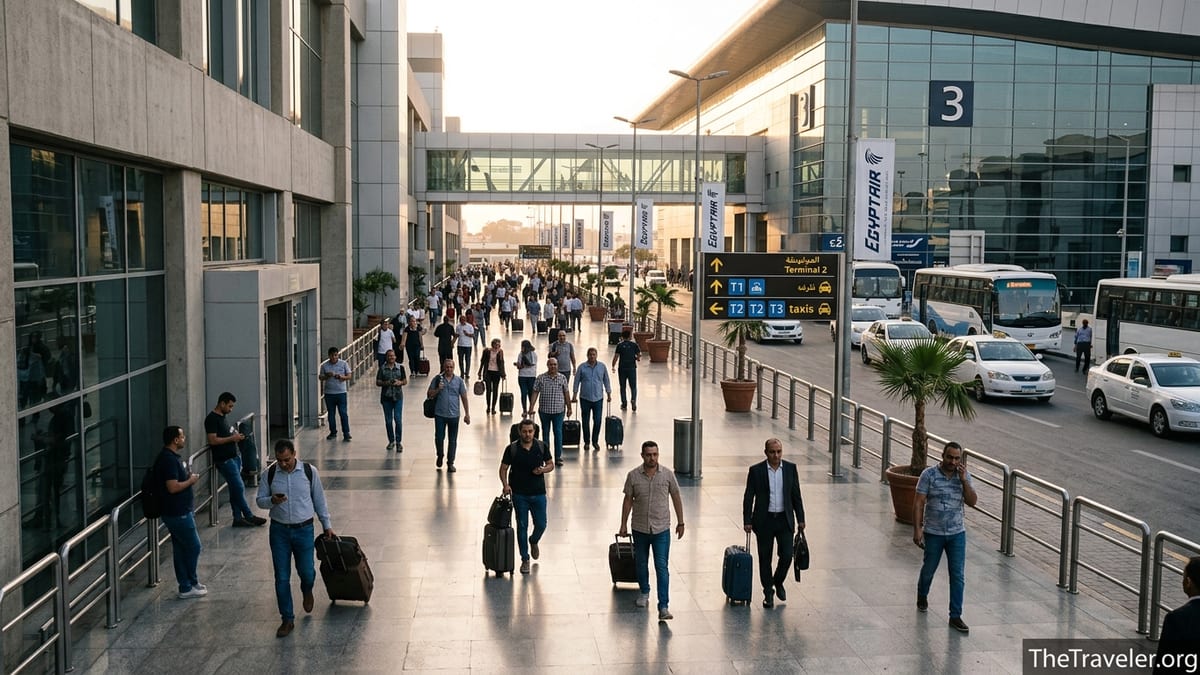
How Cairo’s Three Terminals Really Work in 2026
Cairo International Airport (CAI) sits about 18 kilometers northeast of downtown and is laid out around three main passenger terminals: Terminal 1, Terminal 2 and Terminal 3. All three handle a mix of international and domestic traffic, but each one has a different focus and airline mix. The confusion usually starts because older blogs still describe an older setup, while airlines have quietly shifted gates and check in areas in recent years.
Broadly speaking, Terminal 3 is the home base of EgyptAir and most Star Alliance partners. Terminal 2 serves many other major international airlines, particularly from Europe, the Gulf and Asia. Terminal 1, the oldest building, now focuses on domestic flights and a handful of regional and charter carriers. In real life this means, for example, that an EgyptAir passenger from London to Cairo will almost always arrive at Terminal 3, while a Qatar Airways passenger from Doha will typically use Terminal 2, and a budget traveler on Air Cairo between Hurghada and Cairo is most likely to use Terminal 1.
The good news is that the terminals are physically close. You can walk between Terminals 2 and 3 in roughly 5 to 10 minutes landside, and Terminal 1 is a short shuttle ride or taxi away within the same airport campus. The bad news is that you cannot assume your airline always uses the same building: EgyptAir has, for instance, temporarily shifted some flights between Terminals 2 and 3 during works, and smaller carriers have moved into Terminal 1 as it has been repurposed. Always double-check your ticket or booking email, which should list “CAI T1,” “CAI T2” or “CAI T3” next to your flight number.
Because terminal assignments can change on specific routes, any online description should be treated as guidance, not as law. Think of this article as a clear starting map, then always confirm your own flight’s exact terminal within 24 hours of departure, either in your airline’s app or on the Cairo Airport departures board online.
Terminal 3: EgyptAir’s Main Hub and Star Alliance Home
Terminal 3 is the newest and largest terminal at Cairo and functions as the main hub for EgyptAir and Star Alliance partners such as Lufthansa, Swiss, Austrian Airlines and LOT. If you are flying EgyptAir long haul from cities like New York, Toronto or Bangkok into Cairo, you will almost certainly arrive into Terminal 3 and connect from here to domestic destinations such as Luxor, Aswan or Sharm El Sheikh. Terminal 3 is designed for banked connections, so you will typically see clusters of EgyptAir departures leaving within a tight window after the big long haul arrivals.
Inside, Terminal 3 has a central departures hall with check in desks grouped by airline, feeding into security and passport control on the upper level, with a long pier of gates stretching out toward the runway. Walking time from security to the furthest EgyptAir gates can reach 15 to 20 minutes if you hit a busy period and a remote gate at the end of the pier, so leaving a comfortable buffer is wise. Terminal 3 also connects airside to some gates technically classed as Terminal 2, which is why an EgyptAir boarding pass might show Terminal 3 for check in but direct you to a bus gate that loads at the far end of the complex.
For EgyptAir passengers, the basic pattern is this: most international EgyptAir flights check in and depart from Terminal 3, and most EgyptAir domestic flights also operate from Terminal 3, though exceptions remain on certain regional routes. Arriving passengers follow signage down to immigration on the arrivals level, then to baggage claim and customs. Once you exit into the landside arrivals hall, you will find bank counters and kiosks selling Egyptian SIM cards, as well as the entrances to the official taxi rank, pre booked car services and the pedestrian bridge that leads across to the Le Méridien Cairo Airport hotel, which is attached to Terminal 3.
Because Terminal 3 is the main hub, it is also where most EgyptAir status passengers and Star Alliance Gold members will find lounges. EgyptAir’s primary lounge is located airside close to the central gate area. If, for example, you are flying EgyptAir Business Class from Istanbul to Cairo and then on to Nairobi, you will typically check in and depart from Terminal 3, pass security and immigration here, and then have access to EgyptAir’s lounge before boarding your onward flight. Star Alliance rules usually permit eligible passengers to use other Star Alliance lounges as well, though at Cairo the main facilities are EgyptAir’s own spaces.
Terminal 2: The Main Non Star Alliance International Hub
Terminal 2, physically linked to Terminal 3 by a short airside bridge and a short walk landside, handles a large share of non Star Alliance international airlines. Passengers arriving on carriers such as Qatar Airways, Emirates, Saudia or many European and Asian airlines will most likely use Terminal 2. For instance, a traveler flying from Doha with Qatar Airways or from Dubai with Emirates into Cairo today is usually scheduled to arrive at Terminal 2, clear immigration and customs here, and then exit to the Terminal 2 landside forecourt for transport into the city.
In practice, Terminal 2 feels slightly quieter than Terminal 3, though this depends heavily on the time of day. Its departure level has a series of check in zones, after which you proceed through security and passport control to a central duty free and food court area. From there, a single concourse of gates radiates outward. Some EgyptAir flights have also periodically used Terminal 2, especially during works at Terminal 3, which means you may see EgyptAir branding and transfer desks even if you are traveling on a different airline.
For connecting passengers, the Terminal 2 to Terminal 3 relationship matters. If you are booked on a single ticket with a protected connection, such as a Lufthansa flight into Cairo and an onward EgyptAir domestic flight, you will generally connect airside without formally entering Egypt. The airport uses the airside corridor between Terminals 2 and 3 to route transit passengers according to their boarding passes, and airline staff will typically direct you to a transfer security check before you reach your new gate. On a recent self transfer example reported by travelers, a passenger arriving with a non Egyptian carrier in Terminal 2 and connecting on the same ticket onto EgyptAir in Terminal 3 stayed airside the entire time and completed the process in around an hour.
Landside, the front of Terminal 2 is one of the main pickup points for private transfers and ride services operating at fixed prices. A typical prebooked car into central Cairo in 2026 might cost the equivalent of 15 to 25 US dollars, depending on vehicle type and traffic. The official airport taxis line up outside the arrivals area with meters, though visitors often prefer to agree a fixed price before getting in the car. Whichever you choose, be sure you know which terminal you are exiting from, because many car services ask you to select “CAI Terminal 2” or “CAI Terminal 3” when booking.
Terminal 1: Older Building, Domestic Focus and Smaller Carriers
Terminal 1 is the oldest terminal building at Cairo and has undergone several waves of repurposing. Once the main international gateway, it now handles mainly domestic flights and a number of smaller regional and charter airlines. Air Cairo, for example, has announced that its flights now depart from Terminal 1’s departure hall 1 and arrive into Terminal 1’s arrival hall 3. Travelers flying from coastal resorts such as Hurghada or Sharm El Sheikh into Cairo on Air Cairo or other smaller carriers should therefore expect to use Terminal 1 in many cases.
Compared with Terminals 2 and 3, Terminal 1 feels more utilitarian, with fewer high end shops and a more straightforward layout. After check in, passengers proceed through security and passport control if needed, then enter a compact departures area with a mix of gates, some of which may require bus rides to remote stands. Domestic passengers within Egypt generally remain on the same level without passing through immigration, while international travelers will go through the standard passport control processes.
From a practical point of view, arriving at Terminal 1 means your ground transport options are slightly thinner on the ground but still workable. There is a taxi rank and drop off area, and many private transfer companies will pick up here by arrangement. However, ride hailing apps and hotel shuttles may concentrate more on Terminals 2 and 3, so double check where your driver plans to meet you. If your onward flight leaves from another terminal, allow additional time to move across the airport campus by shuttle bus or taxi.
Terminal 1 is also occasionally used for seasonal and charter services, including holiday flights from European tour operators into Red Sea resorts that tag on a Cairo leg. This means peak times can be highly seasonal, with quiet weekdays and sudden weekend surges. If you are traveling at the start or end of a major holiday period and your ticket lists “CAI T1,” expect queues at security and check in that can feel disproportionate to the size of the building, and arrive earlier than you might for a midweek flight in low season.
Arrivals, Domestic and Regional Flights: Which Terminal You Actually Need
Most travelers care less about airport architecture and more about a simple question: where do I show up, and where will I land? For arrivals into Cairo, the rule of thumb is that you arrive into the same terminal your airline usually operates from. EgyptAir long haul and most EgyptAir regional arrivals come into Terminal 3. Major Gulf and Asian carriers typically use Terminal 2. Smaller Egyptian airlines and some regional carriers use Terminal 1. For example, an Emirates flight from Dubai will land in Terminal 2, while an EgyptAir flight from Luxor will, in many cases, land in Terminal 3, and an Air Cairo flight from Hurghada will arrive into Terminal 1.
Domestic and regional flights are more mixed. EgyptAir’s main domestic bank to tourist hubs such as Aswan, Luxor, Sharm El Sheikh and Hurghada largely runs through Terminal 3, allowing passengers who arrive from Europe, North America or Asia to connect without changing buildings. Some domestic services on non EgyptAir carriers, including routes to coastal resorts or secondary cities, operate from Terminal 1. A traveler flying from Cairo to Sharm El Sheikh on a smaller airline might therefore depart from Terminal 1, even if their inbound long haul flight on a different carrier arrived into Terminal 2 or 3.
Regional flights within the Middle East and North Africa region again split according to airline. EgyptAir routes to destinations such as Amman, Beirut or Casablanca will typically use Terminal 3, while Qatar Airways flights to Doha, Saudia flights to Jeddah or Riyadh, or Emirates flights to Dubai will operate via Terminal 2. Between them, Terminals 2 and 3 handle the majority of regional traffic, with Terminal 1 serving specific airlines that have been allocated space there.
Because these patterns can shift based on airline decisions and airport works, always check your specific flight before travel. If, for instance, you find an older blog saying that “all domestic flights use Terminal 1,” treat that with caution. In 2026, many domestic flights, particularly those on EgyptAir, use Terminal 3 to support smooth hub connections, and a growing number of regional and charter airlines have moved into Terminal 1 instead.
Transport Exits, Taxis and Getting Between Terminals
Once you exit customs in any terminal at Cairo, you immediately face a wall of transport options and, occasionally, unsolicited offers. The safest and simplest route for many visitors is to use a prebooked private transfer or a hotel car. In Arrivals at Terminals 2 and 3, you will usually see drivers holding signs with passenger names near the main exit doors, and many services operate at fixed prices agreed in advance, often in the range of 15 to 30 US dollars equivalent for a central Cairo hotel, more for Giza or New Cairo.
Official white airport taxis line up outside each terminal, operating with meters but often preferring a negotiated flat fare. As a real world example, travelers in 2026 commonly report paying the equivalent of 300 to 500 Egyptian pounds for a standard taxi ride from Terminal 3 to downtown, depending on traffic and negotiation. If you choose this route, walk past any touts inside the terminal and head to the signed taxi queue outside to reduce the risk of overpaying. Always confirm whether the agreed price includes tolls and airport surcharges.
Between terminals, you have two main options: walking or using internal shuttles or taxis. Terminals 2 and 3 sit very close together, separated by a short walkway that many passengers cover in under 10 minutes landside. For example, a traveler who arrives in Terminal 2, exits through customs, and realizes their onward ticket departs from Terminal 3 can walk outside, follow the sidewalk along the frontage and reach Terminal 3’s departures entrance in a few minutes, provided they already have the right to enter Egypt if required. Terminal 1 is farther away and usually reached by a short shuttle bus ride or a quick hop in a taxi between terminal forecourts.
Public transport is limited compared with some major hubs. City buses do serve the airport, including routes into central Cairo and satellite districts, and they are very inexpensive by international standards, but they can be crowded, slow and challenging if you are carrying large luggage or arriving late at night. Some visitors use them during daylight hours for very budget conscious trips, while most international travelers prefer taxis or private transfers, particularly when arriving for the first time or carrying valuables.
Common Wrong Terminal Mistakes and How to Avoid Them
Arriving at the wrong terminal is one of the most frequent Cairo airport mistakes. It typically happens in three scenarios. First, travelers rely on outdated information from an older blog that says, for example, “all EgyptAir flights use Terminal 3,” then discover at the curb that a particular regional flight has been temporarily moved to Terminal 2. Second, passengers book with a smaller carrier that has recently moved into Terminal 1, such as Air Cairo, but assume that because their last trip on EgyptAir used Terminal 3, they can just head there again. Third, self connecting travelers mix tickets on different airlines without realizing that one operates out of Terminal 2 and the other out of Terminal 1 or 3.
In practical terms, a wrong terminal mistake costs you time and stress rather than money, but it can be serious if you have a tight schedule. Imagine landing at Terminal 1 at 22:00 on a domestic flight and having an international departure at 23:30 from Terminal 3 on a separate ticket. If you mistakenly wait for your bags at the wrong carousel or leave via the wrong exit, you could burn precious minutes before even starting the transfer. Similarly, turning up at Terminal 1 for check in on an Emirates flight that actually departs from Terminal 2 could force you into a last minute dash across the airport campus.
The simplest way to avoid this is to treat your ticket or airline app as the final word. Look for the exact terminal number next to your flight. If it is missing, check the airline’s own website or mobile app using your booking reference. On the day of travel, a quick check of the live departures or arrivals board for Cairo will confirm which terminal your flight is currently using. This is particularly important if you booked months in advance, because terminal assignments can change mid schedule, for example when airlines consolidate operations during a refurbishment.
If you do end up at the wrong building, do not panic. Within the airport perimeter, taxis are used to very short hops and will usually accept a small fixed fare for a terminal to terminal ride. Internal shuttle buses, when running, are free and can move you between terminals, although they may not operate on a precise schedule late at night. Factor in at least 30 extra minutes if you must switch terminals after arriving at the wrong one, more at peak times or if you have to recheck luggage and pass through immigration again.
The Takeaway
Cairo International Airport’s three terminal setup looks intimidating on paper but is manageable with the right information. Terminal 3 anchors EgyptAir and most Star Alliance operations and handles a large share of domestic connections. Terminal 2 is the primary hub for other major international carriers from Europe, the Gulf and Asia. Terminal 1, the oldest building, focuses on domestic and regional airlines such as Air Cairo and on some charter and seasonal services. Understanding this high level pattern helps you make sense of where you should be at any given point.
For most travelers, success at Cairo Airport comes down to three habits: always confirm your exact terminal with your airline shortly before you fly, allow enough time to move between terminals if you are on separate tickets, and choose reliable transport from the arrivals hall into the city. If you do these things, you are unlikely to join the long list of people who have missed flights because they trusted an out of date terminal map or followed an overheard tip rather than their boarding pass.
In the end, Cairo Airport is less chaotic than its reputation suggests, especially if you arrive prepared. Use this guide as a field manual, keep your booking app handy, and you will navigate Terminals 1, 2 and 3 with confidence, whether you are chasing a tight domestic connection to Luxor, arriving on a Gulf carrier in Terminal 2, or starting your journey home from EgyptAir’s hub in Terminal 3.
FAQ
Q1. Which terminal does EgyptAir use at Cairo Airport?
EgyptAir mainly uses Terminal 3 for both international and domestic flights, though some routes may occasionally operate from Terminal 2 during specific works or schedule changes. Always check your booking or the airline’s app for your exact terminal before travel.
Q2. How do I know if my flight leaves from Terminal 1, 2 or 3?
Your ticket or booking confirmation should list “CAI T1,” “CAI T2” or “CAI T3” next to the flight details. If it does not, log into your airline’s website or app with your booking reference, or check the live departures for Cairo on the day of travel to confirm the terminal.
Q3. Can I walk between Terminal 2 and Terminal 3 at Cairo?
Yes, Terminals 2 and 3 are close together, and most passengers can walk between them landside in about 5 to 10 minutes, following the sidewalks outside the buildings. If you are making an airside connection on a single ticket, airline staff will usually direct you through internal transit corridors instead.
Q4. What happens if I go to the wrong terminal for my flight?
If you arrive at the wrong terminal, you will need to move to the correct one, either by walking (between Terminals 2 and 3), using an internal shuttle, or taking a short taxi ride. This usually costs you time more than money, but if you have a tight check in cutoff it can lead to a missed flight, so build in extra time.
Q5. Which terminal handles most domestic flights within Egypt?
Many EgyptAir domestic flights connect through Terminal 3, especially to tourist destinations like Luxor, Aswan and Sharm El Sheikh, while some domestic services on other carriers, such as Air Cairo, use Terminal 1. Always check the terminal listed on your specific booking, as assignments can change.
Q6. Where do Qatar Airways, Emirates and Saudia arrive and depart from in Cairo?
Major Gulf carriers such as Qatar Airways, Emirates and Saudia generally use Terminal 2 for their Cairo operations. Passengers arriving from Doha, Dubai or Jeddah on these airlines should therefore expect to land at Terminal 2 and exit through its arrivals hall.
Q7. How much does a taxi from Cairo Airport to downtown usually cost?
Fares vary with traffic and negotiation, but many travelers in 2026 report paying roughly the equivalent of 300 to 500 Egyptian pounds for a standard white taxi from Terminal 3 to central Cairo. Confirm the price or agree to use the meter before the car leaves the curb.
Q8. Is there a hotel connected directly to Cairo Airport?
Yes, Le Méridien Cairo Airport is connected by a pedestrian bridge to Terminal 3, allowing guests to reach the hotel without needing a vehicle transfer. Several other hotels, including mid range brands, are located a short drive from the terminals and often provide shuttle services.
Q9. Do I need to clear immigration to change terminals on a connection?
If your flights are on a single ticket and your bags are checked through, you will often be able to make an airside transfer between flights without formally entering Egypt, following transit signs and security checks. If you are on separate tickets or need to collect and recheck luggage, you will usually need to clear immigration, exit arrivals and then change terminals landside.
Q10. How early should I arrive at Cairo Airport for departure?
For international flights, arriving about three hours before departure is generally sensible, and for domestic flights around two hours is usually enough. If you need to change terminals, are traveling at peak holiday times or have complex luggage or visa requirements, add at least an extra 30 minutes to your usual arrival time.