


More news on this day
The UK Foreign, Commonwealth and Development Office has renewed a "do not travel" warning for areas of Lebanon, highlighting rising regional tensions in a country that has long drawn UK visitors for its Mediterranean coastline, nightlife and historic sites.
Get the latest news straight to your inbox!
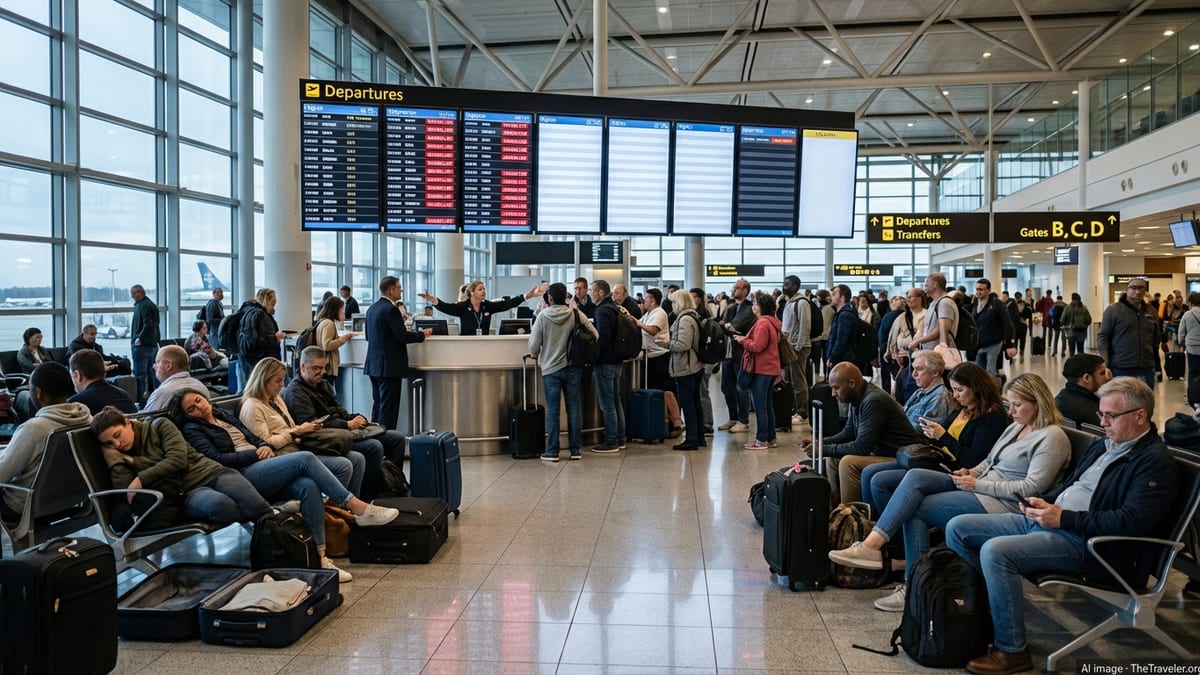
Updated Foreign Office warning reshapes a popular getaway
The latest travel advice for Lebanon on the UK government’s Foreign Office website confirms that the country remains subject to some of the strictest guidance available, including explicit recommendations not to travel to specific regions. The advisory, updated in August 2026 and still current on 22 September 2026, states that there are areas where the Foreign Office advises against all travel and other areas where only essential trips should be considered.
Lebanon has, in recent years, attracted UK and European travellers for short breaks in Beirut and longer holidays along the Mediterranean coast. Travel industry analysis and destination coverage frequently describe the capital’s restaurant scene, nightlife and proximity to historic sites as key draws for city-break tourists. The latest Foreign Office notice, however, underlines that security conditions in and around parts of the country remain unpredictable and can change with limited warning.
According to publicly available information, the current advisory follows earlier periods when all of Lebanon was considered higher risk because of wider instability in the Middle East. While some restrictions have eased compared with previous phases, the Foreign Office continues to identify parts of the country as unsuitable for leisure travel due to security concerns, including the possibility of armed conflict and spillover from regional tensions.
For travellers, the practical impact is significant. The Foreign Office notes in its general guidance that going against an official warning not to travel can invalidate standard UK travel insurance policies, leaving visitors without cover if they encounter medical, legal or evacuation costs while abroad.
Which areas are affected by the ‘do not travel’ guidance
The Foreign Office divides Lebanon into zones based on assessed levels of risk. Its Lebanon advisory explains that there are specific areas where it “advises against all travel,” the strongest form of warning, and other zones where it “advises against all but essential travel.” These designations are based on factors such as armed clashes, the presence of non-state armed groups, and the possibility of cross-border fire and kidnap risks.
The most restrictive advice typically covers regions close to Lebanon’s borders and areas where the security situation is described as highly volatile. Publicly available sections of the advisory highlight parts of the south, areas near the Syrian border and selected locations outside central Beirut as places where leisure trips are not recommended at any time. Maps and written descriptions on the government site delineate these zones in detail so that travellers and operators can check whether a planned itinerary enters a prohibited area.
In Beirut and parts of Mount Lebanon Governorate, the guidance is more nuanced. The Foreign Office travel advice page explains that it no longer advises against all travel or all but essential travel to some districts of the capital and surrounding regions, following a review of the security picture. However, other neighbourhoods and access routes remain within the higher-risk categories, meaning that travellers need to look carefully at the latest wording before booking accommodation or transfers.
The advisory also points out that conditions can deteriorate rapidly. Previous updates to the Lebanon page have been issued after sudden escalations in cross-border fire, domestic political tensions or large-scale protests, each of which has had the potential to disrupt road access, airport operations and essential services.
Impact on insurance, airlines and holiday bookings
The Foreign Office explains in its general policy that a formal recommendation against all travel is reserved for situations where the risk to British nationals is considered unacceptably high. In practice, this designation has wide implications beyond the government’s own communications, because many UK insurers and tour operators use the advice as a reference point for their decisions.
Travel insurance providers commonly state in their policy wording that cover does not apply in destinations or regions where the Foreign Office advises against all or all but essential travel. When a “do not travel” warning is in place, travellers may find that standard single-trip and annual policies exclude claims arising from any incident in those areas, including medical emergencies and cancellations.
Package holiday companies and specialist tour operators also tend to align their operations with the official advice. When the Foreign Office tightens restrictions, operators frequently suspend itineraries, reroute group tours away from named regions, or offer customers the option to rebook for alternative destinations. Industry updates in recent months have pointed to a pattern of short-notice changes in response to developments across the wider Middle East, with Lebanon often highlighted as particularly sensitive to shifts in regional security.
Airlines, meanwhile, continue to adjust schedules and routings as circumstances evolve. Public flight data and recent aviation coverage show that carriers periodically reduce frequencies or alter flight paths when tensions rise, in some cases citing crew-safety considerations or airspace risk assessments. Travellers are advised in open-source guidance to monitor airline notifications closely in the days before departure and to be prepared for changes, even if their own travel plans do not involve entering the highest-risk zones listed by the Foreign Office.
How the Lebanon alert fits into wider travel advisory trends
The renewed “do not travel” warning for parts of Lebanon is part of a broader pattern in government travel advisories. The Foreign Office maintains destination pages for more than 200 locations, and recent updates tracked by independent travel-risk services indicate a number of changes affecting the Middle East and nearby regions during 2026.
Global advisory summaries compiled from official sources show that Lebanon has appeared alongside Iran, Iraq and Syria on lists of destinations subject to the most stringent “do not travel” style recommendations from several governments. These lists often categorise countries and territories using levels that range from “exercise normal precautions” up to “do not travel,” with Lebanon currently placed at the highest tier for at least some areas of its territory.
Travel-health organisations in the United Kingdom have also continued to highlight the importance of checking both security and medical considerations before visiting destinations with complex risk profiles. Recent bulletins from UK-based travel health services encourage travellers to subscribe to Foreign Office email alerts for individual countries so that they receive notification when new security, health or entry information is published.
For tour operators and corporate travel managers, the Lebanon advisory serves as a reminder that risk assessments need regular review. Industry guidance suggests that companies should map itineraries against official advisory zones, verify that insurance and assistance providers will operate in affected areas, and ensure that travellers understand the practical consequences of entering regions under a “do not travel” designation.
What travellers should do before considering a trip
Prospective visitors with personal or professional ties to Lebanon are being urged by public travel information services to study the latest Foreign Office advice carefully and to plan around the most conservative scenario. Because the advisory separates the country into areas of differing risk, it is not sufficient to rely on a general impression that Beirut or the wider coastline are either “safe” or “unsafe.” Instead, travellers are encouraged to compare their intended routes and accommodation with the specific locations listed under the “do not travel” and “only essential travel” headings.
Experts in travel risk management emphasise that anyone considering a visit should confirm in writing with their insurer that cover will remain valid for the precise areas they expect to enter. If the Foreign Office guidance is tightened after a booking is made, travellers may need to contact airlines, hotels and tour providers promptly to understand their options, which could range from fee-free date changes to full refunds, depending on contract terms.
Publicly available advice also recommends maintaining a flexible approach to planning, including avoiding non-refundable bookings, allowing extra time for airport procedures and keeping family or employers informed of itinerary changes. In destinations where the security situation can shift quickly, guidance notes that travellers should be prepared to alter their movements at short notice, follow local developments through reputable news outlets and consider registering contact details with consular services where available.
For now, the Foreign Office’s continued “do not travel” warning for parts of Lebanon ensures that this once straightforward Mediterranean holiday choice remains a complex proposition. Anyone attracted by the country’s cultural and coastal appeal is being directed, through open-source government and industry information, to weigh those attractions against the latest, more restrictive, official assessment of risk.