


More news on this day
Rail passengers on one of Britain’s busiest intercity corridors are facing extensive disruption after a gas leak near Didcot in Oxfordshire prompted a rare “do not travel” warning for services between Reading and Swindon.
Get the latest news straight to your inbox!
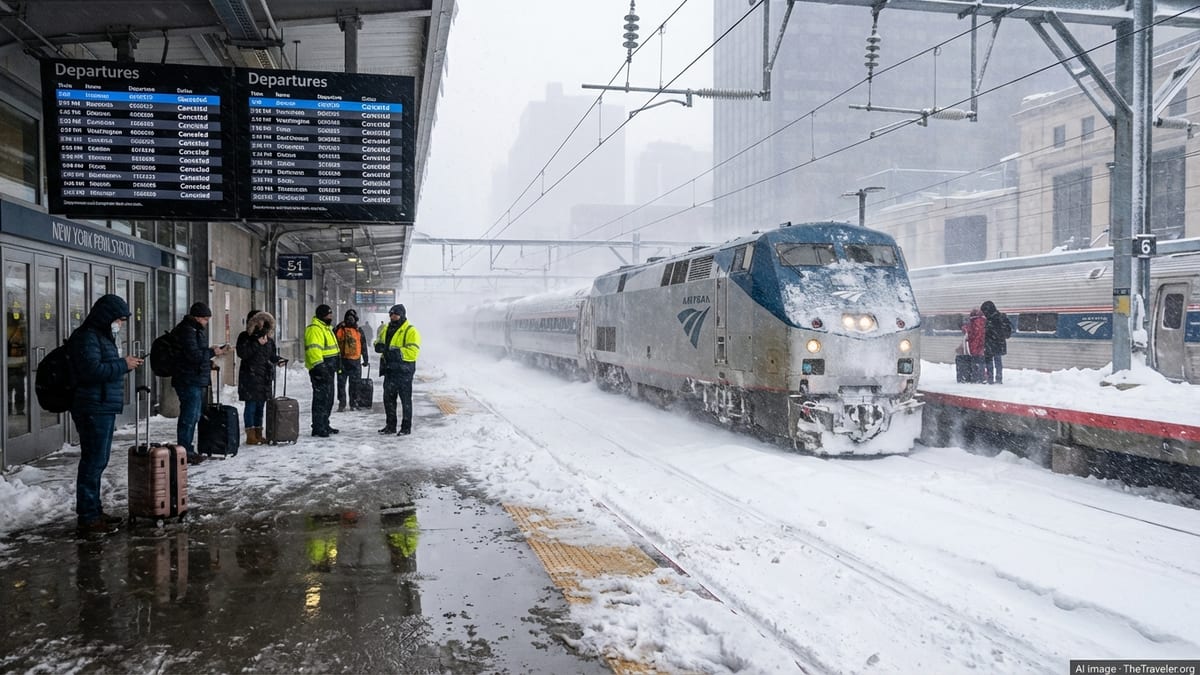
Gas leak closes key Great Western route
Publicly available information from rail operators shows that trains cannot currently run through the affected section of line near Didcot Parkway while a safety exclusion zone remains in place around the gas leak. Services on the main Great Western Railway route linking London Paddington with the West Country and South Wales are among those affected.
Network Rail’s latest update on 23 September 2026 states that engineers are working with gas company SGN on what is described as safety critical repair work. The railway will only reopen once those repairs are complete and the exclusion zone can be lifted. No firm time has been given for a full resumption of services, and rail managers have indicated that further updates on the following day’s timetable will be provided late in the evening.
In response to the incident, Great Western Railway has issued a “do not travel” message specifically for journeys between Reading and Swindon. The operator is warning that any trains able to run on diversionary routes are expected to be extremely busy and that disruption is likely to continue throughout the day, with journey plans subject to change at short notice.
The affected stretch of line carries long distance intercity services as well as local and regional trains, making the impact particularly widespread for commuters, business travellers and leisure passengers heading to and from London, Bristol, Cardiff and the wider South West.
Limited replacement services and diversionary routes
According to the latest travel advice published by Great Western Railway, a very limited rail replacement bus service is operating between Reading and Didcot Parkway. Capacity on these buses is constrained and journey times are significantly longer than normal rail services along the same corridor.
Where possible, some long distance services are being diverted. Information published by the operator shows that London Paddington to Bristol Temple Meads trains are running via an alternative route and calling at Reading and Bath Spa only. Separate services are operating between Didcot Parkway and Bristol Temple Meads, serving Swindon, Chippenham and Bath Spa, while trains between Bristol Temple Meads and South Wales are using the route via Bristol Parkway, Newport and Cardiff Central.
Local stopping services are also affected. Trains that usually run between London Paddington and Didcot Parkway are currently terminating at Reading, with local services continuing to run on the section between Didcot Parkway and Oxford. Great Western Railway has advised that some other routes not passing through the Didcot area are operating normally, although knock-on delays and short-notice alterations remain possible.
Passengers are being repeatedly urged in public guidance to check live journey planners on the morning of travel and immediately before departure, as timetables may be altered late in the day to reflect the evolving engineering work around the gas leak.
Ticket acceptance, refunds and passenger rights
The “do not travel” warning triggers a range of options for affected rail users. Great Western Railway has confirmed through its customer information channels that tickets dated for travel on Wednesday 23 September 2026 on routes passing through Didcot can be used on Thursday 24 September instead, allowing passengers to postpone non essential journeys until services are more stable.
Ticket acceptance arrangements are in place with several other train companies to provide additional flexibility. Published information indicates that customers can use their tickets on a number of alternative operators, including Chiltern Railways, Avanti West Coast, West Midlands Railway, CrossCountry, South Western Railway and London Underground services where appropriate. The exact alternatives available depend on the origin and destination of each journey.
Passengers who choose not to travel because of the disruption are entitled to a full refund on unused tickets from their original retailer, without administrative fees. Those who do attempt their journey and experience long delays may be able to claim compensation under the Delay Repay schemes run by most train companies. The level of compensation depends on the operator and the length of the delay, with some policies starting from delays of 15 minutes and more generous payments for delays over an hour.
Guidance from the Rail Ombudsman and consumer bodies indicates that when a “do not travel” notice is issued, rail companies are acknowledging that they cannot provide a reasonable service and that customers should not be penalised for cancelling or postponing their plans. Travellers are advised to retain proof of their original ticket and any receipts for additional costs if they need to submit a claim.
How today’s disruption fits into a wider pattern
The incident at Didcot follows a series of major disruption events on the British rail network in recent years in which “do not travel” messages have been used more frequently. Past examples have included severe weather linked to named storms, large scale signalling failures and heat related speed restrictions, all of which have led operators to advise passengers to avoid rail travel unless absolutely essential.
Case studies published by the Rail Ombudsman show that such warnings are intended to manage crowding and safety risks on days when significant parts of the network are expected to be blocked or heavily delayed. In previous rulings, the ombudsman has noted that when a clear “do not travel” message has been issued ahead of time, passengers remain entitled to refunds and alternative options even if a small number of trains still operate.
Separate data and technical reports on rail delays and compensation in Great Britain highlight an increase in the number of journeys disrupted by factors outside passengers’ control, including infrastructure failures and extreme weather. Industry bodies have been working on new tools, such as interactive disruption maps and video briefings, designed to give customers clearer information about what is happening on the network during major incidents.
Travel commentators point out that the Didcot gas leak disruption is another example of how a single localised infrastructure issue can have a national impact on long distance rail connectivity, particularly along corridors linking London with regional cities in the West of England and South Wales.
Advice for travellers planning journeys in the coming days
With no confirmed end time for the safety work near Didcot, rail users planning to travel along the Great Western Main Line are being encouraged by publicly available guidance to consider whether their journey is essential or can be postponed. Those who do need to travel are urged to build in substantial extra time, be prepared for crowded services and possible multiple changes, and check operator updates regularly.
For passengers holding advance tickets routed via Didcot over the next few days, the most recent advice suggests monitoring operator announcements for any extension of ticket validity. In earlier large scale disruption events, rail companies have often permitted travel on alternative days or via different routes at no additional cost when the original journey has been made impracticable.
Travellers using connecting services to and from airports or international trains are advised to pay particular attention to potential delays. While international operators such as Eurostar were reporting normal operations at the start of 24 September 2026 aside from separate planned restrictions, industry websites acknowledge that severe disruption on domestic routes can affect passengers’ ability to reach London terminals on time.
For now, the scale of the “do not travel” warning between Reading and Swindon underlines the importance of checking conditions on the rail network shortly before departure. Until the gas leak near Didcot is fully resolved and the exclusion zone lifted, passengers on Great Western routes face an unusually uncertain travel environment, with short notice changes likely to remain a feature of journeys through this part of the network.