


More news on this day
Rail passengers in southern England are facing ongoing disruption after a rare “do not travel” warning linked to a major gas leak near Didcot Parkway prompted widespread cancellations, altered ticket rules and renewed debate over how such alerts are used across the UK network.
Get the latest news straight to your inbox!
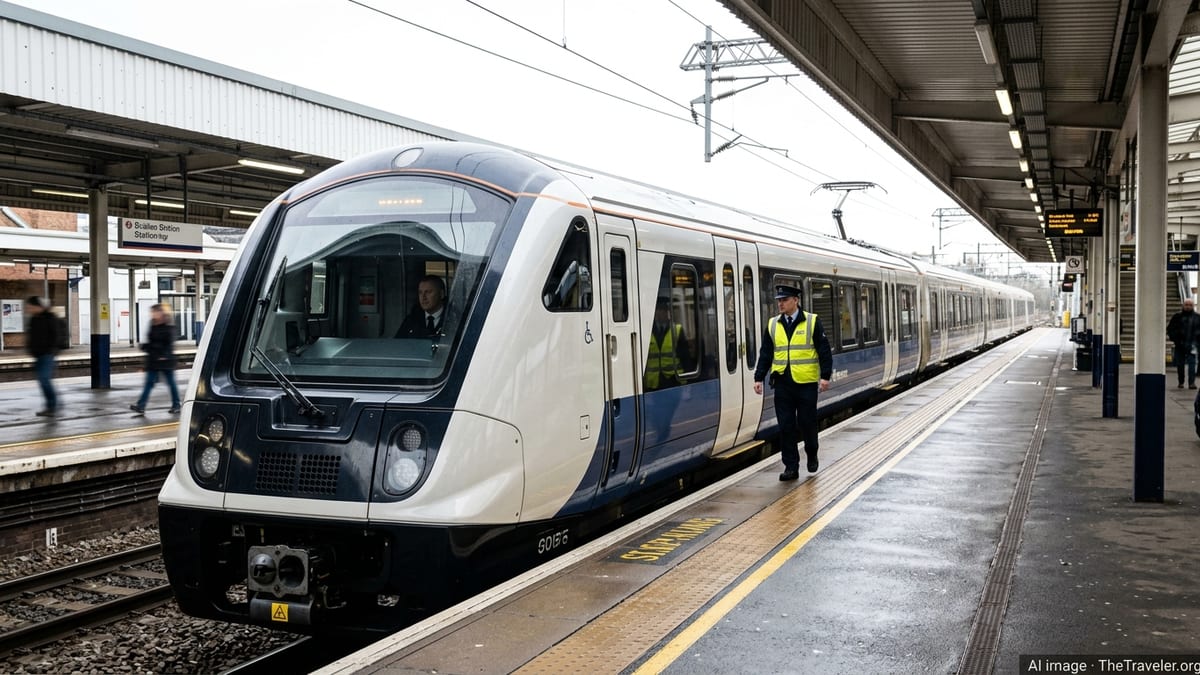
Gas leak near Didcot keeps key Great Western routes disrupted
Publicly available information from Great Western Railway and Network Rail indicates that a significant gas leak close to the railway near Didcot Parkway, first reported on the evening of 22 September 2026, led to the closure of lines between Reading, Didcot and Swindon on 23 September. Services through the area were severely reduced, with many trains cancelled or diverted and no normal timetable in operation.
A “do not travel” advisory was issued for parts of the Great Western network serving the corridor between Reading and Swindon, affecting long distance services towards Bristol, South Wales and the South West as well as local stopping trains. Network Rail’s disruption notice stated that trains could not safely pass through the exclusion zone around the leak, meaning only a small number of limited services could operate on diversionary routes.
Updates published since then show that engineers have continued working with emergency services to repair the leak and reduce the size of the safety cordon. However, capacity through the Didcot area remains constrained, and National Rail’s journey planner continues to show short-notice changes on Great Western Railway services that would usually use this main line.
Information made public by Great Western Railway indicates that passengers with tickets dated for 23 September on affected routes are being allowed to travel on later dates without extra charge. Advance ticket holders are advised to check revised validity details before changing plans, as availability can differ by operator and ticket type.
How a ‘do not travel’ alert changes what rail users can expect
Transport-focused research commissioned by the rail industry in recent years highlights that “do not travel” is now used in a specific way, particularly when widespread disruption is expected rather than limited delays. A passenger report on extreme weather messaging published through Network Rail and Transport Focus notes that many users assume such wording means no trains are running at all, while in practice some services may still operate on a reduced basis.
Case studies released by the independent Rail Ombudsman describe instances where passengers began journeys after “do not travel” notices were issued and later found themselves stranded without access to the usual emergency taxi or hotel arrangements. In those cases, the Ombudsman concluded that operators had clearly signposted the heightened risk of disruption and were not always obliged to provide extensive onward transport when passengers chose to travel regardless.
Further guidance summarised in industry documents and passenger discussions indicates that once a formal “do not travel” advisory is in place for a particular route, normal obligations to complete the journey can be limited. In practice this can mean replacement buses are not guaranteed, and passengers may be asked to return home or delay their trip rather than wait for lengthy diversions.
Recent online journey-planning advice also stresses that rail users should not rely on third-party ticketing apps during such incidents, as they can lag behind live operational data. Official operator websites and National Rail’s own planner are generally cited as the primary sources for up to date information on which trains remain in service.
Extreme weather and infrastructure strain underpin wider ‘do not travel’ use
The latest gas-leak incident comes after a series of severe weather events and infrastructure failures that have seen “do not travel” language appear more often in UK rail communications. During the winter of 2025 to 2026, published reports show that snow, ice and high winds led to suspensions on routes in Wales and Scotland, with a major operator on the East Coast Main Line advising passengers not to travel between parts of northern England and Aberdeen.
This pattern continued into the summer of 2026, when record-breaking temperatures prompted Network Rail to warn passengers only to make essential journeys within areas covered by red extreme heat alerts. On those days, the main long distance operator on the East Coast route issued a “do not travel” message after overhead power lines failed several times within a short period, and journeys between London and key Scottish cities were heavily disrupted.
Official policy papers on weather resilience, published as part of Network Rail’s current investment programme, acknowledge that climate change is expected to increase the proportion of track exposed to flooding and heat-related risks. A written answer in Parliament earlier this year recorded plans for around £2.6 billion in spending between 2024 and 2029 on measures that include upgraded drainage, more robust sea walls and improved monitoring of track temperatures and overhead lines.
Government preparedness guidance for storms and other natural hazards has also been updated in 2026 to emphasise that travellers should pay attention to “do not travel” notices from transport operators, particularly when they coincide with national severe weather alerts. The guidance advises that such notices should be treated as a signal to postpone non-essential journeys where possible.
Practical advice for passengers caught by the latest warning
For those affected by the Didcot gas-leak disruption, published advice from Great Western Railway and National Rail recommends checking journeys on the morning of travel and again immediately before leaving home, as revised timetables can change at short notice while engineers work on the site. Passengers are being encouraged to consider alternative routes that avoid the Reading to Swindon corridor entirely, including services via the Midlands or the south coast where appropriate.
Where journeys are no longer possible or would involve severe delays, publicly available information indicates that most walk-up tickets can be used on alternative days, while advance tickets may be refunded or changed without the usual fees if the booked train is cancelled. Specific rules differ, so travellers are directed to operator websites or ticket retailers for the latest conditions on exchanges, refunds and compensation.
Experience from previous “do not travel” periods suggests that essential travellers who still choose to board a train should be prepared for extended journey times and potential periods without access to catering or air conditioning. Consumer guidance produced for extreme-weather travel emphasises carrying water, snacks and any necessary medication, along with portable chargers in case of long delays on board or at intermediate stations.
For now, with the exclusion zone around the Didcot gas leak still affecting capacity, the central message to rail users remains cautious. Public disruption summaries state that anyone planning non-essential trips through Reading, Didcot or Swindon over the coming days should continue to consider postponing travel or choosing routes that avoid the affected section of line altogether.
Longer-term questions over communication and passenger trust
The repeated use of “do not travel” messaging over the last two years is prompting wider discussion about how rail disruption is framed and what passengers can reasonably expect when warnings are issued. Research into passenger attitudes, published through Transport Focus, suggests that the clarity of language is critical: many travellers feel confused about whether advisories are firm instructions or strong recommendations, particularly when some trains are still running.
Industry-facing documents point out that stronger wording can successfully deter discretionary trips and reduce crowding, which in turn helps services that do run to cope with disruption. At the same time, consumer organisations warn that overuse of severe language could erode trust if passengers find that conditions on the ground do not always match the gravity of the alerts.
Recent case material examined by the Rail Ombudsman shows that some disputes now centre on whether passengers were adequately informed of the implications of “do not travel” notices for onward transport and compensation. Advocates for rail users argue that clearer, earlier explanations of what these alerts mean in practice, particularly around ticket validity and replacement transport, would help travellers make informed decisions.
As the Didcot gas-leak disruption continues to unfold, the incident is likely to serve as another reference point in that ongoing debate. For regular rail users, the latest events reinforce the importance of monitoring official channels closely whenever “do not travel” language appears, and of understanding that such warnings can signal not only short-term inconvenience but a different set of rights and expectations once a journey has begun.