


More news on this day
Runway operations at Cape Town International Airport have resumed after an aircraft incident temporarily closed the main runway this week, prompting widespread flight diversions, lengthy delays and operational strain across the regional network.
Get the latest news straight to your inbox!
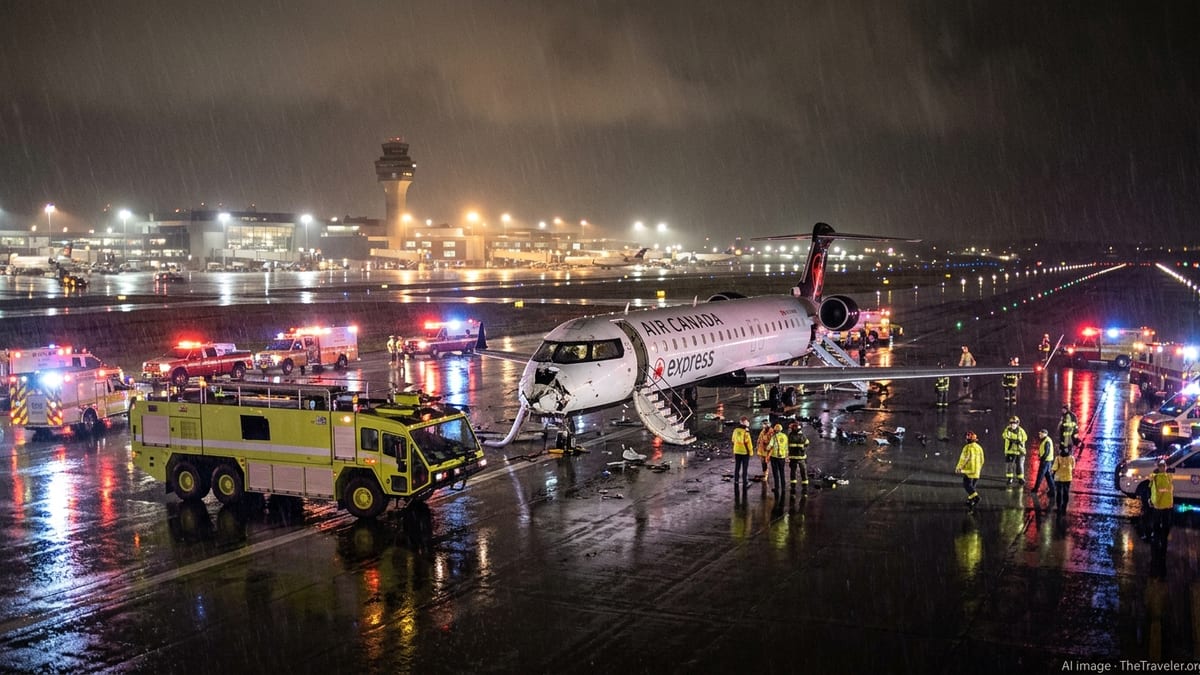
Runway Blockage Triggers Diversions and Delays
According to multiple publicly available accounts, a Kenya Airways aircraft experienced a landing gear problem on arrival at Cape Town International Airport earlier this week, leaving the jet disabled on the main runway. Initial reports from passengers and aviation enthusiasts indicate that the incident occurred on Tuesday 4 August 2026, during evening peak hours, at a time when long haul and regional flights were converging on the airport.
With the primary runway blocked, arriving international flights were unable to land. Flight tracking data and online discussion show that long haul services, including a Delta Air Lines flight from Atlanta to Cape Town, diverted to Johannesburg, while other aircraft entered extended holding patterns before being rerouted or delayed. Travellers reported spending several extra hours on board or in terminals as airlines adjusted their schedules.
Departures were also affected as aircraft scheduled to operate outbound flights were either stranded on the ground or diverted to alternate airports. The disruption had a knock on effect on connections to destinations such as George and other regional centers, leaving some passengers having to rebook for the following day.
Despite the dramatic operational impact, initial information suggests that the incident did not result in serious injuries. The focus at the airport quickly shifted from immediate safety concerns to the practical challenge of clearing the disabled aircraft and restoring runway capacity.
Gradual Resumption of Runway Operations
Publicly available information from passengers at the terminal indicates that limited operations on a secondary runway continued in the hours after the incident, but capacity was sharply reduced. Smaller aircraft were reportedly able to depart using the shorter runway, while most arrivals remained suspended until the disabled jet could be moved.
Updates shared by travellers suggest that runway movements began to normalize later in the evening, with one passenger describing a surge of delayed flights arriving from Johannesburg once the blocked runway was cleared. Some flights were reported to have taken off around four to five hours behind schedule as the backlog worked through the system.
By the following day, Cape Town International Airport appeared to be operating close to its usual schedule, although residual delays and aircraft rotations were still being felt on certain routes. The episode highlighted how a single disabled aircraft at a single runway airport can quickly ripple through airline operations, particularly when it occurs during peak traffic periods.
As of Friday 7 August 2026, publicly accessible flight information boards and traveller reports indicate that both arrivals and departures at Cape Town are once again running broadly in line with published timetables, with no ongoing runway restrictions directly linked to the earlier incident.
Single Main Runway Exposes Operational Vulnerabilities
The disruption has renewed attention on Cape Town International Airport’s dependence on its main runway for handling larger aircraft. Planning and technical documents available in the public domain describe how the airport’s principal runway is the only one certified for the heaviest widebody traffic, while a shorter secondary runway is used primarily by smaller aircraft.
Industry assessments of the airport’s infrastructure have noted for several years that a disabled aircraft on the main runway can quickly lead to extensive diversions and delays. Past procurement and planning papers have highlighted the need for robust aircraft recovery capabilities specifically to address situations where an airliner becomes immobilized on the maneuvering area due to a tyre failure, landing gear collapse or excursion onto soft ground.
The latest event appears to follow this familiar pattern. With a single main runway closed, controllers had to prioritize aircraft able to use the secondary strip, while long haul and fully loaded narrowbody jets either diverted or waited for the blockage to be cleared. The result was a night of congested airspace, overtaxed terminal facilities and strained airline schedules.
For airlines serving Cape Town, the incident underscores standard planning requirements to carry sufficient fuel for diversions and holding, particularly during periods of adverse weather or heightened operational risk. It also illustrates the importance of contingency planning for airports that rely heavily on a single runway for the bulk of their traffic.
Passenger Experience Highlights Strain on Airport Facilities
Accounts posted by passengers during and after the disruption paint a picture of crowded departure halls and long waits. Travellers reported standing in queues for several hours as airlines worked through rebooking, boarding and baggage issues. Some domestic flights reportedly departed late into the night, while others were cancelled or re-timed to the following day.
The incident comes against a backdrop of broader capacity pressures at Cape Town International Airport. In recent months, travel commentary and passenger feedback have pointed to congestion in security lines and check in areas, as well as queuing at immigration during peak international bank times. Extended ground delays caused by the runway blockage appear to have amplified these existing bottlenecks.
For visitors arriving into Cape Town at the height of the disruption, the experience contrasted sharply with the city’s image as a relaxed gateway to vineyards, coastal drives and mountain trails. Families arriving from long haul flights faced additional hours of uncertainty, while some connecting passengers missed onward services and were forced to make last minute accommodation arrangements.
Despite the frustrations, publicly available posts also describe airport staff and airline ground teams working through the night to clear backlogs and get passengers on their way. Once runway operations resumed at scale, the recovery of the flight program progressed steadily, with most services appearing to be back on regular rotation within about 24 hours.
Focus Turns to Recovery Planning and Future Upgrades
The latest incident is likely to feed into ongoing discussions about long term enhancements at Cape Town International Airport, including a realigned main runway and improvements to apron and terminal capacity. National aviation planning documents reference future expansion projects for the airport, including runway redevelopment aimed at handling larger aircraft and increasing overall movements.
A stronger aircraft recovery capability has previously been identified in technical tenders and airport planning papers as a key requirement for minimizing closure times when an aircraft becomes disabled on the runway or taxiways. Industry observers suggest that rapid deployment of such equipment can significantly shorten the window of disruption and reduce the number of diversions when incidents occur.
For airlines and airport operators alike, the episode will serve as a practical case study in how contingency plans function under pressure. Coordination between air traffic control, airport operations teams and airline dispatch centers will be examined, with particular focus on how quickly information was shared with passengers and how effectively the backlog of flights was cleared once the runway became available.
As high season for international tourism approaches in the Southern Hemisphere spring and summer, the experience may also prompt travellers and tour operators to build additional buffers into itineraries involving tight connections in or out of Cape Town. While runway incidents of this kind remain relatively rare, the week’s events have shown how swiftly one disabled aircraft can reshape travel plans across an entire region for many hours.