


Disney cruises have a reputation for being expensive, and it is true that sailing with Mickey usually costs more than a typical family cruise. But not every Disney ship comes with the same price tag. If you choose carefully, sail at the right time, and understand how pricing works, you can board a Disney ship that still feels wonderfully magical without paying the premium attached to the very newest vessels. This guide looks at which Disney ships are typically cheaper, why that is, and what kind of experience you can realistically expect once you are on board.
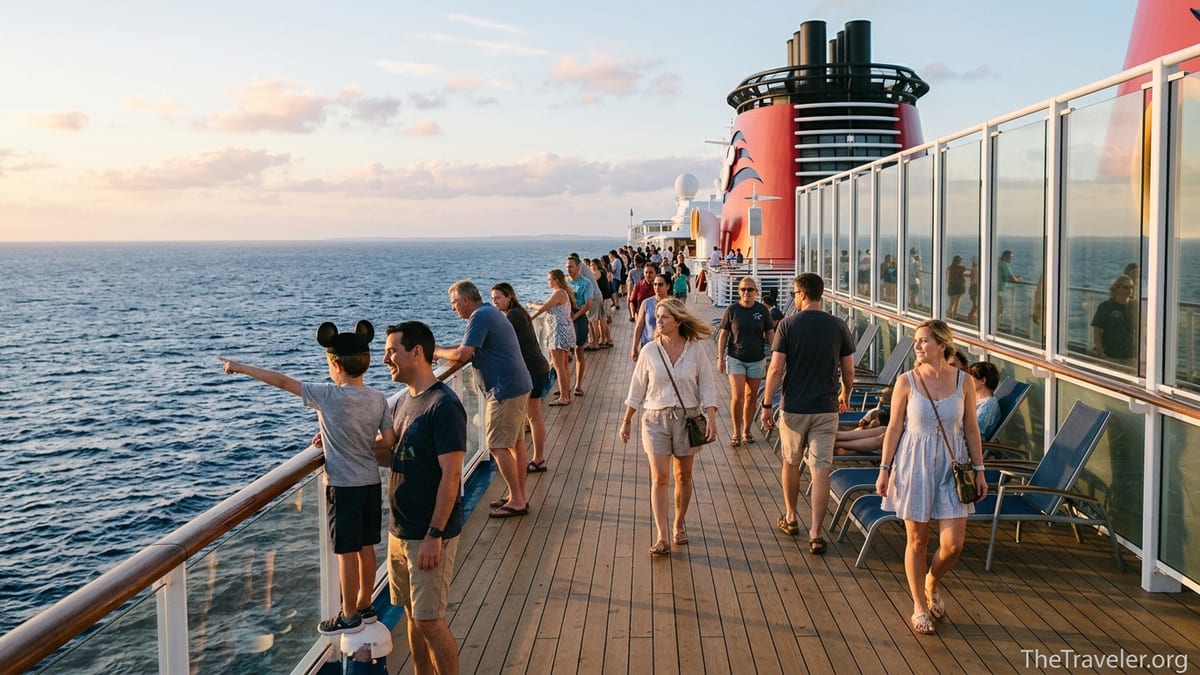
How Disney Prices Its Cruises: Why Some Ships Are Cheaper
Disney Cruise Line pricing is driven mostly by demand, not just by how new or large a ship is. When a brand‑new vessel like Disney Treasure or Disney Adventure is introduced, prices tend to be high because many guests want to experience the latest ship. Over time, as capacity grows and the novelty fades, older ships become relatively more affordable. The result is that the lowest base fares are often found on Disney’s oldest or less hyped ships, especially on shorter sailings and off‑peak dates.
For 2025 and early 2026, some of the best headline rates are on inside and oceanview staterooms on Disney Magic and Disney Wonder, the two original Magic‑class ships, and on certain itineraries aboard Disney Dream and Disney Fantasy, which launched in 2011 and 2012. Public specials released in late 2025, for example, showed four‑night Bahamas and Western Caribbean sailings on Disney Dream and Disney Magic with promotional rates around 115 to 120 dollars per person, per night for selected categories before taxes and fees, based on double occupancy. Those numbers are not typical of school‑holiday weeks but indicate what is possible when demand is softer.
It is helpful to think in total trip cost rather than just nightly rates. A three‑ or four‑night Bahamian cruise on an older or mid‑generation Disney ship in low season can sometimes start around 1,000 to 1,500 dollars per person in an inside cabin when booked early and stacked with a resident, military, or special offer. By contrast, a similar‑length cruise on a brand‑new Wish‑class ship during a popular month can easily run hundreds of dollars more per person for the same basic cabin type. Choosing the right ship and time of year is therefore the single biggest lever if you want Disney magic for less.
Disney Magic and Disney Wonder: Classic Ships, Classic Value
Disney Magic (launched in 1998) and Disney Wonder (1999) are the oldest and smallest ships in the fleet, carrying roughly 2,500 guests compared with 4,000 or more on the newest vessels. Because they lack some of the splashiest modern features and are no longer the “hot new thing,” their fares are often among the lowest in the Disney catalog. Travel agents and seasoned Disney cruisers regularly point to these ships as the best way to access the brand’s signature service and entertainment at a slightly gentler price point.
In recent years, Disney Magic has frequently been scheduled on shorter Western Caribbean runs from ports such as Galveston or New Orleans, while Disney Wonder has rotated among Alaska, Mexico, and select Caribbean and repositioning itineraries. When Disney releases last‑minute or special‑offer rates, these older ships are often included. For instance, select four‑night Western Caribbean sailings on Disney Magic departing from Texas in late autumn have appeared with discounted oceanview categories at promotional nightly rates significantly below comparable cabins on newer ships in prime summer.
Affordability does not mean a bare‑bones experience. Both Magic and Wonder have been “reimagined” multiple times, with updated kids’ clubs, refreshed pools, and modernized decor. On Disney Wonder, families still rotate through themed restaurants such as Tiana’s Place, with live jazz and New Orleans‑inspired dishes, while enjoying classic Disney stage shows in the main theater. On Disney Magic, adults often single out the quieter adult pool deck and the more intimate feel of the public spaces as unexpected highlights, especially when the ship sails cooler‑weather itineraries where guests spread out between indoor and outdoor venues.
Because these ships are smaller, they can feel less overwhelming for first‑time cruisers or families traveling with young children. Parents who have sailed both tend to describe Magic and Wonder as feeling more like ocean liners with Disney flavor rather than floating theme parks. The trade‑off is that there are fewer specialty venues and less variety in water slides compared with the newest ships. If your priority is character meet‑and‑greets, family dining, and Disney entertainment rather than the most cutting‑edge water coaster, that trade‑off can be worth it for the savings.
Disney Dream and Disney Fantasy: Mid‑Generation Magic for Less
Disney Dream and Disney Fantasy are often considered the sweet spot for price versus onboard offerings. These Dream‑class ships are substantially larger than Magic and Wonder, with more pools, bigger kids’ clubs, and the fan‑favorite AquaDuck water coaster looping high above the top deck. At the same time, they do not yet command the same price premium as the very newest Wish‑class vessels, especially on itineraries that are not in peak holiday weeks.
Disney Dream has historically focused on three‑ and four‑night Bahamian cruises out of Florida, visiting ports such as Nassau and Disney’s private island. For cost‑conscious travelers, those short sailings are often where the most approachable entry‑level pricing appears, especially in January, early February, and parts of September. Real‑world examples in 2025 and early 2026 include inside guarantee cabins on four‑night Dream sailings booked by experienced cruisers for totals around 1,600 dollars for two guests before gratuities during low‑demand dates. Those kinds of deals require flexibility on exact stateroom assignment but demonstrate that Disney Dream can be significantly cheaper than a similar‑length cruise on a brand‑new ship.
Disney Fantasy, Dream’s sister ship, has long handled more seven‑night Eastern and Western Caribbean itineraries from Port Canaveral. Week‑long cruises will always cost more in absolute terms than three‑night trips, but Fantasy can still be a relative bargain versus newer ships if you compare per‑night pricing and what is included. For example, shoulder‑season seven‑night sailings sometimes price out in the mid‑hundreds per person, per night for inside or lower‑tier oceanview staterooms, while offering access to extensive youth clubs, multiple pools and splash zones, Broadway‑style shows, and the same core Disney service.
One practical advantage of choosing Dream or Fantasy over the very oldest ships is cabin design. Many families appreciate the split‑bathroom layout, plentiful storage, and slightly more modern feel of the Dream‑class hardware, along with the sense that there is always something to do across the ship’s larger footprint. At the same time, cruisers who have compared Dream‑class and Wish‑class ships often remark that the older Dream‑class vessels feel more thoughtfully laid out and less crowded, which can be a pleasant surprise when you have paid less to be onboard.
When to Sail: The Cheapest Seasons That Still Feel Magical
Choosing the right ship is only half the equation. The other half is timing your cruise to hit the lowest‑demand windows while still enjoying a bit of Disney sparkle. Historically, some of the better value periods for Disney cruises leaving from Florida and the Gulf Coast include early January after New Year’s, select weeks in late January and early February, early March before spring break, late August after many schools return, and much of September and early October excluding holiday weekends. During these times, Disney often releases special offers such as resident rates, military discounts, or “kids sail at reduced fares” promotions that do not appear over major holidays.
As a concrete example, public rate sheets released in late 2025 showed select four‑night Bahamas cruises on Disney Dream in early January 2026 priced in promotional verandah categories from about 120 dollars per person, per night before taxes and port fees, based on double occupancy. On the same document, a December 2025 four‑night Western Caribbean cruise on Disney Magic from Galveston carried a promotional oceanview category at around 115 dollars per person, per night. These types of offers illustrate how shifting your dates just a few weeks away from peak holidays can reduce your fare substantially while keeping the onboard experience unchanged.
On the West Coast and in Alaska, Disney Wonder can be a relative bargain outside of the heart of summer. Shoulder‑season Alaska sailings in May or early September tend to price lower than prime July departures, yet you still enjoy glacier viewing, wildlife sightings, and all the standard Disney entertainment. In Mexico, short Baja sailings from Southern California on Wonder are sometimes among the most affordable Disney cruises all year, especially when school is in session.
If you can only travel during school holidays, there are still ways to shave the cost. Booking as far ahead as possible usually locks in lower starting prices, which then climb as the ship fills. Choosing a three‑night cruise instead of a four‑night, or a Western Caribbean itinerary instead of a particularly in‑demand Eastern route, can keep the bottom line in check. Flexibility remains your best tool: travelers willing to cruise in early January or late September, on an older or mid‑generation ship, will almost always pay less than those insisting on mid‑summer on the newest vessel.
Cabin Choices That Keep the Price Down Without Killing the Magic
Once you have chosen a ship and approximate date, your cabin category becomes the next big factor in price. On Disney Cruise Line, the least expensive way onboard is usually an inside stateroom on an older ship. Inside cabins lack a real window, but on Magic, Wonder, Dream, and Fantasy many come with a “magical porthole,” a round screen that shows a live video feed from outside along with occasional visits from animated Disney characters. For families who plan to spend most of their time at the pool, kids’ clubs, or shows, this can be a smart compromise between cost and atmosphere.
Real‑world pricing examples from 2025 materials show that, for some three‑ and four‑night Bahamas itineraries, inside cabins on older ships during low season can start around 1,000 to 1,200 dollars per person, based on two guests. Oceanview cabins, which add a real porthole or window, typically cost more but still less than verandah rooms with private balconies. Stepping up one category, such as from inside to entry‑level oceanview, can sometimes add only a modest amount per night if you book early, so it is worth running the numbers for your specific sailing rather than assuming a balcony is out of reach.
Another way to hold down costs is choosing a “guarantee” or “restricted guarantee” stateroom. In this arrangement you book a general category such as “Inside Guarantee” and let Disney assign your specific room closer to sailing. In exchange for giving up the ability to pick an exact cabin number, you may save a meaningful amount versus a standard booking in the same category. Travelers who have used this strategy on Disney Dream and Disney Magic report paying hundreds of dollars less for the same basic space, with the only real sacrifice being certainty about location.
It is also important to consider total occupancy. Disney allows three and sometimes four guests in many standard cabins, and the third and fourth passengers often pay a reduced fare compared with the first two. For a family of four sailing in one cabin, the per‑person cost can therefore be noticeably lower than pricing suggests at first glance. On the flip side, if you book two separate cabins for a larger group, you gain privacy but lose some of that pricing efficiency. Careful comparison of one family stateroom versus two standard rooms can reveal surprising savings either way, depending on the sailing.
Onboard Magic: What You Still Get When You Pay Less
One of the biggest misconceptions about choosing a cheaper Disney cruise is the idea that the magic will be diluted. In reality, the core elements that make a Disney cruise feel special are available across the fleet, regardless of how old the ship is or how much you paid for your cabin. When you book a lower‑priced sailing on Disney Magic, Wonder, Dream, or Fantasy, you still get the same rotational dining system, where your servers follow you to a different themed restaurant each night, along with included soft drinks at the beverage stations, first‑run Disney movies in the theater, and elaborate production shows in the main lounge.
Character meet‑and‑greets are another area where value ships shine. Families sailing on Disney Magic or Disney Wonder still report short lines to hug Mickey, Minnie, and princesses in the atrium, especially during off‑peak cruises. On Dream and Fantasy, it is common to see surprise appearances from Goofy or Donald on the pool deck, and even the cheapest inside cabin grants you access to those moments. For many kids, watching fireworks at sea on pirate night or dancing at a deck party is far more important than whether the ship has the very newest water slide.
The kids’ clubs, too, remain a strong point on every Disney ship. Younger travelers can spend hours in supervised spaces themed to Star Wars, Marvel, Pixar, or classic Disney stories, depending on the vessel. Onboard youth counselors lead crafts, games, and science activities that are included in your fare. Adults, meanwhile, have access to quiet lounges, adult‑only pools, and late‑night entertainment. Guests who choose an older or mid‑generation ship often comment that the smaller size creates a cozier feel: after a day or two, the crew recognizes you in the hallway, and you start bumping into the same friendly faces around the ship.
What you give up by not sailing the newest ships is largely in the realm of novelty features and extra venues, such as elaborate new‑build restaurants or the very latest water attractions. But the essentials of a Disney cruise remain intact. Many repeat cruisers who have sampled both older and newer ships ultimately rebook the vessels that offered the best balance of price and atmosphere, not necessarily the ones with the most recent launch date.
Real‑World Money‑Saving Strategies Specific to Disney Ships
Beyond choosing a less expensive ship and cabin, there are several practical strategies that apply especially well to Disney Magic, Wonder, Dream, and Fantasy. First, watch for limited‑time offers. Disney periodically releases special resident rates for Florida or certain states, along with military and first responder discounts. These often apply to sailings on older ships or shoulder‑season itineraries where extra capacity remains. Signing up for email alerts from a cruise‑focused travel agency or checking Disney’s official special‑offers page regularly can help you spot these deals.
Second, be strategic about add‑ons. On any Disney ship, extras such as spa treatments, specialty coffees, alcoholic drinks, paid ice cream, and premium dining can add up fast. To keep your total cost manageable, decide in advance what splurges matter most. For example, a family on a four‑night Disney Dream cruise might choose one paid Port Adventure at Castaway Cay, skip the spa, and limit themselves to a few specialty coffees each day, relying on the many included activities to fill their time. The onboard entertainment, kids’ clubs, main‑dining‑room meals, and most character interactions are already covered in your fare, so you can still enjoy a full, magical experience even with a disciplined extras budget.
Third, consider transportation and hotels. Sailing from a drive‑able port such as Port Canaveral, Fort Lauderdale, Galveston, or San Diego on an older or mid‑generation ship can save hundreds of dollars in airfare for a family. Some Texas and Gulf Coast itineraries on Disney Magic, for instance, are particularly attractive to travelers within a day’s drive who can avoid flights entirely. If you do need a pre‑cruise hotel, look for simple properties near the port rather than Disney‑branded resorts, unless you specifically want to combine a theme park stay with your cruise.
Finally, if you fall in love with Disney cruising on one of these value‑oriented ships, take advantage of onboard rebooking offers. Disney often lets guests place a reduced‑deposit placeholder or book a future sailing while still onboard, with a small discount or added onboard credit. You do not have to pick the exact ship or date immediately; you can later apply the booking to a future Disney Magic, Wonder, Dream, or Fantasy cruise that lines up with another low‑season window, effectively stacking one discount on top of another.
The Takeaway
Disney cruises will likely never be the absolute cheapest vacations on the market, but you do not have to pay premium, top‑tier prices to experience their signature mix of storytelling, service, and family‑friendly fun. By focusing on the fleet’s older and mid‑generation ships, particularly Disney Magic, Disney Wonder, Disney Dream, and Disney Fantasy, and by sailing in shoulder seasons instead of peak holidays, you can bring the overall cost down to a level that surprises many first‑time guests.
In practical terms, that might look like a four‑night Bahamian cruise on Disney Dream in early January with an inside guarantee cabin, or a Western Caribbean itinerary on Disney Magic from Galveston in early December, both booked under limited‑time offers at well under the rates charged for brand‑new ships over summer break. Once onboard, you still enjoy rotational dining, character meet‑and‑greets, Broadway‑style shows, and imaginative kids’ spaces. The ship may be older, but the magic, especially in your children’s eyes, is undiminished.
If you approach planning like a travel strategist instead of an impulse shopper, you can tap into the growing capacity of Disney’s fleet and find pockets of genuine value. The key is flexibility: on dates, on cabin type, and even on which ship you choose. Do that, and you will discover that some of the cheapest Disney cruises still feel every bit as enchanting as the most expensive ones.
FAQ
Q1. Which Disney cruise ship is usually the cheapest?
Disney Magic and Disney Wonder, the two oldest and smallest ships, most often show the lowest starting prices, especially for inside and oceanview cabins in low season.
Q2. Can I still get the full Disney experience on an older ship?
Yes. Older ships still offer character meet‑and‑greets, rotational dining, kids’ clubs, Broadway‑style shows, deck parties, and fireworks at sea on most sailings.
Q3. Are Disney Dream and Disney Fantasy cheaper than the newest ships?
Frequently they are. Dream‑class ships are not brand‑new, so they often price below Wish‑class vessels while still offering modern cabins, large kids’ clubs, and popular water attractions.
Q4. What time of year are Disney cruises the least expensive?
Cheaper fares commonly appear in early January after the holidays, late January and early February, parts of early March before spring break, late August, September, and early October, excluding major holiday weeks.
Q5. Is an inside cabin worth it on a Disney cruise?
For many travelers, yes. Inside cabins are the lowest‑priced option and still include access to all public areas; on many ships they feature a “magical porthole” that makes the room feel less enclosed.
Q6. How much can I realistically expect to pay for a short Disney cruise?
On an older or mid‑generation ship in low season, three‑ or four‑night sailings can sometimes start around the low to mid four figures per person for inside cabins, before taxes, fees, and extras.
Q7. Do last‑minute Disney cruise deals exist?
They do, but they are unpredictable. Disney occasionally discounts unsold cabins close to departure, often on older ships or less‑popular weeks, but availability and savings vary widely.
Q8. Are special discounts available on the cheaper ships?
Yes. Resident, military, and occasional “kids sail at reduced fares” deals often apply to select sailings on older or mid‑generation ships where extra capacity exists.
Q9. How do guarantee cabins help me save money?
With a guarantee cabin you pick a general category, such as inside, but not a specific room. In return for that flexibility Disney may price the fare lower than a standard, pre‑assigned cabin.
Q10. If price is my top concern, should I prioritize ship, itinerary, or dates?
If budget is the priority, start by picking off‑peak dates, then look for itineraries on Disney Magic, Wonder, Dream, or Fantasy, and finally choose an inside or lower‑priced oceanview cabin.