


More news on this day
Operations at Melbourne Airport were thrown into disarray after a China Airlines Airbus A350 arriving from Taipei sustained severe damage when its forward cabin door was torn away in a dramatic ground-handling incident linked to a jetbridge mishap.
Get the latest news straight to your inbox!
Serious Damage After Routine Arrival Turns Costly
According to published coverage, the incident occurred on the morning of 14 April 2026, when the China Airlines A350-900, reported as operating flight CI57 from Taipei, had parked at its gate at Melbourne Airport with the left forward passenger door open and the aerobridge in position. During final ground procedures, the aircraft reportedly rolled backward while still connected to the jetbridge, placing extreme stress on the open door assembly.
Images and videos shared on social media and aviation forums show the jetbridge twisted away from the aircraft and the A350’s L1 door structure visibly deformed and partially detached. Commentary from aviation enthusiasts suggests that the movement of the parked jet, rather than a collapse of the bridge itself, led to the dramatic separation of the door.
Reports indicate that the structural damage is extensive, affecting not only the door but also the surrounding fuselage skin and hinge mechanisms. Industry specialists commenting publicly describe such repairs on a composite-airframe widebody like the A350 as a complex, high-cost undertaking likely to sideline the aircraft for an extended period.
The Taiwan based carrier has not publicly detailed the scale of the repair program, but available fleet-tracking data and local media indicate that the aircraft involved has been removed from scheduled service while technical inspections and assessments proceed.
Passenger Disruption And Operational Impact
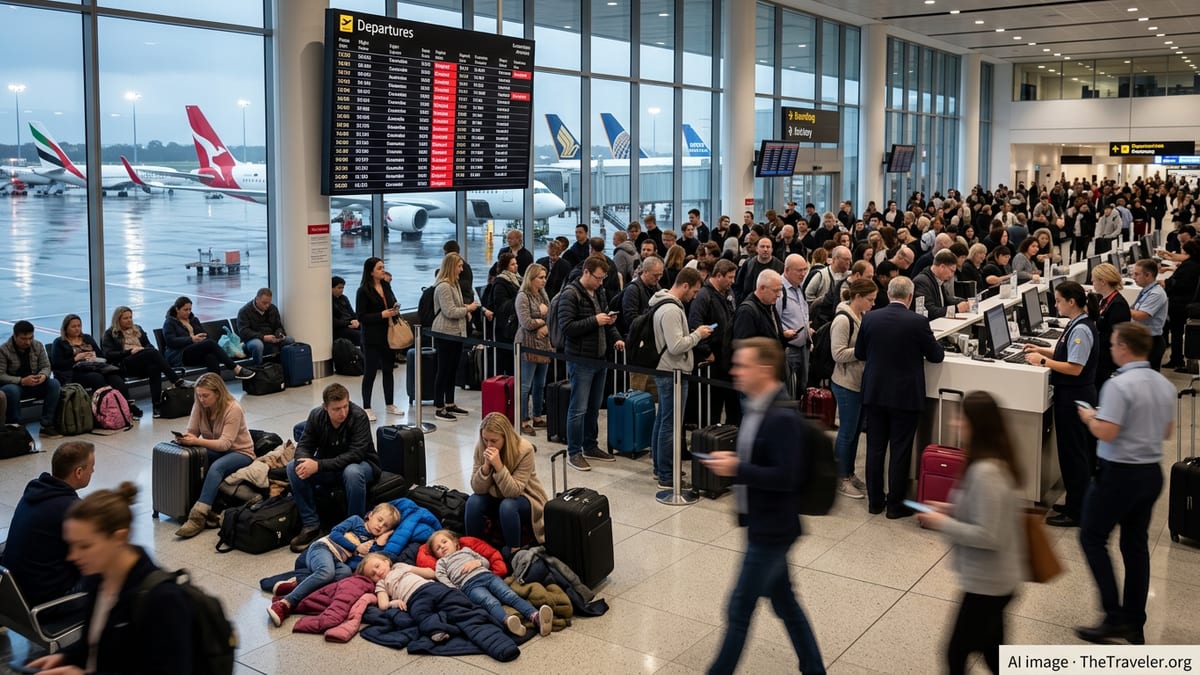
Local media in Taiwan report that the return service from Melbourne to Taipei was abruptly cancelled following the collision, leaving passengers facing significant delays and rebooking challenges. Travellers posting online describe confusion at the gate area as staff worked to secure the damaged aircraft and arrange alternative transport.
Subsequent China Airlines departures on the Melbourne to Taipei route have reportedly operated with substitute aircraft, highlighting the knock-on effects that serious ground incidents can have on long haul schedules. Widebody jets such as the A350 typically operate tightly timed rotations, so the sudden loss of one airframe can ripple through a carrier’s network and affect flights in multiple markets.
Airport operations at Melbourne were also affected in the short term as ground crews and emergency services responded to the damaged aircraft and aerobridge. Publicly available information indicates that there were no injuries among passengers or staff, with the event unfolding while the aircraft was stationary and still at the gate.
While nearby gates appeared to resume activity relatively quickly, the stand involved in the incident remained cordoned off while engineers and safety personnel examined both the jetbridge and the affected section of the A350’s fuselage.
Focus On Ground-Handling Procedures And Safety Systems
Aviation safety commentators note that the apparent roll-back of a parked widebody jet while attached to an aerobridge raises questions about chocking practices, brake settings and communication between cockpit, ground crews and bridge operators. Discussions on professional pilot forums referencing the Melbourne event highlight the importance of robust procedures that prevent any unintended aircraft movement when doors are open.
Modern aerobridges are often equipped with proximity sensors and automatic leveling systems designed to adjust to minor changes in aircraft position or fuselage height. However, those systems are not intended to withstand a substantial rearward movement of the entire aircraft, which can concentrate enormous forces at the door frame and hinge points if a bridge remains locked in place.
Industry records show that similar door related events have occurred elsewhere in recent years, involving both jetbridges and ground vehicles, sometimes leading to cancellations and extended repair periods. Analysts point out that while such incidents are rare compared with overall aircraft movements, they serve as reminders that apron operations remain a critical link in the safety chain.
Investigations in previous ground-collision cases have often examined factors such as ramp surface conditions, slope, the placement and quality of wheel chocks, staffing levels, and the standardization of hand signals and headset communication between ground staff and the flight deck.
Regulatory Scrutiny And Potential Investigation
Given the level of damage and disruption, observers expect that Australian transport safety authorities will review the event in detail, potentially as part of a formal investigation into aircraft ground operations at Melbourne Airport. Publicly accessible documentation from past investigations at the airport shows that regulators routinely examine incidents involving contact with aerobridges and other infrastructure to identify systemic lessons.
Such inquiries typically explore whether established procedures were followed, if training and supervision were adequate, and whether equipment design or maintenance contributed to the event. Although no preliminary findings have been released in this case, specialists commenting publicly anticipate close attention to how the aircraft came to move while connected to the bridge.
Any future safety recommendations could address improvements in ground-handling protocols, enhanced use of wheel chocks and parking indicators, or upgrades to bridge monitoring systems. Airports and airlines worldwide often adjust their own procedures in response to high profile events, even when they occur in other jurisdictions, in order to mitigate similar risks in their operations.
Melbourne Airport, one of Australia’s busiest international gateways, hosts frequent A350 operations by carriers across the Asia Pacific region. As widebody activity continues to grow, the findings from any formal review of this mishap are likely to be closely watched by airport operators and ground-handling firms elsewhere.
Implications For China Airlines And A350 Fleet Operations
For China Airlines, the loss of an A350 to heavy maintenance at a time of strong travel demand represents a significant operational and financial setback. The A350-900 is central to the carrier’s long haul strategy, serving Europe, North America and key destinations in Oceania, including Australia.
Published fleet data indicate that China Airlines operates a relatively small subfleet of A350s compared with some larger competitors, which reduces flexibility when one aircraft is suddenly unavailable. The airline may need to reshuffle aircraft assignments, upgauge or downgrade specific routes, or lease additional capacity to maintain schedules while repairs are under way.
From a technical standpoint, the incident underlines the challenges of repairing advanced composite structures. Unlike traditional aluminum skins, the A350’s carbon fiber fuselage sections and door surrounds often require factory approved repair schemes, specialized materials and detailed structural analysis before an aircraft can be released back into service.
Aviation maintenance experts note in public commentary that restoring full airworthiness after a major door and fuselage deformation can demand extensive non destructive testing, panel replacement and recertification tasks, often pushing costs into seven figure territory. Until those tasks are complete and the aircraft is cleared to fly, China Airlines will have to manage the operational consequences of this dramatic Melbourne airport mishap.