


More news on this day
Crews worked through the morning and afternoon near Eureka after a loaded coal train derailed, spilling coal beside the tracks, disrupting freight traffic and prompting environmental monitoring along a nearby waterway.
Get the latest news straight to your inbox!
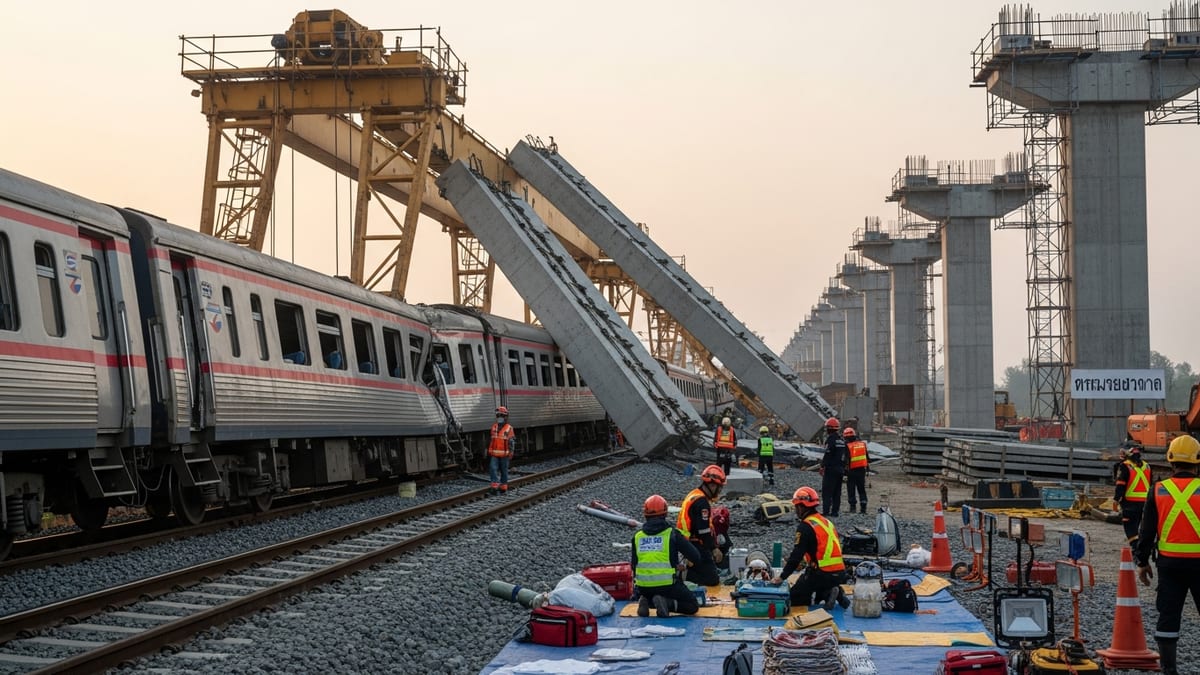
Derailment Near Eureka Prompts Emergency Response
Publicly available information indicates that multiple cars of a coal train left the tracks near Eureka, scattering coal along the rail corridor and damaging a section of track. Initial reports describe the event as a low-speed derailment in which several loaded hopper cars tipped or left the rails while the locomotives remained upright.
Early accounts describe rail crews and local responders moving quickly to secure the site, assess damage and establish an operational perimeter. Rail traffic through the area was halted while inspectors examined track conditions and evaluated derailed equipment. No injuries have been reported, and there are no indications of a fire or hazardous materials release beyond the coal cargo itself.
The derailment occurred near a corridor commonly used for transporting coal from inland mines to coastal terminals and power plants. The incident has drawn attention not only to immediate cleanup needs but also to the broader reliability of freight rail links that supply energy facilities and heavy industry across the region.
Coal Spill Contained as Cleanup Operations Advance
Reports indicate that crews have focused first on containing displaced coal and preventing it from migrating into nearby waterways or wetlands. Heavy equipment has been deployed to corral spilled material into piles away from drainage channels while environmental contractors begin the process of vacuuming, shoveling and loading coal into trucks or rail cars for removal.
Standard rail-industry practice in similar coal derailments typically involves segregating uncontaminated coal for possible reuse and treating any material that mixes with soil or ballast as waste. In this case, teams are reported to be surveying the track bed to determine where ballast or soil must be removed and replaced to ensure long-term track stability.
Once coal and damaged hardware are cleared, track specialists are expected to replace or realign rails, ties and ballast so that freight service can resume. Railroads involved in recent derailments of this type have generally aimed to reopen at least one track within 24 to 48 hours, although full restoration can take longer depending on terrain, weather and the extent of damage.
Environmental Monitoring Along Nearby Waterway
The location of the derailment near a waterway has put environmental safeguards in the spotlight. According to published coverage of comparable coal train derailments along rivers in the inland Northwest, responders typically deploy protective measures such as temporary berms, silt fencing and absorbent materials to minimize the movement of fine coal particles toward the water.
In the Eureka incident, public information suggests that crews are conducting visual inspections along the riverbank and using handheld instruments to check for changes in water quality. Coal is not classified in the same way as many liquid hazardous materials, but fine particles can still darken shorelines and affect aquatic habitats if they enter streams in sufficient quantities.
Environmental agencies often continue monitoring well after tracks are repaired, especially in locations where sensitive fish species, wetlands or drinking water intakes are present. Any necessary shoreline cleanup, such as removing visible coal fragments from rocks and vegetation, can proceed independently from rail reconstruction so that freight service and environmental restoration move forward in parallel.
Rail Traffic Disruptions and Regional Impacts
The derailment has temporarily disrupted a busy freight corridor used for moving coal and other bulk commodities. Rail logistics updates indicate that trains were being held at upstream yards while the affected section of track near Eureka remained out of service. Some shipments may be rerouted over alternate lines where capacity allows, though such diversions can lengthen transit times.
Energy-sector observers note that coal shippers and power producers generally maintain stockpiles to manage short-term interruptions, but extended closures can complicate fuel management plans. In previous derailments involving coal, railroads have often prioritized restoring traffic on at least a single track so that delayed trains can begin moving even while full repairs continue alongside.
Local communities along the route may also experience indirect effects from the disruption. Grade crossings near the derailment site can remain blocked by idled or slow-moving trains when traffic is backed up, and motorists may encounter temporary road closures as heavy equipment and cleanup crews access the scene. These short-term inconveniences are typically balanced against the need to secure the site and complete work safely.
Derailment Renews Focus on Coal Train Safety
The Eureka derailment adds to a series of recent freight rail incidents involving bulk commodities that have drawn renewed public attention to track maintenance, train handling and the condition of aging infrastructure. Coal trains, which are among the heaviest and longest consists on many networks, can place substantial stress on rails, ballast and bridges, particularly in areas with steep grades or challenging geology.
Rail safety analyses of earlier coal derailments in the western United States have pointed to diverse contributing factors, including track defects, equipment failures, weather-related issues and operational errors. Industry guidance emphasizes regular ultrasonic rail inspections, continuous monitoring of wheel health and careful management of train speed and braking forces on difficult terrain.
Public discussions following the Eureka incident are expected to touch on whether additional safeguards, such as enhanced track inspection frequencies, new monitoring technologies or revised operating practices for heavy bulk trains, could reduce the likelihood or severity of similar events. For residents and travelers in the region, the derailment serves as another reminder of how closely rail infrastructure, energy logistics and local environments are intertwined.