


More news on this day
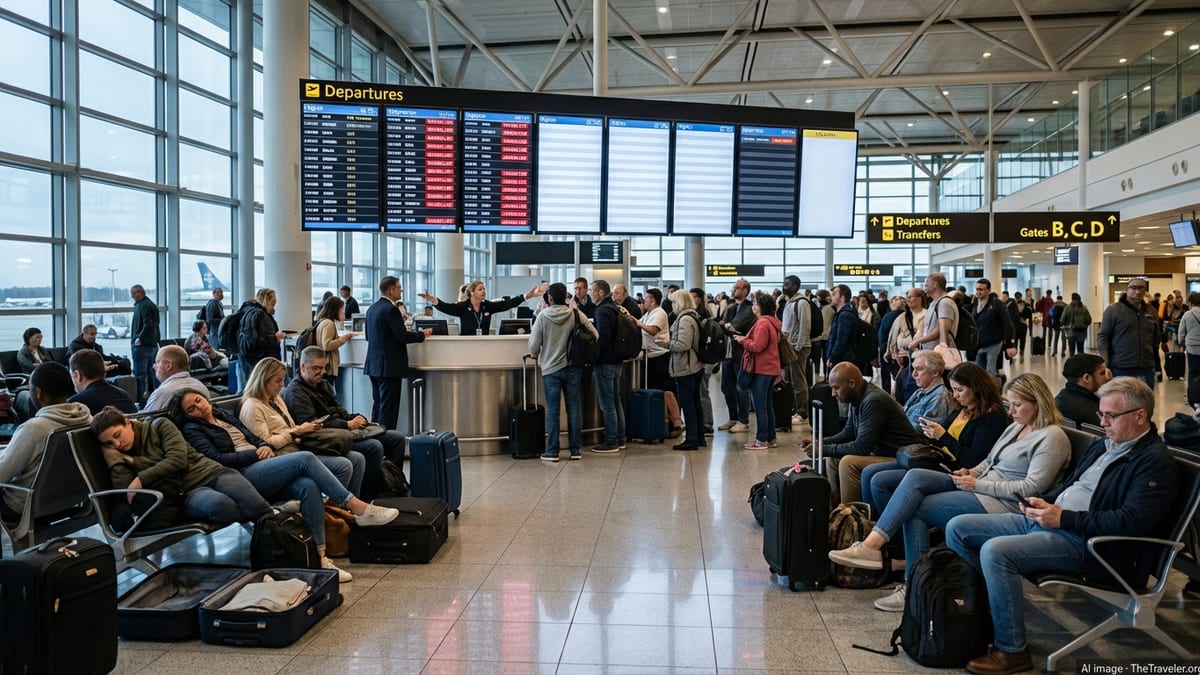
Air travel across the Middle East has been thrust back into turmoil as the latest flare up in the US Iran conflict triggers at least 222 cancellations and more than 960 delays in a single day, snarling key Gulf hubs and disrupting long haul links between Europe, Asia and Africa.
Get the latest news straight to your inbox!
Fresh Conflict Reignites Aviation Disruption
The latest wave of flight disruption follows months of instability that began when conflict in Iran closed large swathes of regional airspace earlier this year. Airports in Dubai, Abu Dhabi, Doha, Kuwait City and other Gulf gateways had been slowly rebuilding schedules as ceasefire talks showed progress in June. That fragile recovery has been derailed by renewed hostilities in July, with airspace risk assessments tightening and airlines once again forced into large scale schedule changes.
Publicly available information indicates that a combination of precautionary airspace restrictions, missile and drone activity around military facilities, and updated safety guidance from regulators has pushed carriers to cancel or significantly delay services across the region. While most commercial airports remain open, intermittent airspace closures and rerouting have created bottlenecks that ripple through already crowded summer schedules.
Analysts note that the Middle East handles a disproportionately high share of global connecting traffic, linking Europe and North America with South and Southeast Asia, Africa and Australasia. Even localized disruptions can therefore have an outsized impact, cascading into missed connections, long ground holds and aircraft and crew stranded out of position.
Recent traffic assessments for Europe and the Middle East show that route networks had only partially recovered from the first phase of the Iran war before this new spike in cancellations and delays. Capacity between Europe and key Gulf hubs remains below both pre conflict levels and summer 2025 benchmarks, leaving little margin to absorb shocks when security conditions deteriorate.
Gulf Hubs Face Cancellations as Airlines Reroute
The day that saw 222 flights cancelled and 960 delayed was driven largely by disruptions at major hubs including Dubai, Doha, Riyadh and Kuwait City, according to airport monitoring and industry data shared in recent media coverage. These airports function as pivotal transfer points where even short airspace closures can force ground stops and extensive schedule reshuffling.
Carriers based in the United Arab Emirates and Saudi Arabia have been adjusting timetables on short notice, especially on routes touching Kuwait and certain Saudi airports. Reports indicate that some flights between Abu Dhabi, Dubai and Kuwait have been repeatedly cancelled or retimed in recent days, with passengers urged to check their flight status before travelling to the airport.
International airlines from Europe and Asia have also extended suspensions or diversions on services into parts of the Gulf and Levant. Coverage of the disruption highlights that some European carriers continue to avoid transiting the airspace of Iran, Iraq, Syria and Israel, while others are suspending direct services to cities such as Kuwait City, Beirut and selected Saudi destinations until conditions are assessed as more stable.
At the same time, several large Gulf airlines are striving to keep long haul operations intact by routing around higher risk areas. Industry reports describe how widebody flights between Europe and Asia are being sent on longer trajectories that bypass affected corridors, increasing block times and fuel burn but preserving essential connectivity for business and leisure travellers.
Regulatory Warnings and Airspace Risk Guidance
The renewed aviation turmoil is unfolding against a backdrop of evolving regulatory guidance on Middle East conflict zones. The European Union Aviation Safety Agency has recently reiterated and refined its advisories for airspace in and around Iran, Iraq and Lebanon, while issuing information notices highlighting ongoing medium level risks in Bahrain, Kuwait, Qatar, Saudi Arabia, Jordan, Israel, Oman and the United Arab Emirates.
These notices do not close airspace outright but prompt airlines to conduct detailed risk assessments and, where necessary, to avoid specific flight levels, routes or regions. For network planners, this introduces complex operational trade offs, particularly during the peak summer season when aircraft and crews are already heavily utilized and schedule slack is minimal.
Security briefings compiled for governments and corporate travellers also reference the potential for rapid changes in airspace status, including short notice restrictions or temporary closures if missile or drone activity intensifies. As a result, airlines are building more contingency into schedules around the Gulf, which can translate into additional delays even on days without direct security incidents.
Travel advisories from several countries now stress that flight cancellations and periodic airspace closures remain possible throughout the Middle East. Travellers are being encouraged to remain flexible, monitor alerts from embassies and carriers, and allow extra connection time when transiting regional hubs.
Passenger Impact Spreads Far Beyond the Region
While the headline figures of 222 cancellations and 960 delays reflect a single intense day of disruption within the Middle East, the impact for passengers is global. Long haul travellers connecting through Dubai, Doha, Abu Dhabi or Riyadh are experiencing extended layovers, missed onward sectors and involuntary overnight stays as aircraft and crews fall out of position.
Reports from consumer and aviation forums describe families separated across multiple flights after last minute cancellations, business travellers stranded mid journey and cargo shipments facing unexpected diversions. Pets travelling in aircraft holds have also been affected, with travellers highlighting the limited number of animal transport slots available on rebooked services after a mass cancellation event.
Because many of the affected airlines operate as network carriers with tightly timed banks of arrivals and departures, a wave of delays across a few hours can disrupt the balance of the schedule for days. Aircraft that arrive late into one hub may miss their next departure slot, pushing the delay on to passengers booked on subsequent legs in Europe, Asia or Africa.
Travel industry data providers note that disruption of this scale complicates efforts by airlines to restore profitability after the earlier phases of the Iran war and its associated spike in fuel prices. Every cancellation or major delay not only inconveniences passengers but also reduces revenue, increases crew and accommodation costs and heightens pressure on already thin operating margins.
What Travellers Can Do as Turbulence Continues
With no swift resolution to the underlying geopolitical tensions in sight, aviation analysts expect on off disruptions across the Middle East to persist in the coming weeks. Although the majority of flights are still operating, the probability of sudden schedule changes remains higher than usual for services touching Gulf and Levant airports or transiting nearby airspace.
Travel experts and public advisories recommend that passengers bound for or connecting through the region build extra resilience into their plans. Practical steps include allowing longer connection windows, booking earlier departures on days with critical arrivals, and closely monitoring flight status through airline channels in the 24 hours before departure.
Passengers are also encouraged to familiarize themselves with airline policies on rebooking and refunds during operational disruption. Many carriers have introduced flexible waivers for itineraries involving the most affected airports, allowing date changes without additional fees or offering refunds where routes are temporarily suspended.
As the Middle East aviation system navigates another period of heightened uncertainty, the day that saw 222 cancellations and 960 delays stands as a stark indicator of how quickly regional conflict can reverberate across the global travel network. For now, travellers, airlines and airports alike are operating with one eye on the departure board and the other on evolving developments in the Gulf.