


More news on this day
The bankruptcy of a prominent European company that specialized in securing compensation for flight delays and cancellations has left thousands of air passengers uncertain about the status of their EU261 claims and pending payouts, highlighting the risks of relying on third-party intermediaries in an already complex compensation landscape.
Get the latest news straight to your inbox!
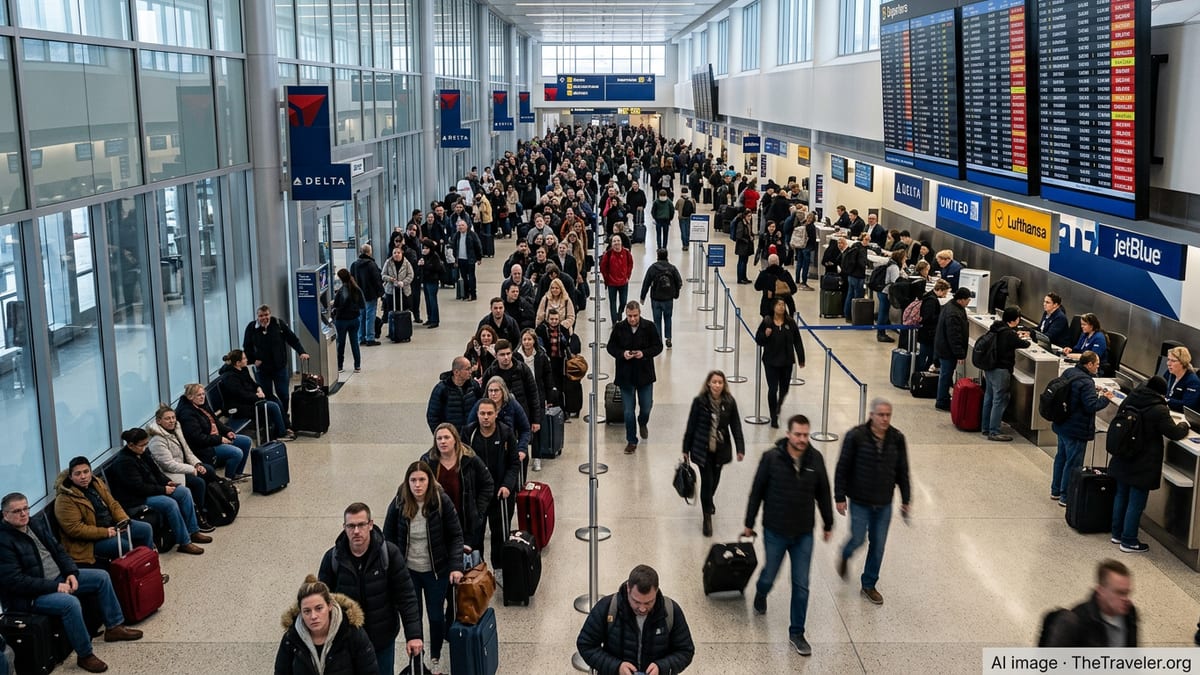
Claims-management model under pressure
Across Europe, a growing ecosystem of legal-technology firms has emerged in recent years to help travelers pursue compensation for flight disruptions under EU Regulation 261/2004, which entitles eligible passengers to fixed cash payouts when delays or cancellations meet specific criteria. Companies such as AirHelp, AirAdvisor and AirClaim market themselves as one-stop services, handling paperwork and negotiations in exchange for a commission on any successful claim, often around 25 to 35 percent of the recovered sum. Publicly available profiles of these businesses describe a success-fee model in which passengers pay nothing upfront and only share compensation if the claim is approved.
Industry observers note that this model depends heavily on steady volumes of valid cases and timely payments from airlines. In practice, compensation disputes can drag on for months or even years, particularly when carriers contest liability or invoke “extraordinary circumstances” defenses. Online forums are filled with accounts of passengers waiting weeks or months for EU261 payouts or faced with repeated rejections that require escalation to regulators or courts, underlining how unpredictable cash flow can be for any company that fronts legal and administrative work before collecting its fee.
Against this backdrop, a leading claims intermediary focused on flight delay compensation has now entered bankruptcy proceedings, according to regional corporate registries and court announcements. The collapse illustrates how prolonged disputes with airlines, rising legal costs and tightening regulatory scrutiny can combine to undermine the financial viability of firms that sit between passengers and carriers.
Passengers caught between airlines and an insolvent middleman
For travelers who handed their cases to the now-insolvent company, the immediate concern is whether approved or pending payouts will ever arrive. Reports on consumer forums indicate that some passengers had already received confirmation that their EU261 claims were successful, only to see communication cease before money reached their bank accounts. Others had granted the firm power of attorney to negotiate directly with airlines, leaving them unsure who currently controls their case files or the status of negotiations.
When a service provider enters bankruptcy or liquidation, customer claims typically become unsecured debts in the insolvency estate. Guidance from regulators in comparable cases, such as the compulsory liquidation of UK payments firm Guavapay, shows that court-appointed liquidators generally take over responsibility for gathering assets, reviewing claims and, where possible, returning funds to customers. However, published advisories in that case also warned that involving additional fee-charging intermediaries to chase money through the insolvency process was unlikely to yield any benefit for most clients, given that recoveries, if any, are distributed according to strict legal priority rules.
Travelers whose flight compensation cases were routed through the bankrupt intermediary may therefore find themselves in a queue with other creditors, with limited visibility on timing or recovery rates. In some instances, passengers may have the option to reassert their rights directly with the airline or through national enforcement bodies, but this can depend on the contractual terms they signed with the intermediary and whether the airline has already transferred any settlement funds.
Regulators weigh consumer protection gaps
The collapse comes as policymakers in both Europe and North America examine the broader framework for passenger rights and compensation. In the European Union, ongoing legislative work to revise Regulation 261/2004 and related air carrier liability rules has highlighted concerns about inconsistent enforcement and lengthy disputes, as well as calls for clearer obligations around accommodation, support during disruptions and financial guarantees to protect travelers if an airline or intermediary fails. Recent discussions in the European Parliament have included ideas such as requiring carriers to maintain guarantee funds or specific insurance to cover bankruptcy scenarios, in part to avoid situations where consumers are left without recourse when key players in the compensation chain become insolvent.
On the other side of the Atlantic, the United States Department of Transportation has been gathering feedback on potential new rules to strengthen airline passenger rights, including proposals around compensation for controllable delays and cancellations. According to a department advance notice of proposed rulemaking, no U.S. airline currently guarantees cash compensation for domestic flight delays, and only a small number offer credits or miles when disruptions are within the carrier’s control. This regulatory gap has fueled interest in third-party tools and services, but it also leaves passengers exposed when intermediaries encounter financial trouble or fail to pass on funds promptly.
Consumer advocates argue that the latest bankruptcy underscores the need for clearer oversight of claims-management companies that operate at the intersection of legal services, financial intermediation and cross-border consumer rights. Some are calling for licensing regimes, minimum capital requirements or trust-account rules that would obligate firms to ring-fence customer funds received from airlines, reducing the risk that payouts become entangled in a corporate insolvency.
What affected travelers can do now
For travelers caught up in the failure of a flight delay compensation company, the first step is typically to confirm the exact status of the firm’s insolvency case through official court notices or national company registers. These documents usually name the appointed administrator or liquidator and explain how creditors, including individual customers, can submit claims. In other recent travel-sector collapses, such as the failures of certain UK-based tour operators covered by the ATOL scheme or travel agents covered by the Ontario Travel Industry Compensation Fund, publicly available information has spelled out deadlines and documentation requirements for consumers seeking reimbursement.
Passengers may also wish to contact the airline directly to determine whether any compensation has already been paid out in connection with their disrupted flight. If the carrier has not yet transferred funds and the intermediary’s mandate is effectively void due to insolvency, it may be possible to reopen a claim in the traveler’s own name, either with the airline or through a relevant national enforcement body. In the EU, that could involve contacting the national authority responsible for enforcing passenger rights, while in the UK similar roles are played by designated regulators and alternative dispute resolution schemes.
At the same time, regulators in other financial and travel-related insolvencies have repeatedly cautioned consumers about new offers from unconnected companies promising to “recover” lost funds for additional fees. Public warnings around the Guavapay liquidation, for example, advised customers that third-party recovery services were unlikely to improve outcomes and could instead expose individuals to further cost or fraud risk. Travel experts suggest that affected passengers should rely on official insolvency communications, reputable consumer advice organizations and, where appropriate, legal counsel before agreeing to any additional contracts.
Growing scrutiny of the flight-compensation business
The bankruptcy of a once-visible flight delay claims intermediary is likely to feed into wider debates about the role of third-party firms in enforcing passenger rights. Legal-technology platforms that assist with EU261 and similar claims argue that they democratize access to justice by lowering procedural barriers and handling complex correspondence with airlines on behalf of infrequent travelers. Company overviews of services such as AirClaim, AirAdvisor and MyflyRight emphasize that many passengers would not otherwise pursue compensation at all, either due to lack of awareness or the time and effort involved.
Critics, however, have questioned commission levels and transparency around contract terms, particularly clauses that assign the claim to the intermediary or give it control over settlement negotiations. Online discussions among travelers increasingly reflect concern about delays in passing on funds once airlines have paid out, as well as uncertainty about what happens if a claims company changes ownership or, as in the latest case, enters insolvency. Combined with legislative moves in Europe to refine compensation rules and enforcement mechanisms, these developments suggest that regulators may pay closer attention to how such firms are structured and supervised in the coming years.
For air travelers, the current turmoil serves as a reminder to carefully weigh the convenience of using a third-party service against the option of pursuing claims directly with airlines or through public enforcement channels. As passenger-rights frameworks evolve on both sides of the Atlantic, the balance between ease of use, cost and security of funds will remain central to how travelers choose to navigate the increasingly crowded market for flight disruption compensation services.
U.S. Department of Transportation airline passenger rights ANPRM
European Parliament dossier on revision of EU261/2004
UK FCA notice on Guavapay Limited liquidation
ATOL claims guidance for failed UK travel firms
TICO update on Ontario Travel Industry Compensation Fund claims