


More news on this day
Boston Logan International Airport recorded the highest number of flight delays among U.S. airports on Tuesday, with thunderstorms across the Northeast contributing to another day of weather-related travel disruption at one of the country’s busiest hubs.
Get the latest news straight to your inbox!
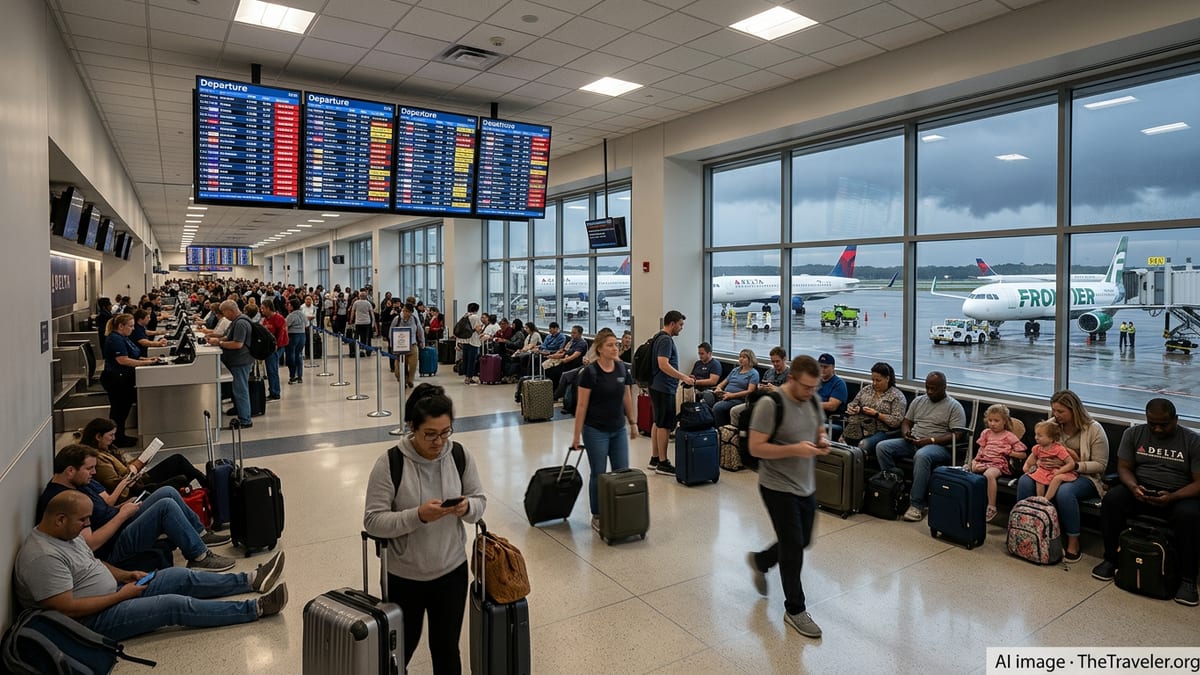
Stormy skies push Boston to the top of delay rankings
Publicly available tracking data indicates that Boston Logan led all U.S. airports for delays on Tuesday, with 19 flights running late. The figures, drawn from flight-tracking service FlightAware and summarized in national coverage of the day’s travel disruptions, place Logan ahead of larger hubs including Chicago and New York for reported delays that day.
The delays coincided with a round of thunderstorms moving across the Eastern United States, with forecasters highlighting the risk of downpours and lightning along busy air corridors. According to recent aviation advisories, convective weather has repeatedly limited route options and slowed traffic flows into and out of major Northeastern airports during the late summer period.
Thunderstorms are one of the leading weather-related causes of serious flight disruptions, particularly in congested airspace where there are few easy detours. Historical analyses of U.S. airport performance have found that convective storms can trigger cascading delays as aircraft and crews arrive late and schedules fall behind, a pattern visible again this week in Boston.
While 19 delays may appear modest compared with days when hundreds of flights are affected, analysts note that any spike that puts a single airport at the top of the national list is significant for travelers relying on tight connections and evening departures.
Summer of interruptions at a capacity-constrained hub
Logan’s latest weather-related slowdown comes after a stretch of summer disruptions in Boston tied to heavy rain, thunderstorms and isolated operational issues. Local coverage in late July reported nearly 500 delays and more than 70 cancellations in a single day amid widespread downpours across Massachusetts, illustrating how quickly conditions can deteriorate when storms line up with peak travel windows.
Separate reporting this season has also described ground holds and residual delays linked to fuel system problems and other non-weather factors, which added strain to an already busy operation. Those events, combined with periodic thunderstorms, have kept Boston near the top of national disruption tables on several occasions during the summer.
According to federal data compiled earlier this year, Logan has long ranked among U.S. airports where weather and airspace constraints can sharply reduce runway capacity. When storm cells block preferred approach and departure routes, controllers often have to meter departures and arrivals more conservatively, leading to ground delays even when conditions at the airfield appear manageable from the terminal windows.
Travelers posting on social platforms in recent weeks have reported extended waits at gates and on taxiways in Boston on stormy days, with some accounts describing rolling departure estimates as airlines adjust to route changes, crew duty limits and congestion elsewhere in the network.
Runway work raises stakes when storms hit
Logan is also preparing for a major runway safety project that will temporarily reduce the airport’s capacity during the busiest travel months. The Massachusetts Port Authority has announced the second phase of work to install an Engineered Material Arresting System at the end of Runway 27, a key piece of infrastructure designed to slow aircraft that overrun the pavement.
According to the agency’s public notice, the project will require a roughly 75-day closure of the runway beginning at the end of August, with completion targeted before the Thanksgiving travel period. The authority has cautioned that travelers may experience additional delays during the work, particularly in periods of poor weather, air traffic constraints or other operational disruptions.
Ahead of the closure, analysts have pointed out that Logan’s runway layout already leaves limited flexibility during certain wind and weather patterns. With one major runway out of service, thunderstorms that might otherwise have been absorbed with modest schedule adjustments could instead trigger longer queues for takeoff and landing.
Industry observers note that this week’s 19 delays during a round of storms offer a preview of the delicate balance operators will need to maintain as the construction period overlaps with late-summer and early-autumn weather systems.
Broader U.S. travel impacts from storm season
The conditions affecting Boston are part of a wider pattern of storm-driven disruption across the United States this week. National reports highlight more than 700 delayed flights and dozens of cancellations across the country on Tuesday, with thunderstorms impacting operations in Florida, Texas, Colorado and along the Eastern Seaboard.
Federal aviation planners have warned that convective weather can force traffic management initiatives such as ground delay programs and reroutes when storms develop along high-density routes. Recent advisories have cited thunderstorms and throughput concerns as key triggers for such measures into Northeastern hubs, including Boston.
Forecast discussions from the National Weather Service office serving southern New England in recent days have described a series of upper-level disturbances and surface fronts bringing showers and a chance of thunderstorms to the region. Even when rainfall totals remain relatively modest at Logan itself, nearby storm cells and lightning can still restrict arrivals and departures.
Airlines and airports across the country are also contending with tight schedules and high demand during the summer peak. When a system like Tuesday’s sweeps through several major hubs at once, the resulting delays can echo across the network long after the strongest storms have passed.
What travelers through Boston should watch now
In the short term, passengers flying into or out of Logan are being urged by airlines and airport advisories to monitor flight status closely on days when thunderstorms are in the forecast. Same-day schedule changes, rolling departure estimates and equipment swaps have all become common features of summer operations at the airport.
Publicly available guidance emphasizes checking in early, allowing extra time for security and ground transportation, and being prepared for gate changes as airlines consolidate flights when weather and air traffic restrictions tighten capacity. For those with connecting itineraries, longer layovers can offer a buffer against short-notice delays such as those seen on Tuesday.
Looking ahead to the fall runway closure, published planning documents suggest that the combination of construction, continued storm risk and high passenger volumes around holidays could challenge on-time performance further. Travelers booking trips during that period may want to favor early-day departures, which historically have more slack to absorb disruptions before evening congestion builds.
For now, Tuesday’s 19 delays place Boston Logan at the center of another day of storm-affected U.S. travel, underscoring how a mix of volatile summer weather and limited runway flexibility can quickly ripple through one of New England’s most important transportation gateways.
National round-up of August 26 U.S. flight delays
Coverage of July weather disruptions at Boston Logan