


More news on this day
Colombia is accelerating investment in marinas, cruise facilities and high-end nautical services along its Caribbean coast, positioning Cartagena, Santa Marta and nearby destinations as emerging hubs for luxury sailing and marine tourism.
Get the latest news straight to your inbox!
Cartagena Expands Its Role as a Gateway for Luxury Yachting
Cartagena is consolidating its status as a primary entry point for yacht owners and upscale boat charters on Colombia’s Caribbean coast. Publicly available information from local authorities shows recent progress on waterfront infrastructure, including the delivery of the first phase of the renovated Muelle de La Bodeguita in 2024, designed to better organize departures for island excursions and tourist vessels in the bay. Additional maritime authorizations for new embarkation facilities at Playa Blanca and Cholón aim to channel the heavy traffic of day boats serving luxury beach clubs and the Rosario Islands into safer, purpose-built piers.
Industry coverage highlights that private operators are moving in tandem with public works. A new marina project launched by domestic boatbuilder Eduardoño in Cartagena has added berths and complementary services for recreational craft and mid-sized yachts, alongside a specialized maintenance workshop for high-end outboard engines. Taken together, these improvements are broadening the options for visiting vessels, from crewed charters to privately owned yachts seeking longer stays.
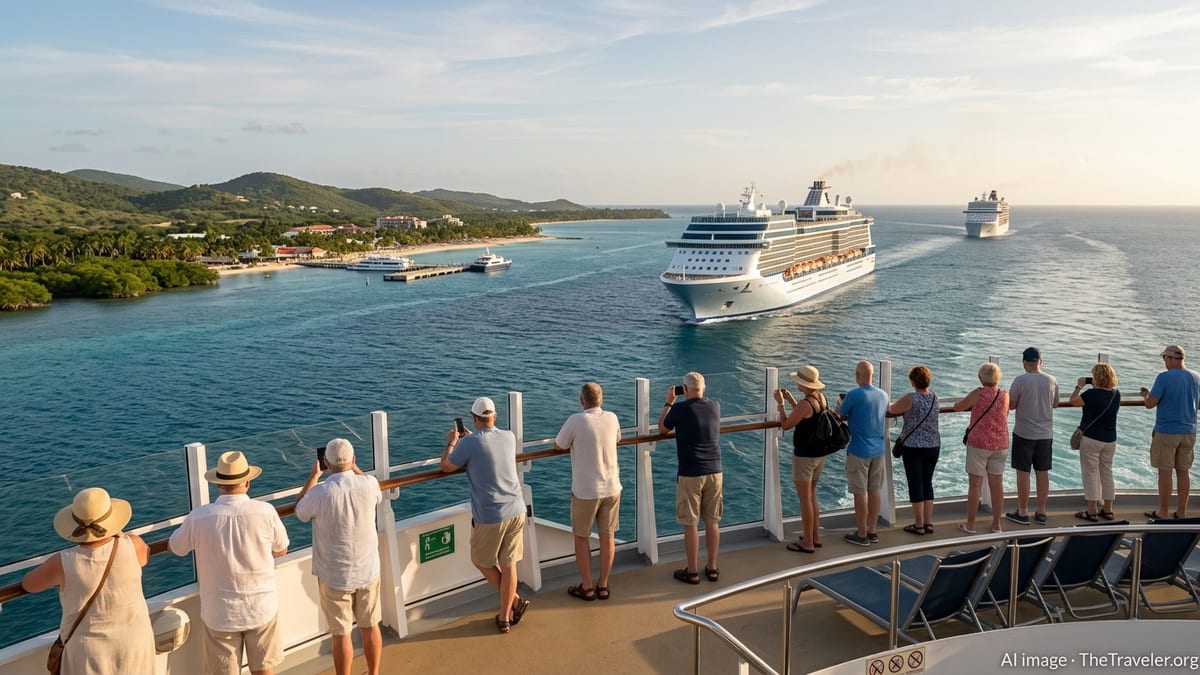
At the same time, Cartagena’s established position as Colombia’s busiest cruise port continues to underpin investment in terminals and urban waterfront upgrades. Port publications emphasize a focus on sustainable operations and passenger handling capacity, reinforcing the city’s role as both a turnaround port and a marquee call on Caribbean itineraries. For luxury travelers, this mix of cruise facilities, marinas and shore-side services is making Cartagena a more complete nautical destination rather than just a historic city with nearby beaches.
Santa Marta Emerges as a Boutique Nautical Destination
While Cartagena captures much of the international spotlight, Santa Marta is quietly positioning itself as a boutique alternative for nautical travelers. The city’s modern marina, located near the historic center and overlooked by the Sierra Nevada mountains, has been promoted in regional media as a “paradise” for yacht owners, with sheltered berths, repair services and easy access to national parks and coastal villages. The marina’s setting within walking distance of restaurants, hotels and cultural sites has helped Santa Marta attract both long-stay cruisers and short-term charter operations.
Official tourism figures show that Santa Marta has recorded strong growth in international arrivals in the past two years, supported by investment in infrastructure tied to the city’s 500th anniversary commemorations. Local tourism agencies report double- and triple-digit percentage increases in cruise ship calls and passenger numbers between 2023 and 2025, alongside more than 20 billion Colombian pesos directed to projects ranging from waterfront improvements to visitor services. Port statistics from the national maritime authority also indicate thousands of vessel arrivals in the Santa Marta jurisdiction over the last three years, reflecting a busier maritime landscape that includes cargo, cruise and recreational boats.
Seasonal reports from the maritime authority describe robust passenger movement by sea during peak holiday periods, when more than 120,000 travelers have used maritime transport routes between Santa Marta and nearby beaches and coastal attractions. For luxury and adventure visitors, this network of waterborne connections is creating opportunities for yacht-based itineraries that pair marina stays with excursions to Tayrona National Natural Park, Taganga, fishing villages and secluded bays along the Magdalena coast.
Rising Cruise Traffic and the Shift Toward High-End Itineraries
Colombia’s Caribbean ports are also benefiting from a broader shift in the global cruise and small-ship market toward more varied and experiential routes. Cruise schedules published by the Port of Santa Marta for the 2024–2025 and 2025–2026 seasons list calls from upscale brands including luxury yacht-style ships and sail-powered vessels, bringing smaller groups of higher-spending passengers into the city. Media coverage from Colombian outlets notes that over 8,000 passengers and 4,000 crew visited Santa Marta in the early months of 2025 alone, contributing to hotel stays, guided tours and shore excursions.
Cartagena, already a regular stop for large cruise lines, continues to expand its offerings for premium and luxury segments, with operators promoting private island experiences in the Rosario archipelago, curated gastronomy tours in the walled city and chartered catamaran or yacht outings within the bay. Travel industry commentary indicates that international visitors increasingly pair cruise calls or short city stays with bespoke sailing experiences, relying on a growing ecosystem of boat charter companies and concierge services that cater to small groups, celebrations and family travel.
National-level tourism promotion campaigns have started to highlight Colombia’s Caribbean ports as part of a single nautical corridor, encouraging cruise lines and expedition operators to design itineraries that combine Cartagena, Santa Marta and other coastal destinations such as Barranquilla and the Gulf of Morrosquillo. This integrated approach seeks to distribute visitor flows more evenly and to position the country as a diversified cruising and yachting region rather than a single-port call.
National Maritime Strategy Supports Nautical Tourism Growth
The acceleration of marine tourism on Colombia’s coasts is unfolding alongside a formal national maritime strategy. A functional maritime strategy document released by the national maritime authority for the 2023–2026 period outlines priorities for implementing international maritime standards, improving port governance and enhancing safety and environmental management. Although primarily focused on regulatory and institutional frameworks, the strategy acknowledges the role of tourism and recreational navigation as part of Colombia’s broader “maritime power” objectives.
Tourism policy initiatives complement this framework. Programs under the Ministry of Commerce, Industry and Tourism have channeled funds into sustainable tourism projects in coastal destinations, including Santa Marta, with an emphasis on infrastructure, community-based tourism and conservation. Presentations to international investors describe nautical and cruise tourism as key components of Colombia’s strategy to diversify visitor offerings beyond traditional sun-and-beach resorts, referencing the arrival of river cruise lines and boutique ships as examples of an expanding high-end segment.
Publicly available planning documents also highlight the need to align marina development, coastal zoning and environmental protections. For nautical tourism, this means that new berths, yacht clubs and embarkation points around Cartagena Bay, Santa Marta’s waterfront and other coastal municipalities are being evaluated not only on economic potential but also on their compatibility with fragile marine ecosystems and established fishing communities.
Beyond the Big Two: A Growing Network of Coastal Experiences
Beyond Cartagena and Santa Marta, other coastal areas of Colombia are beginning to benefit from the rise of nautical tourism. Smaller ports and beach towns along the Caribbean, including points near the Rosario Islands, Barú and the Ciénaga Grande de Santa Marta, are seeing increased traffic from charter boats and day-trip operators. Travel accounts and tourism board materials point to new marinas and mooring options under discussion or development along the Caribbean and Pacific coasts, part of an effort to extend the sailing season and create multi-stop itineraries.
At the traveler level, publicly shared trip reports and online discussions show a growing appetite for combining coastal city stays with sailing, diving and island-hopping experiences. Visitors increasingly use Cartagena as a launch pad for yacht charters to the Rosario and San Bernardo archipelagos, while treating Santa Marta as a base for marine excursions paired with trekking in the Sierra Nevada and visits to indigenous and rural communities. This pattern is helping to spread tourism spending along the coast and to support small operators that provide provisioning, guiding and shore-based services to yacht crews and passengers.
As Colombia continues to refine its maritime strategy and invest in port and marina infrastructure, industry observers expect the country’s profile in the luxury sailing and marine tourism market to rise. With Cartagena serving as a cosmopolitan gateway and Santa Marta emerging as a scenic boutique hub, a broader network of coastal communities is gradually being integrated into a new era of nautical tourism on the Caribbean and beyond.