


More news on this day
Air travel across Europe has been hit by a fresh wave of disruption as Barcelona El Prat Airport recorded 2,439 delayed flights and 187 cancellations in a single operational window, rippling across key holiday and business routes and leaving thousands of passengers facing missed connections, overnight stays and rebooked itineraries.
Get the latest news straight to your inbox!
Barcelona Becomes Epicentre of Widespread European Disruption
The latest disruption has placed Barcelona among the worst-affected hubs in Europe, with the concentration of 2,439 delays and 187 cancellations within a short period pointing to a combination of heavy summer demand, knock-on operational problems and broader network congestion. Publicly available operational data and industry monitoring suggest that delays at Barcelona have recently climbed well above seasonal norms, with tight aircraft and crew rotations amplifying even minor incidents into rolling schedule problems.
Barcelona is one of Europe’s busiest leisure gateways, serving dense short haul networks across Spain, France, Italy and the UK, along with long haul links to North America, Latin America and the Middle East. When such a hub experiences several hundred cancellations and thousands of delayed departures and arrivals, the disruption rarely remains local. Aircraft and crews that should be operating out of Madrid, Paris, London or Rome later in the day are frequently out of position, forcing airlines to trim schedules or combine services.
Recent punctuality reports for major European airports show that even in more stable months, on-time performance at Barcelona typically hovers well below 80 percent, reflecting the operational challenges of handling dense summer banks of flights, frequent weather variations over the western Mediterranean and periods of air traffic flow restrictions. When additional pressure is applied to this system, as seen during the latest disruption, the cumulative effect can be dramatic for both airlines and passengers.
The surge in delays and cancellations has also highlighted how reliant Europe’s short haul network is on a handful of key Mediterranean hubs. A day of severe disruption at Barcelona can ripple out to Palma de Mallorca, Ibiza, Málaga, Lisbon, Nice and beyond, particularly affecting point-to-point low cost routes and popular holiday charter operations.
Knock-on Effects Across Major European Hubs
Operational data and airline schedules indicate that the problems centered on Barcelona quickly translated into wider disruption across Europe. Large network airports such as Paris Charles de Gaulle, London Heathrow, Amsterdam Schiphol and Frankfurt rely on highly coordinated arrival and departure waves. When aircraft inbound from Barcelona arrive late or not at all, those hubs face difficult decisions about runway sequencing, stand allocation and onward connections.
Reports from passengers and aviation tracking platforms show that services linking Barcelona with northern European hubs experienced extended ground holds, missed slots and, in some cases, outright cancellations as carriers sought to preserve long haul operations. Aircraft scheduled to fly early morning rotations from Barcelona to cities such as Brussels, Munich and Copenhagen often turn around to operate further legs in the afternoon and evening. Once the initial rotation is delayed or cancelled, entire chains of flights can be affected for the rest of the day.
In recent years Europe’s air traffic network has shown increasing sensitivity to localized shocks, whether from weather patterns, IT outages, staffing constraints or regulatory changes. Large-scale IT incidents and air traffic control bottlenecks have demonstrated how quickly a single point of failure can cascade into continent-wide disruption. The current wave of Barcelona-centred delays fits this pattern, with the figures on disrupted flights underlining how little spare capacity exists during peak periods.
Airlines have responded by adjusting schedules, trimming marginal frequencies and consolidating flights where possible to rebuild resilience. However, this often means that when a day of disruption strikes, passengers face reduced options for same-day reaccommodation and longer waits for alternative services, particularly on popular leisure routes.
Passenger Impact: Missed Holidays, Business Trips and Tight Connections
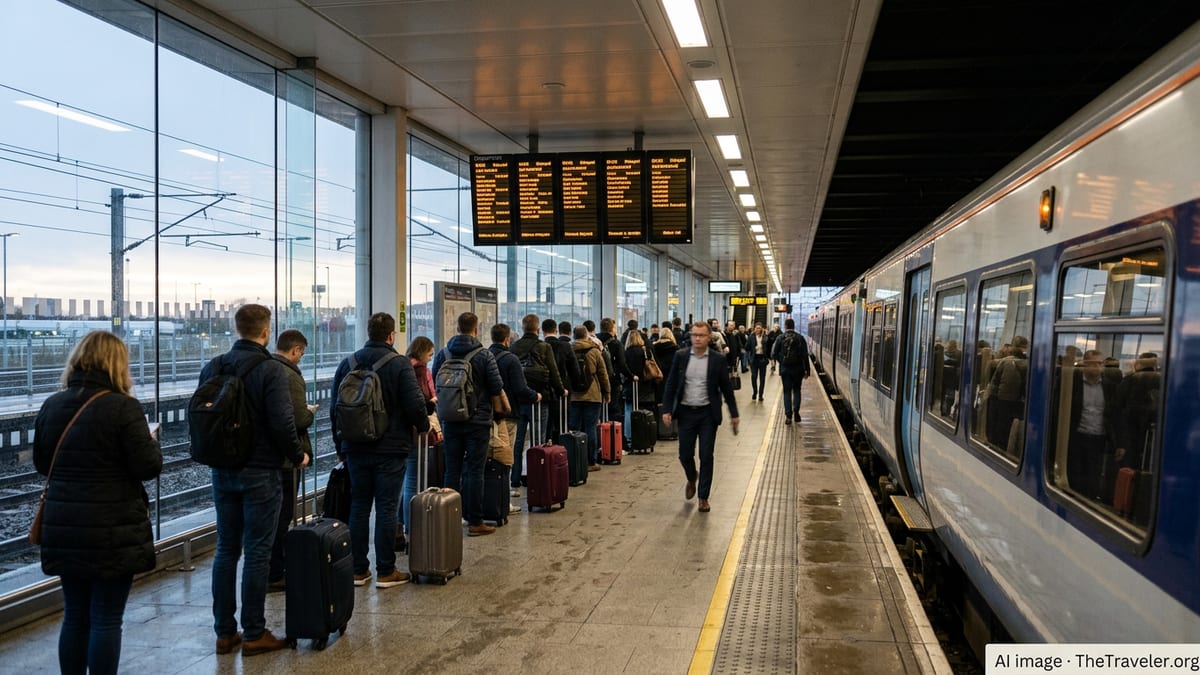
For travelers, the statistics on 2,439 delays and 187 cancellations translate into very personal consequences. Families headed to Mediterranean resorts have reported missing the first day or more of their holidays, while business travelers have faced lost meetings, rebooked hotels and added costs. Social media posts and forum discussions from passengers traveling through Barcelona in recent weeks describe crowded terminals, long queues at airline desks and rapidly changing departure boards.
Disruption has been particularly acute for those relying on tight connections via European hubs. A delayed departure from Barcelona can easily cause a missed onward flight to destinations such as New York, São Paulo or Doha. In such cases, passengers frequently face overnight stays or rerouting via alternative hubs, as long haul services tend to operate at or near capacity in peak months.
Travelers on low cost carriers have reported mixed experiences in terms of support and communication. Some airlines have accelerated the use of mobile notifications and self-service rebooking tools, allowing passengers to change flights or request refunds digitally. Others have struggled to keep pace with rapidly evolving operational conditions, leaving passengers reliant on information screens and staff at crowded gates.
Industry observers note that while Europe has strong passenger protection rules that can entitle travelers to care and, in some circumstances, compensation, the complexity of determining eligibility can make the process slow and frustrating. Passengers affected by the latest wave of disruptions are being encouraged by consumer groups and travel advisers to keep detailed records of delays, cancellations and additional expenses as they navigate claims procedures.
Structural Strains: Air Traffic, Staffing and Infrastructure Limits
The scale of the latest disruption has revived questions about the structural limits of Europe’s aviation system. Air traffic management across the continent operates close to capacity on busy days, and relatively small shifts in weather patterns, wind direction or storm activity can trigger flow restrictions that lead to queues of aircraft waiting for take-off or diversion around congested airspace. Published analyses of previous disruption episodes show that the cost of delays in Europe runs to hundreds of euros per minute when aircraft, fuel, crews and passenger impacts are taken into account.
Barcelona illustrates some of these pressures. As a coastal airport sandwiched between the city and the sea, it faces physical constraints on runway expansion and terminal growth. Summer peaks bring intense bursts of departures and arrivals in tight time windows, stretching everything from ground handling to security and border control. Even when average delay per flight appears modest, large volumes of traffic can turn that into substantial aggregate disruption.
Staffing has also emerged as a recurring challenge. Airlines, ground handlers and air navigation providers across Europe have all faced recruitment and training backlogs in recent years. During peak travel periods, any unexpected absences or surges in demand can lead to shortages in key operational roles, compounding the impact of weather or technical issues. The result is a system in which resilience remains limited, particularly at large leisure-focused hubs like Barcelona.
Industry bodies and regulators have been discussing long term solutions, including investments in digital air traffic management systems, modernization of airport infrastructure and revised slot coordination rules. However, most of these measures will take years to deliver tangible improvements, leaving operators and passengers exposed to further episodes of large-scale disruption in the near term.
What Travelers Can Do as Disruption Persists
With Europe’s aviation network operating near its limits and Barcelona once again highlighting the scale of potential disruption, travel specialists are encouraging passengers to adopt more conservative planning strategies. Booking earlier departures in the day, allowing longer connection times, and avoiding extremely tight same-day turnarounds between separate tickets can all reduce the risk of missed flights when delays mount.
Passengers are also being advised to monitor flight status closely in the 24 hours before departure, using airline apps and independent flight tracking services where available. When significant delays or cancellations are signaled early, travelers sometimes have more options to switch to alternative services or adjust itineraries before arriving at already crowded airports.
Flexible tickets and comprehensive travel insurance have gained renewed attention as a buffer against such disruption. Although these options often carry higher upfront costs, they can provide valuable support when large-scale delays or cancellations occur, particularly for long haul or multi-leg journeys starting or ending in hubs like Barcelona.
While the current episode of 2,439 delays and 187 cancellations has drawn attention to the immediate strain on Europe’s air travel system, analysts suggest it may also serve as another warning about the need for deeper structural reforms. Until those changes materialize, passengers flying through Barcelona and other busy European hubs are likely to face recurring periods of disruption and will need to plan their journeys with greater resilience in mind.