


Relocating to Thailand involves frequent interaction with local government offices that administer civil registration, local services, and certain business and property procedures. Understanding how these offices are structured, what they do, and how they operate in practice is essential for evaluating the practicalities of a medium or long term stay. This briefing examines the local government landscape in Thailand and provides an operational view of how foreign residents and their families are likely to deal with it.
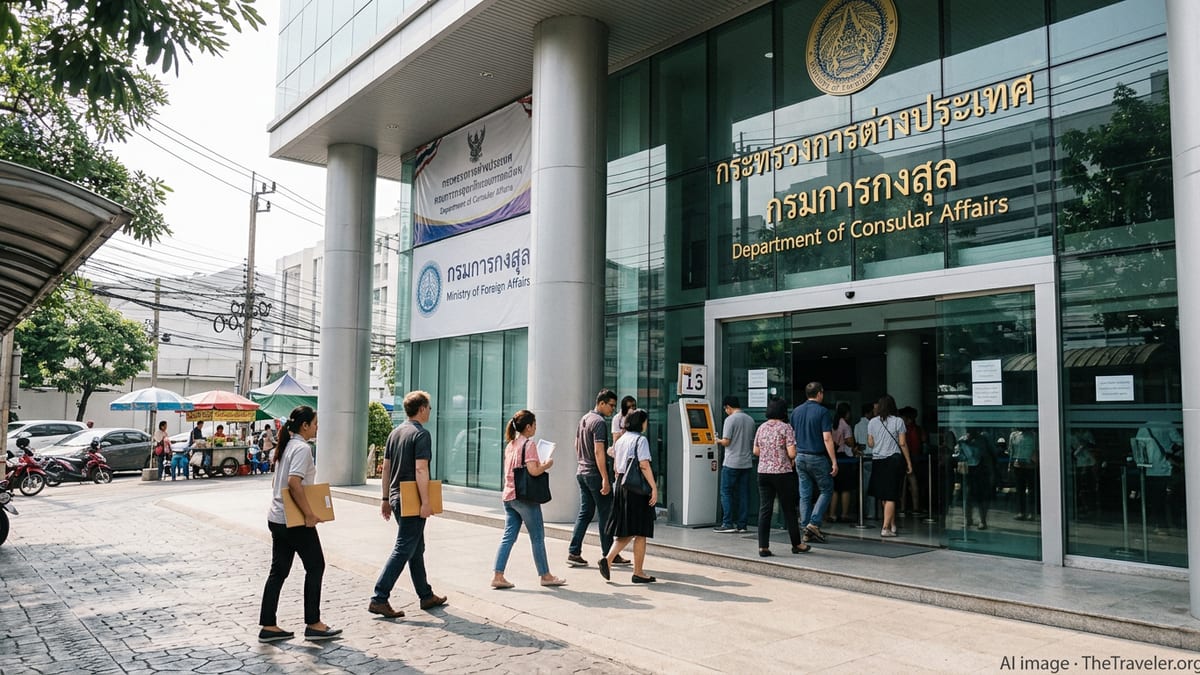
Overview of Thailand’s Local Government Structure
Thailand’s administration is divided into central, regional, and local levels. For a relocating individual or family, the most relevant interface is with local government units that deliver day to day services. These include provincial administrative organizations at the provincial level, municipalities in urban areas, and subdistrict administrative organizations in rural zones. All sit under the oversight of the Ministry of Interior, which appoints the 76 provincial governors outside Bangkok.
Bangkok operates as a special local government with its own metropolitan administration and separate district offices. In the rest of the country, provincial governors, district offices, and municipalities work together to implement centrally defined policies and procedures, including civil registration, local infrastructure, and public order. Foreign residents therefore encounter a system that is relatively uniform in legal basis but can vary in practice between provinces and even between neighboring districts.
Local government bodies are funded through a mix of central transfers and locally collected revenues. This funding model means that smaller or rural offices may have more limited staffing and technology than major urban municipalities. For relocation planning, this translates into potential differences in processing times, language support, and reliance on paper-based procedures, depending on where in Thailand one chooses to live.
In parallel with conventional local offices, Thailand has established centralized multi-agency complexes in Bangkok, such as the Chaeng Watthana Government Complex and investment and expat service centers. These are designed to consolidate services for both Thai citizens and foreign nationals, although they primarily target high volume services like immigration, licensing, and business registration rather than everyday local matters.
Key Local Offices Foreign Residents Commonly Encounter
Foreign residents are most likely to deal with four categories of local office: district offices for civil registration, municipal or subdistrict offices for local services, land offices for property matters, and transportation offices for driver licensing and vehicle registration. Each of these has a defined national mandate but interprets procedures locally, which explains the variation in required documents and processing experiences reported by expatriates.
District offices handle core civil registration functions, including house registration, birth and marriage registration, and certain identity records. They administer the house registration book system that underpins address verification in Thailand. For foreigners, this often takes the form of a yellow house book recording non-Thai residents at a given address, while Thai citizens are usually listed in a blue house book.
Municipal (tessaban) and subdistrict administrative organization offices are responsible for local infrastructure and community level services such as waste collection, some building permissions, and local welfare programs. While foreigners typically interact less frequently with these offices for personal matters, they may become important when dealing with construction permits, small business activities, or neighborhood level issues.
Land offices, operating at the provincial or district level, manage land title deeds, property transfers, and certain registrations related to condominium and house ownership structures. Foreigners who purchase condominiums or hold structures on leased land will usually deal with these offices during acquisition and any subsequent changes. Department of Land Transport regional offices, separate from land offices, manage driver’s licenses and vehicle registrations, which many long term foreign residents need for daily life.
Core Procedures: House Registration, Identity, and Local Records
Thailand’s house registration system is central to many interactions with local government. A house registration book, issued by the district office responsible for the property, records the legal address and residents affiliated with that address. Thai nationals are listed in a blue book, which supports voting rights and many identity based procedures. Foreign residents can, in many districts, be registered in a yellow house book that confirms their place of residence and can be used for a range of administrative tasks.
Practical experience indicates that obtaining a yellow house book can range from a relatively quick procedure, sometimes completed in a single visit, to a multi visit process stretching over several weeks. Variability is driven by the specific district office, the familiarity of staff with foreign registrations, and the level of documentation requested. Typical supporting documents may include a passport, visa, proof of property ownership or lease, Thai ID and house book of the property owner, and translated and legalized civil documents in more cautious districts.
Because the house book is a primary proof of domicile in Thailand, it is frequently requested or accepted as evidence when registering vehicles, applying for a driver’s license, or opening certain bank accounts. When a foreigner cannot be added to a house book or the district office is unfamiliar with the yellow book procedure, local immigration offices can in some cases issue residence confirmation letters that serve a similar function for specific transactions. However, these letters are usually more limited in scope and validity period than a house registration record.
Local government offices also maintain records of births, marriages, and deaths through the Department of Provincial Administration system. For binational families, this means that registering a marriage or a child’s birth in Thailand is handled at the district office. Recent updates to the central registry, including the expansion of digital identification and electronic records, are intended to modernize interactions, but implementation and digital access for foreigners remain uneven across provinces.
Language, Documentation, and Process Culture
Most local government offices operate primarily in Thai, and English language capacity depends heavily on location. Central Bangkok offices and some large provincial cities are more likely to have staff who can manage routine procedures in English, while rural district or subdistrict offices may have very limited foreign language ability. Professional interpreters are rarely present on site, so accompanying Thai speaking family members, colleagues, or hired facilitators is common practice in more complex cases.
The procedural culture is formal and document driven. Original documents and multiple photocopies are usually required, and officials may request more supporting material than is strictly set out in national guidelines. For example, some district offices ask foreign applicants for family records to be translated into Thai and legalized by both home country authorities and the Thai Ministry of Foreign Affairs, even when other offices accept less formal documentation. Relocation planning should therefore assume that additional translation, certification, and multiple visits may be necessary for non routine matters.
Queue management and service hours are another practical factor. Typical office hours are roughly aligned with standard Thai government hours on weekdays, often from morning until mid afternoon, with a midday closure or reduced staffing during lunch. Busy urban offices can experience high demand, resulting in long waits or daily quotas for certain services. In contrast, smaller offices may be less crowded but close earlier or offer particular services only on specific days of the week.
Foreign residents report that officials generally follow established rules but have limited discretion to deviate from written procedures. This can be positive in terms of predictability once one understands the rules, but it can also produce rigid outcomes when documentation does not exactly match expectations. Investing time in advance inquiries, using official hotlines in Thai where possible, or sending a Thai contact to clarify requirements before appearing in person can reduce the risk of wasted visits.
Centralized Complexes and One Stop Service Arrangements
In Bangkok and some major cities, Thailand has concentrated many government services into large complexes and specialized centers. The Government Complex on Chaeng Watthana Road houses multiple ministries, courts, and the primary immigration division responsible for many foreign resident interactions. These complexes typically offer more structured queuing systems, clearer signage, and, in some units, limited English language support compared with smaller local offices.
Thailand has also expanded multi agency “one stop” centers that bring together investment promotion, immigration, and labor departments. Recent initiatives consolidated investment advisory and expat services into an investment and expat services center in central Bangkok, designed to provide integrated support for targeted investors and high skilled foreign workers. For those who qualify under specific visa or investment schemes, these centers can substantially reduce the need to navigate multiple separate local offices for visa and work permit related matters.
However, one stop centers do not fully replace local government offices. Civil registration, house registration, local construction permits, and many everyday administrative issues remain under the authority of district, municipal, and subdistrict offices. Even when a multi agency center processes immigration or labor formalities, foreign residents still need to maintain local address records and comply with provincial or municipal rules through the usual channels.
Centralized centers can experience significant processing peaks during rule changes or office relocations. Announced moves of one stop immigration and work permit facilities from older locations to new office towers have been accompanied by warnings about temporary delays. Relocating families that rely on these services should monitor timing and plan applications outside expected disruption periods where feasible.
Digitalization, Modernization, and Regional Variations
Thai authorities have promoted digital government initiatives, including electronic civil registration, digital identification, and online appointment systems for some high volume services. For example, the Department of Provincial Administration has rolled out digital ID functionality that allows Thai citizens to access certain services electronically, while other agencies provide online booking for driver’s license appointments or queue reservations at immigration offices. These measures are gradually changing how citizens interact with government, especially in urban areas.
For foreigners, access to digital channels is more limited and inconsistent. Many online systems are designed for Thai ID numbers and do not fully accommodate foreign passport holders or foreigner identification numbers. As a result, even where digital tools exist, foreign residents often still need to appear in person with physical documents at local offices. Over time, broader integration may reduce this gap, but at present relocation planning should assume a largely in person, paper based interaction model for local procedures.
Significant regional variation persists in how quickly new policies and technologies are implemented. Bangkok and some major provincial cities usually pilot reforms first, with smaller or more remote provinces following later. This can mean that a process described as available online in national announcements is, in practice, still handled manually in many district and subdistrict offices. Foreigners living outside major centers should therefore verify local practice rather than assuming that centrally announced digital options are already operational locally.
Modernization also affects physical office environments. Newer complexes tend to have clearer information counters, more systematic queuing, and better signage compared with older, smaller buildings that may still rely on informal desk by desk interactions. While this does not change legal requirements, it influences how accessible local government feels to non Thai speakers and can materially affect the time and stress associated with completing standard procedures.
Risk Factors and Practical Mitigation Strategies
From a relocation risk perspective, the main challenges in dealing with local government offices in Thailand include documentation uncertainty, language barriers, variable processing times, and occasional policy shifts that are implemented quickly but communicated unevenly. None of these usually prevent a relocation, but they add friction and can disrupt timelines for activities such as obtaining a driver’s license, registering a property, or formalizing family status in Thai records.
Several practical mitigations can reduce these risks. First, building extra time into schedules is essential. Where a procedure might theoretically be completed in one day, planning for multiple visits is prudent. Second, arranging translation and legalization of key civil documents well in advance of arrival can prevent delays caused by local demands for fully certified paperwork. Third, leveraging Thai speaking support through employers, relocation providers, or trusted local contacts can significantly smooth interactions at offices that do not regularly handle foreign applicants.
It is also advisable to clarify, for any critical procedure, which specific office has jurisdiction and what its exact requirements are. For example, house registration is handled at the district office where the property is located, and that particular office’s interpretation of rules will prevail. Sending a Thai contact to ask for a written or clearly listed set of required documents can reduce the likelihood of last minute surprises.
Finally, foreign residents should be prepared for modest but recurring administrative burdens, such as periodic appearance requirements or renewals at transport or district offices. While these visits may only be necessary once every few years, they contribute to the ongoing time cost of integrating into a system whose processes are optimized for Thai citizens rather than foreign nationals.
The Takeaway
For potential relocations to Thailand, the functioning of local government offices is a practical consideration that directly influences daily life and administrative certainty. The system is structured, rules based, and relatively predictable once understood, but it is not yet fully adapted to high volumes of foreign residents outside specialized centers and investment schemes. Procedures remain document heavy, language support is uneven, and processing approaches vary across provinces and districts.
Foreign nationals planning a move should anticipate multiple interactions with district, municipal, land, and transportation offices, particularly during the first one to two years of residence. With adequate preparation, language support, and time buffers, these interactions are generally manageable, but they add complexity relative to jurisdictions with more integrated digital services and standardized multilingual support.
From a decision making standpoint, dealing with local government in Thailand should be viewed as a moderate administrative friction rather than a prohibitive obstacle. The impact will be greatest for families needing complex civil registration, property related procedures, or frequent licensing activities in areas with limited English capacity. Prospective relocators who factor in these realities and plan for systematic, document oriented processes are better positioned to navigate Thailand’s local government interfaces efficiently.
FAQ
Q1. Which local government office will I deal with most often as a foreign resident in Thailand?
Most foreign residents interact most frequently with district offices for civil and house registration, and with transportation offices for driver’s licenses and vehicle registrations, alongside occasional dealings with municipal or subdistrict offices for local services.
Q2. Can I complete most local government procedures online in Thailand?
Some agencies offer online appointments and limited digital services, especially in major cities, but most local procedures for foreigners still require in person visits with original documents.
Q3. How important is the house registration book for foreigners?
The house registration book is a key proof of address in Thailand and is often requested for procedures such as vehicle registration, driver’s license applications, and some banking or utility transactions.
Q4. Will staff at local government offices speak English?
English is more commonly spoken at large urban offices and centralized complexes, but many district and subdistrict offices operate almost entirely in Thai, so language support through a Thai speaker is often helpful.
Q5. Are local government procedures consistent across all provinces?
The legal framework is national, but implementation details vary; different offices may request different supporting documents or apply internal interpretations that affect processing times and requirements.
Q6. How long should I expect to spend at a local government office for a typical procedure?
Routine matters can sometimes be completed within a few hours, but it is prudent to plan for half a day per visit and to expect that more complex procedures may require several visits.
Q7. Do I need a facilitator or lawyer to deal with local government offices?
Many procedures can be completed independently, but using a Thai speaking facilitator, relocation consultant, or employer support can significantly reduce language issues and repeat visits, especially for non routine matters.
Q8. Are one stop service centers a replacement for local offices?
One stop centers can streamline certain immigration and work related procedures, particularly for specific visa categories, but they do not replace district, municipal, or land offices for civil registration and local administrative matters.
Q9. How are appointments and queues managed at Thai local government offices?
Some large offices use electronic queuing and appointment systems, while many smaller offices rely on walk in queues; arriving early in the day usually improves wait times.
Q10. What is the main relocation risk related to dealing with Thai local government?
The primary risk is administrative delay due to documentation disputes, language barriers, and varying interpretations of rules, which can disrupt timelines if not anticipated and buffered in relocation planning.