


Coney Island has been New York City’s seaside playground for more than a century, but first-time visitors are often confused the moment they step off the subway. Are they at Coney Island or Luna Park? Is the Wonder Wheel part of Luna Park? And why do different rides seem to require different tickets or cards? Understanding where Luna Park ends and the wider Coney Island amusement area begins can make the difference between a smooth, budget-friendly day at the beach and a frustrating one spent in the wrong ticket line.
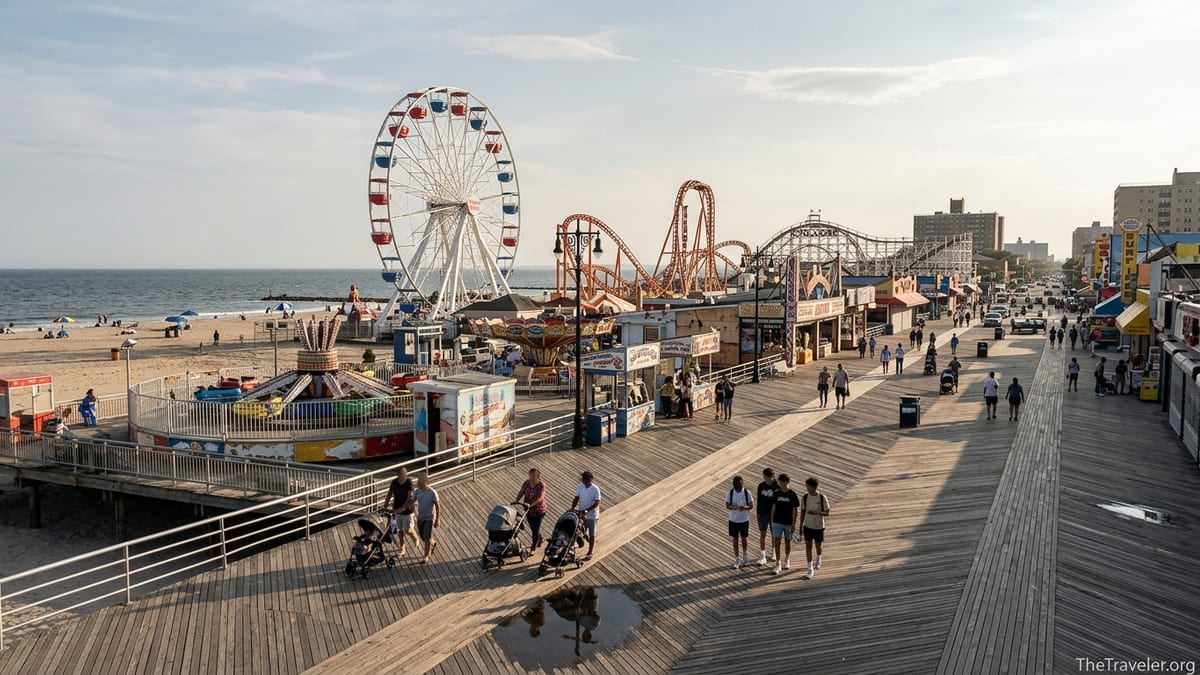
Coney Island vs. Luna Park: The Big Picture
The simplest way to think about it is this: Coney Island is the whole neighborhood and historic amusement district in southern Brooklyn, while Luna Park is one specific modern amusement park operating inside that district. When New Yorkers say "let’s go to Coney Island," they usually mean the entire experience: the beach, the boardwalk, the arcades, the street performers, the historic rides, the minor league ballpark, and the tangle of rides and games that light up Surf Avenue after dark.
Within that larger area, Luna Park is a branded complex of rides and attractions managed by the Zamperla company on land redeveloped by the city in the 2000s. It sits mostly along Surf Avenue and between Surf Avenue and the boardwalk, close to the Coney Island–Stillwell Avenue subway terminal. Luna Park is home to many of the newer steel coasters and thrill rides, as well as one of the most famous wooden roller coasters in the world, the Coney Island Cyclone.
Just a few steps away, however, you are no longer in Luna Park at all but still very much in Coney Island. Deno’s Wonder Wheel Amusement Park occupies the section of the boardwalk around West 12th Street, clustered around its namesake 150-foot Ferris wheel. Independent operators run additional rides and attractions like the Thunderbolt roller coaster, the B&B Carousell and various go-karts, sling-shot rides and arcades. All of these together form the modern Coney Island amusement district, and Luna Park is just one piece of that puzzle.
For a traveler planning a day out, this distinction matters in practice because tickets, wristbands and payment systems that work inside Luna Park will not automatically work on rides run by Deno’s Wonder Wheel Amusement Park or other operators, even though everything looks like one sprawling seaside fairground.
A Short History of Fun: From Classic Coney to the Modern Parks
Coney Island’s amusement history stretches back to the late 1800s, when it was famous for three grand amusement parks: Steeplechase Park, Dreamland and the original Luna Park, which operated from 1903 to 1944. Those early parks transformed a stretch of seaside marshland into a dense fantasy city of towers, lights, animal acts and early thrill rides that drew millions of visitors a year from across the United States.
The original Luna Park was a self-contained world of elaborate architecture and electric illumination. Its onion domes and minarets were covered in thousands of light bulbs at a time when electric lighting itself was still a novelty. Visitors paid separate admission for attractions inside, ranging from pioneering scenic railways to exotic animal shows. A series of fires and postwar changes in leisure travel eventually led to its closure, and by the mid-20th century Coney Island entered a long period of decline, with smaller operators replacing the once-grand parks.
The site that is today’s Luna Park was for decades home to Astroland, a space-themed park that opened in 1962. Astroland operated until 2008, when the city rezoned the area and pursued a large-scale redevelopment of the amusement district. In 2010, the Italian ride manufacturer Zamperla opened the current Luna Park on the former Astroland site, deliberately reviving the historic Luna Park name as part of a broader effort to restore Coney Island’s image as a major seaside destination.
Meanwhile, Deno’s Wonder Wheel Amusement Park represents continuity with Coney Island’s mid-century era. The Wonder Wheel itself opened in 1920 and was designated a New York City landmark in 1989, recognizing its cultural importance. The Vourderis family, who bought the Wheel in the early 1980s, gradually expanded the surrounding kiddie rides into today’s small but dense park along the boardwalk, making it the district’s last major family-owned amusement park. When you ride the Wonder Wheel or walk through Spook-A-Rama, you’re experiencing a slice of old Coney Island that predates the current Luna Park by generations.
Layout on the Ground: Where Each Park Actually Is
On a map, Coney Island’s core amusement zone sits between Surf Avenue and the Riegelmann Boardwalk, roughly from West 5th Street to West 16th Street. The Stillwell Avenue subway terminal anchors the western end. When you come out of that station, you’re looking straight at rides, but those rides belong to different operators depending on which direction you turn and how far you walk.
Luna Park’s main clusters are along Surf Avenue between about West 10th and West 15th Streets and in a large interior section stretching toward the boardwalk. The Coney Island Cyclone stands slightly east of this main block near Surf Avenue and West 10th Street, in its own fenced area but operated by Luna Park. On maps and park signage, Luna Park often appears broken into named zones, but those zones share the same branding, ticket system and website.
Directly on the boardwalk at West 12th Street you find Deno’s Wonder Wheel Amusement Park. The towering white Wonder Wheel is almost impossible to miss and acts as a visual dividing line between sections of Luna Park on either side. Behind and around the Wheel are compact alleys of kiddie rides, family rides and a few thrill attractions like the Phoenix suspended family coaster and the classic Spook-A-Rama dark ride. The entrances feel more intimate than Luna Park’s wide Surf Avenue frontages, and you pay for rides individually or with park credit bought from Deno’s, not Luna Park.
Other major attractions sit just outside both parks but are part of the larger Coney Island experience. The Thunderbolt roller coaster, a modern steel coaster built near the site of an older ride of the same name, occupies a separate plot near the boardwalk and West 15th Street. The B&B Carousell spins under a pavilion near the boardwalk and the baseball stadium. Add in the New York Aquarium a short walk down the boardwalk, and it becomes clear that "Coney Island" is not a single, gated theme park but a patchwork of independently operated amusements, with Luna Park as the largest and most visible section.
Tickets, Wristbands and How Payment Really Works
One of the most practical differences between Luna Park and the rest of Coney Island is how you pay for rides. Luna Park operates on a credit system rather than cash at the ride gates. You buy a Luna Card or an unlimited ride wristband at official kiosks or ticket booths, load it with ride credits or purchase a timed pass, and then tap in at each ride. Cash is typically not accepted directly at individual Luna Park rides, though you can use cards or cash at the park’s food and game stands.
In practice, this means that if you are planning to spend several hours riding within Luna Park’s boundaries, one of the park’s unlimited ride wristbands for a four-hour window can offer good value, especially on weekdays or shoulder-season dates when prices are lower. These wristbands generally cover a selection of rides but may exclude certain premium attractions, so visiting travelers should always check the fine print at the ticket booth before buying. Families with teens often find that a midday to late-afternoon wristband session allows them to marathon the Cyclone, ride the spinning coasters and squeeze in multiple laps on family attractions without constantly recalculating per-ride costs.
Step over to Deno’s Wonder Wheel Amusement Park or other independent rides, however, and Luna Park credits won’t help you. Deno’s uses its own ticket system or pay-per-ride pricing, and some attractions still accept cash or standard payment cards directly at booths. For example, you might buy a package of ride credits specifically for the Wonder Wheel and the Phoenix coaster at a window near the wheel’s base, then walk a few meters away and pay a separate fee in cash for a go-kart track operated by a different company. A common first-timer mistake is loading a Luna Card with more credits than they can realistically use, thinking it will cover everything they see along the boardwalk.
For budget-conscious travelers, a good strategy is to decide in advance where you expect to ride the most. If your priority is hitting the Cyclone, Thunderbolt and several Luna Park flat rides, focus your spending on the Luna Park wristband or card. If your group includes younger children who will spend most of their time on kiddie rides around the Wonder Wheel, you may be better off skipping the Luna Park wristband entirely and buying rides a la carte at Deno’s and nearby attractions. Many New York–based families combine a few headline coasters in Luna Park with a single spin on the Wonder Wheel and then shift their spending to boardwalk food and the beach.
Signature Rides: Who Owns What, and Where to Find Them
Another source of confusion is the location and ownership of Coney Island’s most iconic rides. The Coney Island Cyclone, a 1927 wooden coaster recognized worldwide and protected as a New York City landmark, is operated by Luna Park even though it sits in a somewhat separate enclosure near West 10th Street. If you are carrying a Luna Park wristband or ride card that includes the Cyclone, you’ll present it at the Cyclone’s dedicated ticket booth. The ride’s historic status doesn’t change the fact that it is part of Luna Park’s modern portfolio.
The Wonder Wheel, on the other hand, belongs entirely to Deno’s Wonder Wheel Amusement Park and is outside Luna Park’s system. The 150-foot eccentric wheel features both stationary cars and unique swinging cars that slide along a track as the wheel turns, offering a very different sensation than a conventional Ferris wheel. The wheel’s landmark status and its prominent position on the boardwalk make it one of the most photographed structures in Coney Island, but you can only ride it with tickets or credits purchased from Deno’s. Luna Park passes do not cover it.
Modern thrill rides add another layer. Luna Park operates several steel coasters and high-intensity attractions scattered through its footprint. Thunderbolt, a vertical-lift steel coaster with a dramatic orange track, is run under the Luna Park brand even though it sits slightly apart from the main clusters of rides, close to the boardwalk at West 15th Street. Other Luna Park rides include spinning coasters, pendulum rides and drop towers that cater to teens and young adults seeking more intense experiences than the classic wooden Cyclone.
Deno’s specializes more in family and kiddie experiences but has invested in notable additions like the Phoenix, a suspended family coaster that opened in the early 2020s, designed to swoop around the Wonder Wheel and provide smooth thrills accessible to a broad range of ages. Between these two parks and the standalone attractions, a visitor who understands which ride belongs to which operator can build an efficient plan: for example, riding Cyclone and Thunderbolt on a Luna Park wristband in the early afternoon, then migrating to the Wonder Wheel, Phoenix, and Spook-A-Rama in the early evening as the boardwalk lights come on.
Atmosphere, Crowd Patterns and When to Go
Even though Luna Park and the rest of Coney Island share the same physical environment, the atmosphere can feel subtly different depending on where you are and when you visit. Luna Park’s Surf Avenue frontage, with its large gates, branded signs and promotional banners, has more of a modern regional theme park feel. Music is loud, ride signage is contemporary and there are clear lines for queueing and security checks at the busiest rides. On summer weekends, this area can feel intensely crowded, with queues for headline rides like Cyclone and Thunderbolt stretching onto the midway.
A few steps toward the boardwalk, the character shifts. Around Deno’s Wonder Wheel, narrow alleys of kiddie rides, game stalls and snack stands evoke a more old-school seaside fairground atmosphere. Neon signs sit next to hand-painted ones, and the pace is slightly slower, especially in the earlier part of the day when families with small children dominate. In the evening, when the Wonder Wheel lights up and music drifts from bars along the boardwalk, the area feels nostalgic rather than high-tech.
In terms of timing, late spring through early fall forms the core operating season for most rides, with peak crowds on sunny Saturdays and Sundays between about late June and Labor Day. Midweek afternoons in May or early June, and September weekdays after New York City schools are back in session, are often more comfortable times for visitors who want shorter lines and a bit more breathing room. During these shoulder periods, Luna Park may offer promotional pricing or weekday passes that make its wristbands especially appealing, while Deno’s will still operate a solid slate of rides for families.
Weather plays a big role in the experience. On very hot days, the area around Luna Park’s Surf Avenue side can feel exposed, with limited shade while you queue. However, you are only a short walk from the beach, where you can cool off in the ocean or sit under an umbrella before returning to the rides. The boardwalk near Deno’s tends to catch more of the sea breeze, so some travelers prefer to base themselves there in mid-afternoon and dip into Luna Park for targeted coaster runs either before noon or after dinner.
Food, Drinks and the Classic Coney Island Experience
In everyday speech, people talking about "eating at Luna Park" often mean grabbing food anywhere in the amusement district, but the reality on the ground is that your options range far beyond what’s technically inside the park’s boundaries. Luna Park operates its own branded concessions, where you can find typical amusement park fare like burgers, fries, pizza slices and soft drinks. These are conveniently positioned near major rides and ticket booths, making them an easy option if you plan to stay within Luna Park for several hours with a wristband.
Step out toward the boardwalk, and your choices widen considerably. Classic Coney Island institutions serve hot dogs, clam strips, corn on the cob and frozen lemonade just a short walk from both Luna Park and Deno’s Wonder Wheel. Independent snack stands line the boardwalk, selling funnel cakes, cotton candy and ice cream. Prices for quick bites are typically on the higher side compared with elsewhere in Brooklyn, reflecting the tourist demand, but many visitors budget for at least one nostalgic food stop: for example, a hot dog from a century-old stand before heading back to ride the Cyclone.
Families often find that mixing and matching works best. You might spend the early afternoon in Luna Park, taking advantage of the included rides on a wristband, then exit for a sit-down meal or boardwalk snack, and return afterward to stroll through Deno’s and the game arcades. Because there is no single admission gate to Coney Island itself, you are free to wander between the different operators as hunger, weather and energy levels dictate. The key practical tip is to keep track of any time-limited wristbands for Luna Park so that meal breaks do not unexpectedly eat into your ride window.
Beyond food, the broader Coney Island experience includes walking along the sand, browsing souvenir shops, watching street performers and, during the right season, catching events like minor league baseball games or fireworks nights that light up the sky above the rides. Luna Park’s modern rides provide the adrenaline, but the sense of place that makes a Coney Island visit memorable comes from this mix of beach, boardwalk and layers of history that surround the park.
Planning Your Visit: Choosing What Fits Your Travel Style
For many travelers, the most useful distinction between "Coney Island" and "Luna Park" is in how they plan and budget the day. If you are a ride enthusiast or traveling with teenagers who want to pack in as many coasters and thrill rides as possible, plan around Luna Park’s operating hours and ticket offers. Check in advance which rides are included in unlimited wristbands and which may require additional credits. Arrive close to opening time on a weekday if you can, hit the Cyclone early before lines lengthen, then work your way through the park’s other major attractions.
If your focus is more on a relaxed seaside day with a few classic rides, treat Luna Park and Deno’s as complementary rather than competitive. You might skip the wristband entirely, buy a single ride on the Cyclone for the sake of history, and then head to the boardwalk for the Wonder Wheel and a handful of kiddie rides if you’re traveling with younger children. This style of visit often pairs well with spending several hours at the beach or popping into the nearby aquarium, with only an hour or two devoted to mechanical thrills.
Travelers with limited time in New York City should also consider logistics. The Coney Island–Stillwell Avenue station is the main transit hub, served by multiple subway lines from Manhattan. From the station, both Luna Park and the broader Coney Island attractions are within an easy five- to ten-minute walk. Because there is no single admission to Coney Island as a whole, you can decide on the spot whether to commit to a Luna Park wristband based on the weather, the crowds and the energy levels in your group. Many visitors simply walk through the district first, see which rides look appealing, and then go back to the appropriate ticket booth to buy the most efficient option.
Whichever approach you choose, understanding that Luna Park is a component of Coney Island rather than a synonym for the entire area helps manage expectations. You will encounter multiple ticketing systems, distinct ride lineups and slightly different atmospheres, all within a few city blocks. With a bit of advance planning, you can use these differences to your advantage, tailoring a visit that feels authentically Coney Island while matching your comfort level with crowds, motion sickness thresholds and budget.
The Takeaway
When you strip away the branding and nostalgia, the practical difference between Coney Island and Luna Park comes down to scope, ownership and logistics. Coney Island is the larger neighborhood and historic amusement district along the Brooklyn shoreline, blending beach, boardwalk, minor league baseball, aquarium exhibits and a tangle of independent rides and attractions. Luna Park is the largest single amusement operator within that district, with its own modern ticketing system, concentration of thrill rides and stewardship of icons like the Coney Island Cyclone.
For visitors, recognizing that Luna Park wristbands, credits and rules apply only within its own gates, while rides at Deno’s Wonder Wheel Amusement Park and other operators require separate payments, can prevent costly misunderstandings. It also opens up the chance to craft a more nuanced day out, whether that means dedicating four focused hours to Luna Park’s coasters or building a slower itinerary that blends a single Cyclone ride with a sunset spin on the Wonder Wheel and a long walk on the sand.
Both Luna Park and the wider Coney Island amusement area are evolving, with city-backed redevelopment projects, new rides and ongoing debates about how to balance history with modern tourism. Yet the essential appeal remains remarkably consistent: a lively, sometimes chaotic but deeply atmospheric slice of seaside entertainment within the New York City limits. Understanding how Luna Park fits into that larger picture will help you navigate it like a local rather than a bewildered first-timer.
Ultimately, you do not have to choose between "Coney Island" and "Luna Park" as if they were competing destinations. A well-planned visit will naturally include both: the concentrated thrills of Luna Park’s coasters and drop rides, and the broader texture of Coney Island’s boardwalk, Wonder Wheel, arcades and ocean views that have lured generations of New Yorkers and travelers to the edge of the Atlantic.
FAQ
Q1. Is Luna Park the same thing as Coney Island?
Coney Island is the entire neighborhood and historic amusement district, while Luna Park is one specific modern amusement park operating inside that area.
Q2. Is the Wonder Wheel part of Luna Park?
No. The Wonder Wheel belongs to Deno’s Wonder Wheel Amusement Park, a separate, family-owned park on the Coney Island boardwalk.
Q3. Do Luna Park wristbands work on all rides at Coney Island?
No. Luna Park wristbands and ride credits are only valid on rides operated by Luna Park. Attractions at Deno’s and other operators require separate payment.
Q4. Who operates the Coney Island Cyclone?
The Coney Island Cyclone is operated by Luna Park, even though it sits slightly apart from some of the park’s other rides near Surf Avenue and West 10th Street.
Q5. Can I walk freely between Luna Park and the rest of Coney Island?
Yes. There is no single admission gate to the overall area. You can walk between Luna Park, Deno’s Wonder Wheel and the boardwalk without passing through turnstiles.
Q6. Do I need advance tickets to visit Luna Park?
You do not need advance tickets to enter the area, but it can be useful to check Luna Park’s official channels for current wristband offers, hours and any special events before you go.
Q7. Which park is better for young children, Luna Park or Deno’s?
Both have family attractions, but Deno’s Wonder Wheel Amusement Park has a dense cluster of kiddie rides and a more compact layout that many families with small children find convenient.
Q8. Are there free things to do at Coney Island if I skip most rides?
Yes. You can walk the boardwalk, relax on the beach, photograph the rides, browse shops and enjoy the general atmosphere without paying for admission to a specific park.
Q9. Is Coney Island safe to visit in the evening?
Crowds, families and tourists are common on warm evenings, especially in summer. As in any busy urban area, standard city awareness and basic precautions are recommended.
Q10. How much time should I plan for Luna Park compared with the rest of Coney Island?
Ride-focused visitors often spend three to four hours in Luna Park, then another few hours on the boardwalk, at Deno’s or on the beach, making a full day overall.