


More news on this day
Emergency crews converged on a Laurens County rail corridor after a freight train derailed, disrupting rail traffic and prompting a coordinated response focused on safety, containment and assessment of the surrounding area.
Get the latest news straight to your inbox!
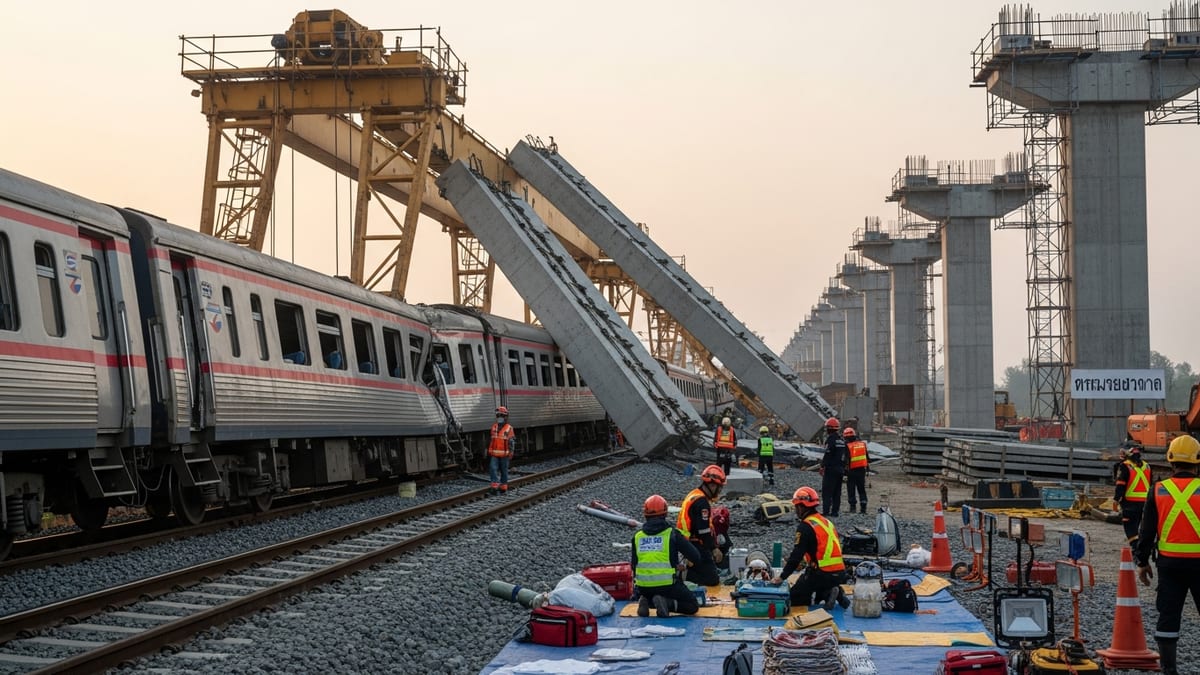
Derailment disrupts freight route through rural corridor
Initial reports indicate that the derailment occurred along a freight line passing through Laurens County, a largely rural stretch of track that carries regular rail traffic across this part of the region. The incident involved multiple railcars leaving the tracks, forcing an immediate halt to train movements while responders assessed the scene.
Publicly available information suggests that the affected train was part of a routine freight service, traveling through a corridor that links industrial and distribution hubs with destinations across the Southeast. The derailment left cars scattered along and beside the rail bed, with debris and displaced track infrastructure adding to the operational challenges.
Rail traffic through Laurens County provides an important connection for agricultural products, manufactured goods and consumer freight. Any disruption along this route can quickly ripple outward, affecting freight schedules in neighboring counties and potentially leading to delays along connecting lines while rail operators work around the damaged section.
While the precise cause of the derailment has not yet been detailed in public reports, investigators typically examine a range of factors in similar incidents, including track conditions, equipment performance, train handling and recent weather patterns.
Multi-agency response focuses on safety and scene stabilization
Reports from the scene describe a coordinated response involving local fire and emergency crews supported by regional and state-level resources. Responders moved quickly to secure the area around the damaged train, establishing perimeters and staging zones so that teams could work safely around the derailed railcars and compromised track.
Standard practice in derailments of this type includes initial life-safety checks, identification of any hazardous materials, and an assessment of structural stability for overturned or leaning cars. Crews typically use air monitoring devices, thermal imaging, and visual inspections to determine whether spills, leaks or fire risks are present, particularly where tank cars or mixed freight are involved.
Road closures and restricted access are common around rail incidents, and reports from Laurens County indicate that traffic was diverted away from the immediate derailment site to keep bystanders clear and to give heavy equipment room to maneuver. Utility providers and rail maintenance teams often join these operations to evaluate any damage to power lines, signal systems and communications cables that may run along the right of way.
Once the immediate hazards are addressed, incident commanders generally shift focus to recovery operations, working with rail company contractors to plan the removal of damaged cars and debris from the alignment.
Environmental checks and hazardous materials precautions
Whenever a freight train derails, questions quickly arise about potential environmental impacts. According to published coverage of recent rail incidents across the United States, modern derailment protocols emphasize early identification of any hazardous cargo and swift deployment of specialized teams if a risk is detected.
In Laurens County, crews examined the contents of the affected cars and the surrounding ground for signs of leaks, spills or releases. Rail manifests and placards on railcars typically guide responders as they determine whether hazardous substances are present and what level of protective equipment is required. Even when no obvious release is visible, responders often conduct precautionary soil and water checks, especially near drainage ditches, creeks or low-lying areas.
Environmental impact from a derailment can range from minor disturbance of ballast and soil to more serious consequences if fuels, industrial chemicals or other regulated materials escape containment. Publicly available guidance from transportation and environmental agencies notes that cleanup plans usually include removing contaminated soil, isolating storm drains and coordinating with state environmental offices for any required testing and long-term monitoring.
In many freight derailments, the absence of hazardous materials or significant leaks allows the focus to remain on mechanical cleanup and infrastructure repair. However, responders in Laurens County are proceeding under the conservative assumption that conditions could change as railcars are moved, maintaining on-site monitoring throughout the operation.
Rail traffic interruptions and logistics impacts
The derailment has prompted temporary suspensions and rerouting of rail traffic through Laurens County while crews work to clear and repair the line. Freight railroads generally implement contingency plans in cases like this, shifting trains to parallel routes or adjusting schedules to move priority shipments first.
Businesses that rely on rail service in the region may experience delays as equipment and crews are reassigned to manage the disruption. Shipping schedules for bulk commodities, intermodal containers and manufactured goods can be affected for days or weeks, depending on the extent of track damage and the complexity of the recovery operation.
Rail infrastructure repairs typically begin once the derailed cars are removed. Track inspectors look for damage to rails, ties, ballast, bridges and signal systems, while engineering teams design a repair plan suited to the site. In some cases, damaged segments can be replaced quickly; in others, more extensive reconstruction is required, especially if the underlying track bed has been disturbed.
Travelers in the broader area may notice increased truck traffic on nearby highways as shippers temporarily divert loads from rail to road. Public information from logistics analysts notes that even short interruptions on a single line can prompt broader adjustments to supply chains, particularly in rural corridors that offer limited alternative routes.
Derailment highlights ongoing debate over rail safety
The incident in Laurens County comes amid continuing national discussion about rail safety, maintenance standards and hazard preparedness. Recent derailments in other parts of the country have kept attention focused on inspection practices, train length and weight, and the condition of aging rail infrastructure.
Research on derailment risk notes that freight trains, while more fuel-efficient than highway trucks, can pose significant consequences when incidents occur. Analysts frequently point to the importance of proactive maintenance, regular track inspections and the use of modern detection technology, such as wayside sensors and rail integrity monitoring systems, to reduce the likelihood of failures along busy routes.
Local communities situated along freight corridors often call for clear communication and transparent reporting when accidents take place. In Laurens County, residents are monitoring developments through local news outlets and official public updates, watching for information about cleanup progress, rail line reopening and any recommended precautions.
As investigations move forward, publicly released findings are expected to focus on the chain of events that led to the derailment and any corrective measures that could reduce the risk of similar incidents in the future. For communities across the region, the Laurens County derailment serves as another reminder of the close connection between rail infrastructure, everyday commerce and public safety.