


More news on this day
Neighborhoods in unincorporated Coweta County, Georgia, faced hours of disruption on Sunday, June 28, after a CSX freight train derailment blocked a key railroad crossing, halting local traffic but resulting in no reported injuries or hazardous material leaks.
Get the latest news straight to your inbox!
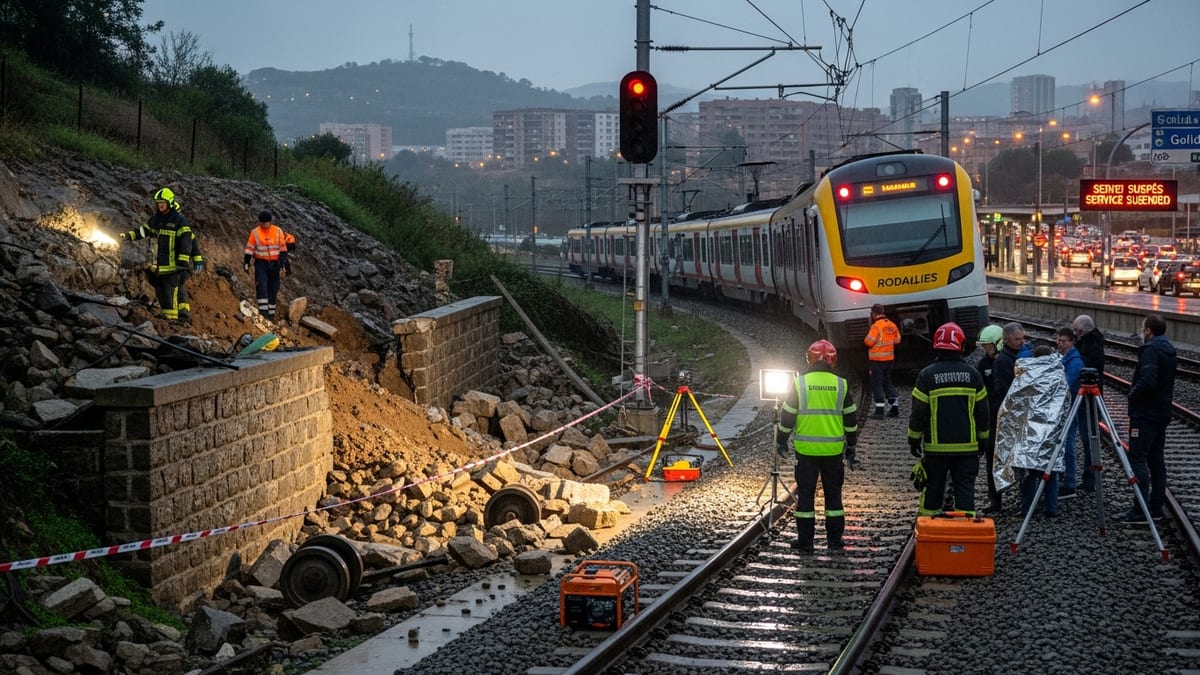
Early-morning derailment near Herring Road crossing
Publicly available information indicates the derailment occurred shortly after 7:30 a.m. on June 28 near the Herring Road crossing close to Palomino Drive, in an unincorporated area outside Newnan in Coweta County. A CSX intermodal train was traveling through the area when the wheelset of one railcar left the track.
Reports describe the incident as involving a single intermodal railcar that remained upright and in line with the rest of the train, reducing the risk of a more serious crash or cascading derailment. Even so, the position of the train across the roadway left drivers on both sides of the tracks unable to pass.
Initial details from publicly posted updates and regional coverage indicate there were no fires, secondary collisions, or structural damage to nearby property. The event remained confined to the rail corridor, but its location at a busy local crossing quickly translated into widespread inconvenience for nearby neighborhoods.
Rail activity through Coweta County is a routine part of daily life, with CSX and other freight operators moving trains between metro Atlanta and points across the Southeast. Residents who regularly use Herring Road and surrounding streets found their usual morning routes unexpectedly cut off as crews responded to the derailment.
Neighborhoods cut off as crossings stay blocked
The blocked crossing effectively stranded sections of residential neighborhoods on either side of the tracks for much of the morning. Motorists approaching Herring Road at Palomino Drive encountered barricades and emergency signage directing them to turn around and find alternative routes.
Coweta County’s 911 and emergency management officials used social media and public alerts to describe the situation initially as a railroad maintenance closure and urged drivers to avoid the area. For many residents, that meant detouring several miles to reach main corridors that were not affected by the standing train.
Residents reported delays getting to church services, work shifts, and routine Sunday errands, as local roads around Herring Road became congested with detour traffic. With no clear reopening time early on, some drivers chose to wait near the tracks in the hope that the train would be cleared quickly, only to face longer-than-expected delays.
The disruption also affected delivery services, ride-share drivers, and visitors unfamiliar with the area who rely on navigation apps that do not always immediately reflect sudden closures caused by rail incidents. For those living closest to the crossing, the stranded train brought extended noise and visual intrusion, as locomotives idled and maintenance vehicles arrived at the site.
No injuries or hazardous leaks reported
Regional news coverage and company statements reviewed by TheTraveler.org indicate that no injuries were reported among train crew or the public. The derailed railcar reportedly remained upright and intact, significantly reducing the risk of spillage or secondary damage.
Information available on Sunday afternoon showed no hazardous material leaks or spills associated with the derailment. The affected railcar was described as part of an intermodal consist, which typically carries containerized freight rather than bulk chemical loads. This helped ease immediate concerns among nearby residents about potential air or water contamination.
Published coverage also noted that there was no indication of fire or need for large-scale evacuations in the surrounding neighborhoods. Emergency responders focused primarily on securing the crossing, directing traffic, and coordinating with railroad crews working to re-rail or remove the affected car.
While the lack of injuries and environmental impact distinguishes this incident from more severe derailments seen elsewhere in the United States, it has still added to local attention on how freight rail operations intersect with rapidly growing suburban areas south of Atlanta.
Restoring service and reopening local roads
CSX crews were dispatched to the Herring Road site to assess the damaged wheelset, inspect track conditions, and begin the process of safely clearing the line. According to publicly available updates, teams worked through the morning and into the afternoon, aiming to restore freight movements while minimizing additional disruption to Coweta County traffic.
Re-railing or removing a single intermodal car can require specialized equipment and careful choreography, particularly when the car remains coupled to a long train. Crews must stabilize the car, inspect the rail and ties beneath it, and verify that the surrounding track meets safety standards before trains can again move at normal speeds.
Local information shared throughout Sunday indicated that Herring Road would remain closed until the work was complete, with reopening contingent on both clearing the train from the roadway and ensuring the crossing infrastructure was unharmed. Nearby residents reported gradual reductions in congestion as drivers adapted to alternate routes and as word of the closure spread.
By late day, rail service in the area was expected to resume under routine operating conditions, subject to any temporary speed restrictions that might be imposed while longer-term inspections continue. The incident underscored how quickly a single mechanical problem on a freight train can ripple out into hours of lost time for communities built around at-grade crossings.
Renewed focus on rail safety and community impact
Although the Coweta County derailment did not result in injuries or hazardous releases, it arrives at a moment of heightened public scrutiny of freight rail operations across Georgia and the wider United States. Recent collisions, derailments, and high-profile mechanical failures in other regions have prompted renewed attention to track conditions, inspection practices, and the safety of trains passing through residential areas.
Planning documents and transportation studies prepared for Coweta County note the importance of freight rail to the local economy, while also acknowledging growing pressure on road networks where trains intersect with car and truck traffic. Sunday’s blockage on Herring Road offers a clear, tangible example of the way a relatively small rail incident can complicate everyday mobility for hundreds of drivers.
In the coming days, federal and company investigators are expected to continue reviewing data from the train, track records, and inspection logs to determine what caused the wheelset to leave the rail. Publicly available summaries of such investigations often highlight factors such as track defects, equipment wear, and train handling as possible contributors in incidents of this type.
For residents of the affected neighborhoods, the derailment will likely feed into ongoing conversations about emergency access, redundancy in local road networks, and communication when rail incidents occur. While Sunday’s event ended without physical harm, its hours-long disruption serves as a reminder that even minor derailments can significantly alter the rhythm of community life, especially in fast-growing counties tied closely to regional rail corridors.