


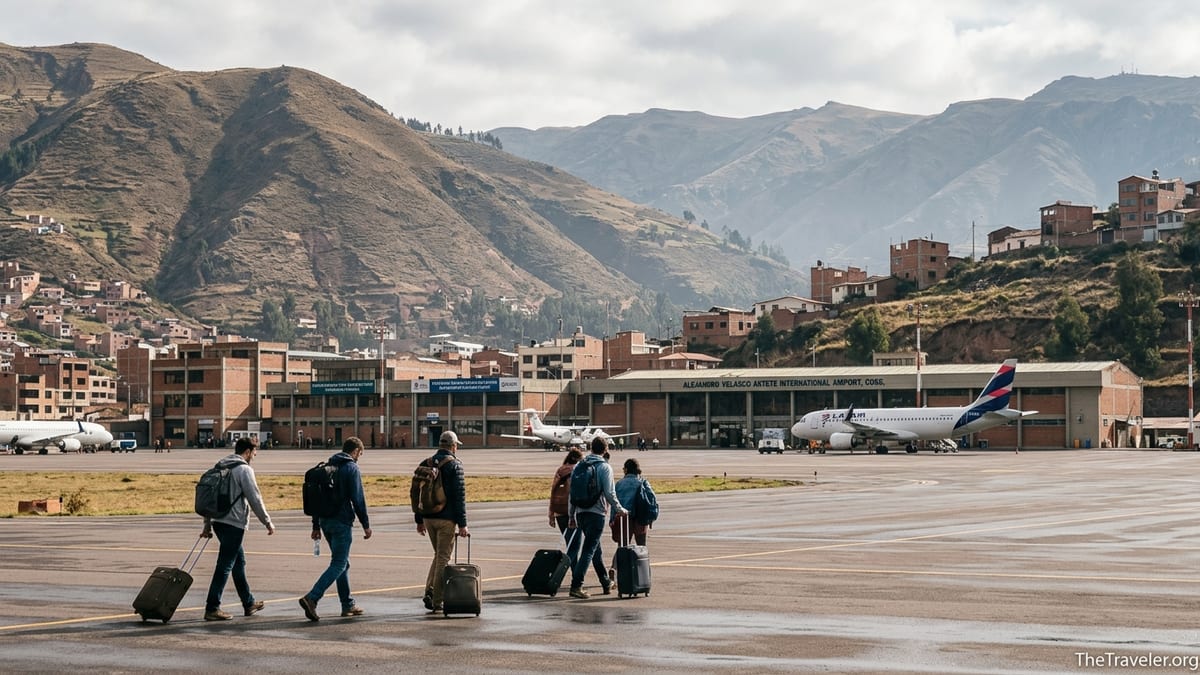
Landing at Alejandro Velasco Astete International Airport in Cusco is dramatic in every sense. The plane skims past brown Andean hills, the runway appears at the last second, and before you even collect your bag you are suddenly at roughly 3,300 meters above sea level. For many travelers coming directly from Lima, Miami, Los Angeles, or other low-altitude cities, that jump can trigger altitude sickness, known locally as soroche. This guide is designed as a practical, on-the-ground manual for those first crucial 24 hours, from the moment you step off the plane to the decision of whether to head straight to the Sacred Valley.
Get the latest updates straight to your inbox!
Understanding Cusco’s Airport Altitude and What It Means for Your Body
Alejandro Velasco Astete International Airport sits at an elevation of about 3,310 meters, or around 10,860 feet, on the edge of Cusco. That is higher than many of the world’s big mountain towns and significantly higher than Machu Picchu itself, which is closer to 2,430 meters. You feel this difference the moment you walk across the tarmac: the air is cooler and noticeably thinner, especially if you carry a heavy backpack up the terminal stairs.
The city of Cusco rises just above the airport to roughly 3,399 to 3,400 meters. In practice, this means that driving 15 minutes from the airport to a central hotel around Plaza de Armas takes you slightly higher again before you have had any time to adjust. By contrast, much of the Sacred Valley, including Urubamba at about 2,870 meters and Ollantaytambo around 2,790 meters, lies several hundred meters lower. Travelers who go straight to the valley often report they can walk around more comfortably there on their first evening than in Cusco’s steep cobbled streets.
At these elevations, the percentage of oxygen in the air is the same as at sea level, but the air pressure is lower, so with each breath your lungs take in fewer oxygen molecules. Your body will gradually compensate over hours and days by increasing breathing rate and heart rate and eventually producing more red blood cells. In the meantime, you may notice that climbing even a few flights of stairs at your hotel in San Blas or hauling luggage onto a minibus at the airport leaves you unusually winded.
No matter how fit you are, you cannot “train away” the basic physiological impact of arriving by plane at 3,300 meters in under an hour from sea level. Marathon runners from New York and retirees from Sydney are roughly equally likely to feel some effect. The key difference lies in how carefully you manage the first 24 to 48 hours after landing.
Soroche Symptoms: What New Arrivals Commonly Experience
Soroche is the local term for acute mountain sickness. For many visitors, it begins subtly a few hours after landing at Cusco airport. The most common early symptoms include a dull headache that feels a bit like a hangover, mild nausea, insomnia on the first night, and a general sense of fatigue or weakness. You might find yourself short of breath while walking up the slope from Avenida El Sol to your hotel near the cathedral or needing frequent breaks while climbing to a viewpoint in San Cristobal.
More moderate cases can bring stronger, throbbing headaches, loss of appetite, and more pronounced nausea. Some travelers describe feeling “flu-ish” without having an actual cold. These symptoms often appear in visitors who arrive on a mid-morning flight, check in at a central Cusco hotel above 3,400 meters, and then immediately go on a walking tour of Sacsayhuamán or hike up to Cristo Blanco the same afternoon.
Severe altitude sickness is less common but must be taken seriously. Warning signs include persistent vomiting, confusion, difficulty walking in a straight line, or breathlessness even while sitting still. If someone who has just arrived from Alejandro Velasco Astete airport experiences these symptoms, they should seek medical attention immediately. Many Cusco hotels maintain relationships with local clinics, and some larger properties, especially in the historic center, can call a doctor to the room within an hour.
It is also important to distinguish altitude sickness from simple travel exhaustion or dehydration. A traveler arriving on an overnight flight from Mexico City may feel tired and headachy because they slept poorly, skipped breakfast, and drank little water. In practice, both situations are often mixed, so treating dehydration and resting in the first hours after arrival helps regardless of the cause.
First-Day Mistakes to Avoid After Landing at Cusco Airport
One of the most common mistakes is over-scheduling your arrival day. Travel agencies and tour platforms sometimes propose ambitious plans that start right from Alejandro Velasco Astete airport: a Sacred Valley tour with stops at Pisac ruins, a weaving cooperative, lunch in Urubamba, and Ollantaytambo fortress, all on the same day you land. While this can work for some people, it leaves no room for your body to react to the altitude. Many travelers reach the last stop of the day exhausted, with pounding headaches that overshadow the scenery.
Another frequent error is combining alcohol, heavy food, and altitude within hours of landing. Cusco’s historic center is filled with appealing pisco sour happy hours, wood-fired pizza places near Plaza Regocijo, and traditional spots serving rich dishes like alpaca steak and chicharrón. Visitors who celebrate their arrival with cocktails and a large, salty dinner often find themselves awake at 3 a.m. with headache and nausea. Your body is already working harder just to get enough oxygen; adding alcohol and heavy digestion can tip mild soroche into something more serious.
Ignoring stairs and hills is a smaller but very real mistake. Many boutique hotels in Cusco, especially in the San Blas neighborhood, are accessed by steep streets or long interior staircases. Travelers sometimes choose a charming guesthouse “with great city views” without realizing it sits several dozen steps above the nearest taxi drop-off. Arriving from the airport with luggage and climbing this staircase while your body is still adjusting often provokes chest tightness and dizziness.
Finally, some visitors rely too heavily on last-minute altitude remedies at the airport itself. Small kiosks near arrivals at Alejandro Velasco Astete often sell oxygen sprays, coca candies, and local pills marketed for soroche. These can play a supporting role, but they are not magic solutions. If you have a history of lung or heart issues, or if a doctor has previously recommended a medication such as acetazolamide (Diamox), you should sort that out before your trip rather than depending on impulse purchases once you land.
Hydration, Food, and Coca Tea: What Actually Helps
Good hydration is one of the simplest and most effective tools you have. The air at 3,300 meters is dry, and the flight from Lima or beyond will have dehydrated you further. After landing, aim to drink water consistently in small amounts rather than one huge bottle at once. Many hotels in Cusco and the Sacred Valley provide complimentary filtered water dispensers in lobbies or jugs in rooms. Buying a large bottle of still water at the airport convenience store or at a supermarket on Avenida de la Cultura on the way into town and keeping it with you is a practical move.
Food choices on day one should be lighter than you might usually select. In the hours after arriving, options like chicken soup, grilled trout, quinoa soup, or simple rice dishes sit better than heavy fried plates. In Urubamba and Ollantaytambo, casual restaurants near the main plazas often offer “menu del día” lunches with soup, a small main course, and herbal tea for a reasonable price, which is a good compromise between nourishment and not overloading your system.
Coca tea is one of the most visible local remedies. Almost every hotel in Cusco and the Sacred Valley lays out a thermos of hot water with coca leaves in the lobby, especially in the afternoons and evenings. Many visitors report that sipping a cup or two helps with mild headache and fatigue. Coca leaves can also be chewed slowly during gentle walks or long drives between sites. However, coca tea is not a substitute for medical treatment, and it is not advisable to drink large quantities late in the evening because it can act as a mild stimulant and interfere with sleep.
Other herbal infusions, like muña tea (from Andean mint), are widely available in cafes and at breakfast buffets. Muña can ease digestion and mild nausea and is gentler than coffee when you are still acclimating. If you typically drink several strong coffees each morning, consider cutting down on arrival day and replacing at least one cup with herbal tea and water to avoid compounding dehydration.
Hotel Oxygen, Clinics, and When to Seek Help
Many mid-range and higher-end hotels in Cusco advertise “oxygen-enriched rooms” or in-house oxygen services. In practice, this can range from having small oxygen tanks available at reception to certain rooms that receive a modest flow of enriched air. Properties around the historic center and San Blas that cater for international visitors often keep portable oxygen cylinders behind the front desk and can bring them to your room if you are feeling unwell.
A short session with supplemental oxygen, typically 10 to 20 minutes via nasal cannula or mask, can provide quick relief from a headache or breathlessness. For example, guests at well-known hotels near Plaza de Armas often recount using oxygen after returning from a half-day tour and then being able to enjoy a light dinner. However, the effects are temporary. It is still important to rest, hydrate, and avoid strenuous activity for the rest of the day.
Cusco has several private clinics that are familiar with treating altitude-related problems among travelers. Some operate 24-hour services and can send a doctor to hotels. Costs vary widely, but a basic consultation and oxygen therapy will usually be significantly cheaper than an emergency room visit in North America or Europe, although still a notable extra expense. Travel insurance that covers medical treatment at altitude is worth considering before your trip.
You should seek professional help urgently if symptoms escalate rather than improve: severe or worsening headache, confusion, difficulty forming sentences, trouble walking straight, or breathlessness at rest are red flags. In some cases, doctors may recommend descending to a lower altitude, which might mean transferring from a hotel in Cusco down to Urubamba or Ollantaytambo in the Sacred Valley, or even continuing down to Ollantaytambo and then to Machu Picchu Pueblo (Aguas Calientes), which lies much lower than Cusco.
Going Straight to the Sacred Valley: Pros, Cons, and Real Itineraries
One of the big decisions facing new arrivals at Alejandro Velasco Astete airport is whether to sleep the first nights in Cusco itself or go directly to the Sacred Valley. The rationale for heading to the valley is simple: towns like Urubamba and Ollantaytambo sit a few hundred meters lower than Cusco, which reduces the strain on your body. Travelers who book a private transfer from the airport straight to a Sacred Valley hotel often report they sleep more comfortably that first night and wake up with milder symptoms, if any.
In practice, the transfer works like this. After collecting luggage at Alejandro Velasco Astete, you meet a pre-arranged driver in the small arrivals hall or outside by the taxi rank. From there, the drive to Urubamba typically takes around 90 minutes, winding up over a pass and then descending into the valley. Many visitors schedule a relaxed lunch stop at a countryside restaurant along the Urubamba River or in the town of Pisac before checking into a hotel with spacious gardens, for example near the town entrance to Urubamba or walking distance from Ollantaytambo station.
The main disadvantage of going directly to the Sacred Valley is logistics. You will be farther from Cusco’s restaurants, museums, and historic sites in those first days, and some travelers feel they are “wasting time in the valley” when they want to be exploring the city. Public transport options are limited, so you are more reliant on hotel shuttles or taxis to move between villages. Also, if you are arriving late in the afternoon or evening, the drive to the valley can feel long after a day of flights, and some people prefer the simplicity of a 15-minute taxi ride to a central Cusco hotel.
For many itineraries, a compromise works well. One common pattern is to fly into Cusco, go straight to Urubamba or Ollantaytambo for two or three nights, visiting nearby sites such as Maras and Moray or Pisac at an easy pace, then take the train from Ollantaytambo to Aguas Calientes for Machu Picchu, and finally finish with a couple of nights in Cusco on the way back. This “start lower, end higher” pattern allows your body to acclimatize gradually while still giving you time to enjoy Cusco’s steep streets and viewpoints once you are better adjusted.
Practical Arrival Tips Inside Alejandro Velasco Astete Airport
Upon landing, take your time walking from the plane to the terminal. Some flights still use stairs directly onto the tarmac, and there may be a short walk across to the building. Move slowly, especially if you are carrying a heavy bag. Inside the small baggage claim area, there are basic services: ATMs from Peruvian banks, mobile carrier counters offering local SIM cards, and small kiosks selling drinks, snacks, and altitude-related products such as coca candies and oxygen sprays.
It is wise to buy or refill a water bottle before you leave the airport. If you are meeting a guide or driver, they may also offer bottled water, but it is helpful to start hydrating immediately. Avoid grabbing a sugary soft drink as your first beverage; instead, opt for plain water or perhaps a light herbal tea once you reach your hotel. The airport environment is busy and can feel crowded during morning peaks, which can be slightly overwhelming when combined with the thin air.
Official airport taxis and pre-arranged transfers wait directly outside the arrivals hall. For travelers going into Cusco, the ride to areas such as Plaza de Armas or San Blas typically takes around 20 to 30 minutes, depending on traffic. Those heading to the Sacred Valley will usually meet a pre-booked driver holding a printed sign, as ride-hailing services may be inconsistent. When possible, ask your accommodation to arrange the transfer in advance and make sure the vehicle is large enough so you are not cramped during the higher sections of the road.
As you leave the airport and pass through the outskirts of Cusco, pay attention to how you feel in the car. Lightheadedness, tingling in the fingers, or a mild headache are common and not necessarily a reason to worry. However, if you feel increasingly breathless or very unwell, tell your driver or guide immediately. Stopping briefly or adjusting your plans to go down into the valley rather than up into the city may be the smarter choice if your symptoms appear quickly and strongly.
The Takeaway
Arriving at Alejandro Velasco Astete International Airport places you instantly in the high Andes. Understanding that you are stepping out of the plane at about 3,300 meters, higher than many ski resorts, is the first step toward a safe and enjoyable visit. Soroche is not a sign of weakness; it is a normal reaction to rapid ascent. Managing your first 24 hours with rest, hydration, light food, and modest activity gives your body the chance to catch up.
Whether you choose to spend your first nights in Cusco or go straight to the Sacred Valley, prioritize flexibility in your itinerary. Allow time in Urubamba or Ollantaytambo if you know you are sensitive to altitude, and do not feel pressured to fit every ruin and viewpoint into the first day. Make use of simple tools such as coca tea, hotel oxygen, and professional medical help if you need it, and remember that descending to a lower town or to Aguas Calientes is often the most effective remedy if symptoms become more than mild.
Handled with respect and a bit of planning, Cusco’s thin air need not be the defining memory of your trip. Instead, it can be a brief, manageable hurdle on the way to sunrise over Machu Picchu, market mornings in Pisac, and evenings wandering Cusco’s lit-up plazas once your body has settled into its new altitude.
FAQ
Q1. How high is Alejandro Velasco Astete International Airport?
The airport sits at roughly 3,310 meters, or about 10,860 feet, above sea level on the edge of Cusco, making it one of the higher commercial airports in the world.
Q2. Will I definitely get altitude sickness when I land in Cusco?
No. Many travelers feel only mild symptoms or none at all, but it is impossible to predict in advance. Planning a gentle first day and staying well hydrated reduces the risk of more severe soroche.
Q3. Is it better to sleep in Cusco or the Sacred Valley on my first night?
If you are worried about altitude, the Sacred Valley is usually more comfortable. Towns like Urubamba and Ollantaytambo are a few hundred meters lower than Cusco, which many visitors find makes a noticeable difference.
Q4. How long should I stay in the Sacred Valley before moving up to Cusco?
Spending two or three nights in the Sacred Valley before staying in Cusco works well for many travelers, especially those who have had problems at altitude before or who are planning demanding hikes later.
Q5. Does coca tea really help with altitude sickness?
Coca tea can ease mild symptoms like headache and fatigue for some people, and it is widely offered in hotels. It is a supportive measure, not a cure, and should not replace medical advice or treatment.
Q6. Should I avoid alcohol completely when I arrive in Cusco?
It is wise to avoid or minimize alcohol on your first day at altitude. Enjoying a pisco sour can wait until you are better acclimatized, as alcohol can worsen dehydration and interfere with sleep.
Q7. Are oxygen-enriched hotel rooms worth the extra cost?
For most healthy travelers, simple measures such as rest and hydration are enough. Oxygen services can be helpful if you feel unwell or are particularly sensitive, but they are usually not essential.
Q8. Can children handle Cusco’s altitude?
Many families visit Cusco with children without problems. Kids can experience the same symptoms as adults, so keep their first day relaxed, encourage water and light meals, and seek medical help promptly if they seem unusually lethargic or distressed.
Q9. Do I need a prescription medication like acetazolamide?
Some travelers at higher risk of problems, or those planning rapid ascents and strenuous treks, discuss acetazolamide with their doctor before traveling. It should be taken under medical guidance rather than self-prescribed on arrival.
Q10. What should I do if I feel very sick on the first night?
If symptoms are severe or worsening, contact your hotel reception, use oxygen if available, and seek medical care. In many cases, doctors will recommend rest, treatment, and, if necessary, moving to a lower altitude such as the Sacred Valley or Aguas Calientes.