


More news on this day
Air travelers across the Northeast faced widespread disruptions after a communications failure tied to a cut fiber-optic line triggered ground stops and lengthy delays at Philadelphia International Airport and multiple New York-area airports, with impacts rippling to other hubs as airlines worked to reset schedules.
Get the latest news straight to your inbox!
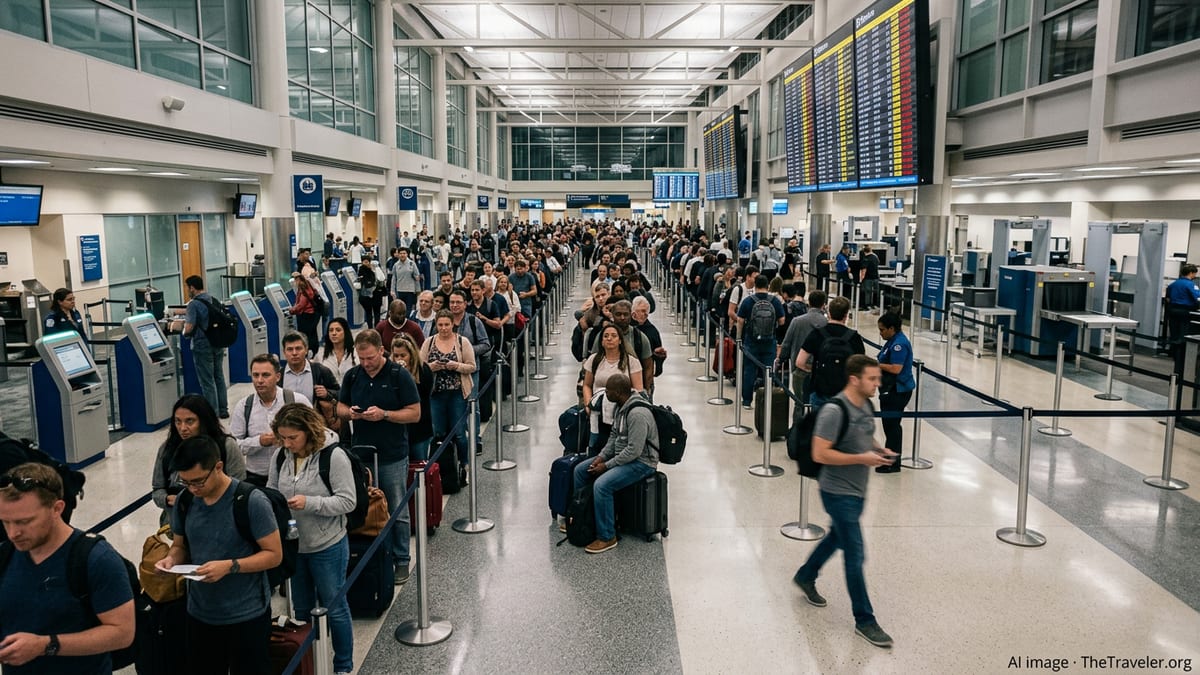
What happened and why it mattered for Philly and New York airspace
Published coverage indicates the disruption began Monday, September 21, 2026, when a primary telecommunications circuit failed and the system attempted to switch to a backup. Reports indicate the backup fiber path was also unavailable because a fiber-optic cable had been severed during construction work in New Jersey.
The outage affected communications supporting operations managed through the Philadelphia Terminal Radar Approach Control facility, often referred to as Philadelphia TRACON. That facility plays an outsized role in the region because it handles approach and departure traffic not only for Philadelphia International Airport but also for busy New Jersey airspace that includes Newark Liberty International Airport, with knock-on effects for New York City-area traffic flows.
In published coverage, the incident has been attributed to a construction mishap involving rail corridor work that cut into a Verizon fiber line. The result was a sudden loss of key air-traffic communications links, forcing the Federal Aviation Administration to slow or pause arrivals to maintain safe separation while systems were stabilized.
Ground stops, halted arrivals, and the scale of the disruption
Ground stops and ground delays were issued for a cluster of major airports, including Philadelphia (PHL), Newark (EWR), Teterboro (TEB), and later New York’s LaGuardia (LGA) and John F. Kennedy (JFK). As restrictions expanded, travelers saw gate holds, delayed departures, and aircraft waiting to leave their origin airports because inbound arrival slots were constrained.
Data cited in coverage from flight-tracking services showed Newark’s operation was especially constrained for much of the day. Reports based on Flightradar24 tracking indicated commercial arrivals at Newark were effectively halted for several hours, contributing to airline crew and aircraft dislocations that can take a full day or more to unwind even after the underlying technical issue is repaired.
Philadelphia also experienced significant disruption. Published reporting based on FlightAware figures described hundreds of delays and roughly 200 cancellations at PHL by late afternoon Monday, reflecting both the immediate ground stop and the cascading effect of aircraft and crews being out of position for later departures.
How travelers felt the ripple effects beyond PHL and NYC airports
While the headline impacts centered on PHL and the New York-area airports, delays spread across the Northeast as incoming flights were held at their origin, diverted, or canceled. Coverage described disruption reaching other airports, including Boston Logan and Washington-area operations, as airlines and air-traffic managers adjusted to reduced capacity in one of the country’s most tightly interconnected airspaces.
For passengers, the disruption often appeared as rolling delays that changed multiple times, followed by cancellations later in the day once it became clear aircraft rotations could not be completed. That pattern is common after a ground stop, because inbound flights that do not arrive on time can strand the aircraft needed for subsequent departures.
Reports also noted that the timing coincided with heavy demand in the New York region during the United Nations General Assembly period, increasing the sensitivity of the system to any capacity shock. When arrivals at major hubs are throttled, even carriers that are not headquartered at those airports can feel the impact through missed connections and aircraft sequencing changes.
Status updates and what to watch next if you are flying today
Published coverage indicated that repairs to the telecommunications lines were completed Monday evening and that operations were in the process of resuming, though it can take time to clear backlogs once air-traffic flow programs have been in place for hours. Even after a ground stop is lifted, airlines must reposition aircraft and crews, accommodate duty-time limits, and rebook passengers, which can keep delays elevated into the following day.
Travelers with Tuesday, September 22, 2026 itineraries through PHL, EWR, JFK, LGA, or nearby reliever airports were advised in multiple reports to check airline flight status frequently and to monitor FAA operational advisories, since ground delays can be imposed or extended with little notice when arrival rates are still being managed.
For passengers already at the airport, the most useful practical step is to confirm whether the flight is waiting on an aircraft arrival, a crew, or an air-traffic slot. Each category can imply a different likelihood of departure and can affect rebooking choices, especially if an alternative routing avoids the most constrained hub in the itinerary.
A familiar vulnerability: aging links and limited redundancy
The incident also renewed attention on how dependent the Northeast system is on resilient communications between air-traffic facilities. The Philadelphia TRACON’s role in managing Newark-area traffic has grown in recent years due to staffing and congestion challenges, which means an outage there can quickly cascade into New York-area schedules.
Publicly available FAA materials in recent years have described efforts to modernize fiber networks and improve operational resilience for the Newark corridor, including upgrades intended to create more robust communications paths. Monday’s disruption, however, illustrated how a single construction-related cut can still create widespread consequences if redundancy is compromised at the wrong time.
For travelers, the takeaway is that once a major hub in the Northeast experiences a prolonged ground stop, the aftereffects can persist even after service resumes. Airlines typically focus on restoring aircraft rotations and protecting downstream schedules, so rebooking options may improve as the day progresses and as aircraft get back into position.