


For many travelers, the single most important day on an Alaska cruise is “glacier day.” Yet itineraries describe very different destinations: Dawes Glacier in Endicott Arm, the twin Sawyer Glaciers at the end of Tracy Arm, or the broad expanse of Glacier Bay National Park. Each delivers ice, mountains and wildlife, but the experience on board and the odds of reaching the glacier face can be surprisingly different. Understanding how these options compare will help you book the itinerary that matches your travel style, risk tolerance and budget.
Get the latest updates straight to your inbox!
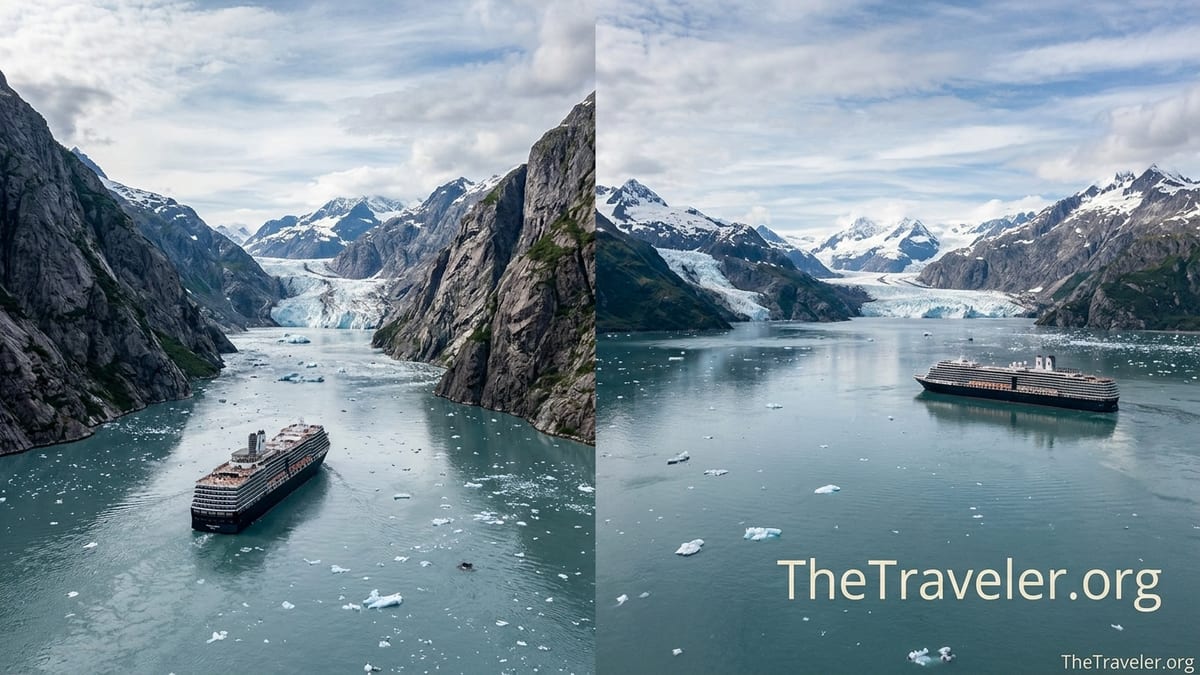
Quick profiles: Dawes Glacier, Tracy Arm and Glacier Bay
Dawes Glacier is a vigorously calving tidewater glacier at the head of Endicott Arm, one of two steep, narrow fjords in the Tracy Arm–Fords Terror Wilderness within Tongass National Forest. Cruise ships and tour boats sail up Endicott Arm past sheer granite walls, waterfalls and floating ice to view Dawes, whose face can rise roughly 600 feet from the water and frequently sheds icebergs into the fjord. Dawes has become a primary glacier highlight on many big-ship itineraries after recent safety concerns in nearby Tracy Arm.
Tracy Arm is Endicott’s sibling fjord, carved just to the south. It is similarly narrow and steep-sided, with high granite cliffs and hanging glaciers leading to the twin Sawyer Glaciers at its head: North Sawyer and South Sawyer. Historically, Tracy Arm and the Sawyer Glaciers were marquee scenic-cruising calls for big-ship lines out of Seattle and Vancouver. A major landslide and megatsunami near South Sawyer in August 2025, however, led nearly all large-ship operators to suspend Tracy Arm visits for at least the 2026 season, shifting those scenic days to Endicott Arm instead.
Glacier Bay National Park and Preserve offers a different scale altogether. Instead of a single narrow fjord, Glacier Bay is a broad, branching basin with multiple tidewater glaciers, including the popular Margerie Glacier in Tarr Inlet and Johns Hopkins Glacier in the bay’s western arm. Cruise ships enter through Icy Strait and spend a full day slowly transiting the park; National Park Service rangers usually come aboard to narrate, lead programs and point out wildlife. Ships do not dock or tender, so the entire Glacier Bay experience is viewed from the vessel itself or its decks and balconies.
In practical terms, Glacier Bay is an all-day immersion in a protected national park, while Endicott Arm and Tracy Arm are shorter, more intense fjord transits focused on one primary glacier at the end of a single narrow arm.
Time in the ice: how long ships really spend inside
Glacier Bay calls are governed by a strict National Park Service permit system that limits the number of large cruise ships per day. According to park materials and scientific studies of ship traffic, vessels typically enter the park in the morning between about 6:00 and 10:30 and remain inside for 8 to 12 hours. They follow a set route up the bay, usually reaching the tidewater glaciers in the upper arms after three to four hours of scenic sailing, then spending roughly an hour parked or slowly pivoting in front of at least one major glacier before retracing their route out in the late afternoon or early evening.
Endicott Arm and Tracy Arm scenic cruising days are usually shorter segments embedded within a port day. On common big-ship itineraries, the ship turns off Stephens Passage into one of the fjords in the very early morning, spends several hours motoring up past ice and waterfalls, then turns around near the glacier face and exits by late morning or midday to continue toward Juneau or another port. In practice, many large ships are inside Endicott or Tracy for roughly four to six hours, with perhaps 30 to 60 minutes paused near the glacier if ice conditions allow.
Because Glacier Bay is a full, regulated park day, it generally offers more total hours of glacier-focused scenery than an Endicott or Tracy fjord transit. However, the fjord days can feel more intense because of the tight confines, ice-clogged water and close views when conditions cooperate.
Scenery and atmosphere: narrow granite fjords vs wide open bay
If your mental picture of Alaska involves tall granite walls rising almost vertically from milky turquoise water, the narrow fjords of Endicott Arm and Tracy Arm deliver that drama. Both are classic U-shaped glacial valleys, only about a mile or two wide, with cascading waterfalls and side glaciers perched high on the cliffs. As your ship pushes through brash ice and small bergs, the sense of enclosure is strong; you often feel like the walls, ice and sky fill your entire field of vision.
Glacier Bay feels more expansive. After entering from Icy Strait, ships sail through broad reaches with forested shorelines and distant snowfields before turning into the western arm and Tarr Inlet. The bay gradually narrows closer to the tidewater glaciers, but you retain sweeping views across wide water, with mountains and icefields layered in the distance. Instead of a single glacier at the end of one tight corridor, you may pass several named glaciers and broad hanging icefields as the ship works its way toward Margerie.
Weather and light also accent the differences. The north-facing orientation of Endicott Arm often means soft, early morning light on Dawes Glacier during peak summer sailings, while Glacier Bay’s longer day can include changing conditions, from foggy lower reaches to clear, bright skies near the upper bay. In both settings, low clouds and rain are common, and both can be magical or misty depending on the day. If you want that quintessential “fjord” feeling in your photos, Endicott or Tracy have the edge; if you prefer panoramic vistas with multiple glacier backdrops, Glacier Bay is usually more varied.
How close you can usually get to the glacier face
Approach distances matter tremendously to how dramatic your glacier encounter feels. Dawes Glacier and the Sawyer Glaciers sit at the dead-end of single narrow arms, and their approach channels can become clogged with icebergs and brash ice, especially in peak melt season. Large cruise ships are required to maintain safe clearances and may turn around miles short of the glacier if the ice pack is dense. In seasons with heavy calving, it is not unusual for a big ship to stop well back, offering a more distant but still scenic view of the ice.
When conditions are favorable, however, cruise ships in Endicott Arm can edge significantly closer to Dawes than many have historically managed at Tracy Arm, simply because Dawes has tended to be slightly more accessible. Some captains carefully weave through the ice, get within a good viewing distance, then slowly rotate the ship so both port and starboard balconies face the glacier. Still, the most intimate perspectives at Dawes usually come from dedicated small-boat excursions that detach from the main ship and continue further into the ice field.
In Glacier Bay, ships rarely face a single “all or nothing” approach. Park authorities manage vessel traffic and, on a typical permitted day, the ship will spend around an hour parked or slowly turning in front of at least one tidewater glacier, often Margerie. If one inlet is especially choked with ice or wildlife restrictions are in effect, the captain and park rangers can often substitute another glacier in the bay’s western or eastern arms. You may not get as close to any one glacier as a small catamaran at Dawes or Sawyer, but you have a higher chance of at least one solid glacier viewing even in challenging conditions.
Tracy Arm has historically offered strikingly close small-boat views of the Sawyer Glaciers when ice and safety conditions allowed. Given the 2025 landslide and resulting tsunami, however, most large-ship operators have stopped entering Tracy Arm for now, and even small-boat itineraries are being reassessed. Travelers specifically dreaming of Sawyer Glacier photos should pay close attention to updated advisories and be prepared for last-minute changes or substitutions.
Reliability and current landslide concerns
Every glacier call in Alaska is inherently conditional. Captains and pilots make real-time decisions based on ice, tides, weather and safety advisories, and even experienced lines sometimes have to abandon or shorten a glacier visit. That said, the current risk profile and operating patterns differ in important ways between these destinations.
In Tracy Arm, a massive slope failure above South Sawyer Glacier in August 2025 sent tens of millions of cubic meters of rock into the fjord, producing a megatsunami that scoured the surrounding cliffs. Subsequent investigations by state and federal scientists highlighted how difficult it is to predict similar events in steep, glaciated fjords. As a precaution, at least five major cruise lines and several others removed Tracy Arm from their 2026 itineraries, replacing it with Endicott Arm and Dawes Glacier on parallel routes. For big-ship travelers over the next few seasons, this effectively means that a Tracy Arm visit is unlikely unless you are on a small-ship or expedition operator that has chosen to continue limited access.
Endicott Arm, although part of the same wilderness fjord system and shaped by similar geologic forces, is currently considered more navigable for large ships. Operators emphasize that hazards exist throughout Southeast Alaska’s fjords, but Endicott does not have a recent, comparable landslide-tsunami event at its glacier terminus. For now, this has made Dawes Glacier the “safer” substitute in the eyes of many large-ship lines, and a significant share of Inside Passage cruises now advertise Endicott Arm & Dawes Glacier as their marquee scenic-cruising day.
Glacier Bay’s reliability is framed more by park permitting and ice distribution than by acute landslide risk. The bay has a long history as a cruise destination, and the National Park Service’s traffic and wildlife protections are designed to keep conditions broadly predictable. While individual sailings can lose some glacier time to heavy ice or low visibility, the redundancy of multiple glacier arms and the full-day window usually give captains and rangers flexibility to deliver at least one substantial glacier viewing opportunity on most visits.
The takeaway for planners is that, in the current environment, Glacier Bay and Endicott Arm are relatively stable bets for big-ship itineraries, though no glacier is guaranteed. Travelers booking an itinerary that still names Tracy Arm should verify with the line whether that fjord remains on the schedule for their specific year and date, and be prepared for the possibility of substitution or route changes on short notice.
Wildlife and natural history: what you are likely to see
All three destinations offer classic Southeast Alaska wildlife, but the scale and context differ. Glacier Bay’s broad waters and protected status make it a strong candidate for spotting marine mammals and birdlife over the course of the day. Humpback whales and harbor porpoises are regularly seen in the lower bay and Icy Strait approaches. Harbor seals haul out on ice near tidewater glaciers, especially at sites like Johns Hopkins Inlet where pupping has been studied extensively, and bald eagles, seabirds and occasionally brown bears may be visible along the shorelines.
In the narrower corridors of Endicott Arm and Tracy Arm, the wildlife experience feels more compressed. You may see harbor seals resting on ice floes close to the ship, mountain goats on steep slopes near the glacier face, and occasional black or brown bears along the shoreline. The tight fjord walls make it easier to scan for terrestrial animals, but the short duration of the transit means your total viewing window is smaller than an all-day Glacier Bay visit. Small-boat excursions to Dawes or the Sawyer Glaciers increase the odds of intimate wildlife encounters simply because they operate in the densest ice fields for longer, though they still can never guarantee sightings.
From a natural history standpoint, Glacier Bay comes with the added benefit of onboard National Park Service rangers, who interpret the region’s rapid glacial retreat, cultural history and ecosystem changes through commentary and talks. In Endicott Arm and Tracy Arm, interpretation is usually provided by cruise line staff or local naturalists hired for the season. The wilderness designation of the Tracy Arm–Fords Terror area adds a sense of remoteness, but the narrative focus is more on the immediate spectacle of cliffs, waterfalls and ice than on the broader story of a national park.
If structured learning and a high likelihood of varied wildlife sightings across a full day are priorities, Glacier Bay has an advantage. If you prefer an intense, sensory hit of cliffs, blue ice and close-in seals within a narrower time window, Endicott Arm and, when available, Tracy Arm deliver that punchier experience.
Costs and add-ons: what is included and what costs extra
On big-ship itineraries, Glacier Bay access is generally bundled into the cruise fare for itineraries that hold coveted park permits. You do not pay a separate ticket to enter the park; the cost is baked into the cruise line’s operating expenses and reflected in overall pricing. In practice, cruises that include Glacier Bay can sometimes be priced higher than similar itineraries that do not, but you do not need to book or budget for any special excursion to enjoy the glacier day itself.
At Dawes Glacier and the Sawyer Glaciers, the most intimate experiences typically come through optional small-boat excursions that carry a premium price. Several major lines sell catamaran or expedition-boat tours that rendezvous with the cruise ship in the fjord, then sail further into the ice to get closer to the glacier face. Recent examples advertised for 2026 departures show per-person prices often in the range of about 350 to 500 US dollars, and in some luxury or limited-capacity offerings, even higher. Travelers report paying close to 900 dollars per person on select high-end small-boat glacier day tours, although such prices are not universal.
If you skip the add-on in Endicott Arm, you will still enjoy scenic cruising and glacier views from the main ship at no additional cost, but your closest approach to the ice will depend on the captain’s judgment and conditions that day. In Tracy Arm, where big-ship entries are currently curtailed, independent small-ship and expedition cruises that still aim for the Sawyer Glaciers often build the close-in glacier visit into their base fare, which can make those itineraries more expensive overall than mainstream big-ship cruises but with fewer separate add-on decisions.
The bottom line is that Glacier Bay generally offers the most fully included glacier experience for big-ship travelers, while Dawes and Sawyer often entice serious photographers and glacier enthusiasts to spend significantly more on small-boat excursions. Because prices shift with demand, season, cruise brand and capacity, travelers should treat any listed price range as an example only and always check their specific sailing for current rates before budgeting.
Which glacier day fits which traveler?
For many first-time Alaska cruisers, especially families or travelers seeking a single iconic glacier day with minimal extra cost, Glacier Bay is the most straightforward match. You receive an all-day immersion in a national park, ranger-led interpretation, and a relatively high likelihood of seeing at least one major tidewater glacier up close without needing to pay extra for a tour. If you want to maximize glacier and wildlife time while keeping discretionary add-on spending modest, a Glacier Bay itinerary is often the best fit.
Photographers, repeat visitors and travelers who prioritize dramatic fjord scenery may gravitate toward Endicott Arm and Dawes Glacier, especially if they are willing to pay for a small-boat excursion. The combination of sheer granite walls, dense ice fields and the potential to get much closer to the glacier face can produce extraordinary images and more visceral sensations of being inside a living ice landscape. This choice suits guests comfortable with early mornings, a bit more exposure to cold wind and spray, and the financial premium that intimate small-boat tours command.
Travelers specifically dreaming of Tracy Arm and the twin Sawyer Glaciers need to factor in the current instability and itinerary shifts. For 2026 and likely the near term, most major cruise lines have rerouted away from Tracy Arm for safety reasons, substituting Endicott Arm. If Sawyer Glacier is nonnegotiable on your wish list, you may need to look at small-ship expedition cruises or specialized tour operators that continue to run into Tracy Arm under tighter operational parameters. Even then, the possibility of last-minute changes for safety reasons will remain higher than in Glacier Bay or Endicott Arm.
Risk tolerance also matters. Travelers who would be deeply disappointed by a missed glacier approach may prefer Glacier Bay for its multiple glacier options and full-day flexibility, or Dawes for its growing track record as a reliable substitute. Those comfortable with more uncertainty, in exchange for the potential of a rarer experience, may still consider Tracy Arm with appropriately cautious expectations and thorough review of current advisories.
Key differences at a glance
When you strip away brand names and brochure language, the practical contrasts become clearer. In terms of scenery, Glacier Bay offers wide, multi-glacier vistas in a national park setting, while Endicott Arm and Tracy Arm focus on one narrow, high-walled fjord culminating in a single glacier face. Viewing distance on large ships is typically moderate but consistent in Glacier Bay, more variable in Endicott Arm, and currently uncertain in Tracy Arm due to reduced big-ship access.
Time at or near the glacier is usually about an hour paused in front of a tidewater glacier within a longer 8 to 12 hour park day in Glacier Bay, versus roughly 30 to 60 minutes of close-in viewing within a 4 to 6 hour fjord transit in Endicott or Tracy. Add-on options are minimal and mostly not required in Glacier Bay, whereas the most intimate encounters at Dawes and Sawyer often rely on paid small-boat excursions that can significantly raise the per-person cost of your glacier day.
From a pros and cons standpoint, Glacier Bay scores highly on reliability, educational value and included experience, but offers slightly more distance from any one glacier face than a dedicated small boat. Endicott Arm with Dawes Glacier delivers a cinematic fjord experience and the potential for very close ice encounters, at the expense of shorter overall glacier time and higher costs if you opt into premium tours. Tracy Arm, in normal years, combines extreme fjord drama with twin glacier views, but in the wake of the 2025 landslide, it currently carries the greatest uncertainty and is absent from most mainstream big-ship programs.
Thinking of these destinations in table form can help: Glacier Bay as the broad, all-day, mostly included park experience; Endicott Arm & Dawes Glacier as the narrow, intense fjord with optional high-cost small-boat intimacy; and Tracy Arm & Sawyer Glaciers as the spectacular but, for now, less accessible and more safety-constrained outlier.
Conclusion: matching your glacier day to your priorities
No single glacier destination is objectively “best” for every Alaska cruiser. Each of the three delivers a different balance of scenery, reliability, intimacy and cost. The key is to match your choice to what matters most to you, and to understand the trade-offs before you put down a deposit on any itinerary.
If you want the classic, all-day Alaska glacier experience with strong odds of at least one satisfying tidewater glacier viewing and minimal need for extra spending, a Glacier Bay itinerary is usually the safest and most straightforward pick. If your priority is photographing towering granite walls, blue ice and calving events from as close as possible, and you are willing to budget substantially for a small-boat excursion, Endicott Arm and Dawes Glacier can deliver some of the most intense glacier moments available on a mainstream cruise.
Travelers who have long dreamed specifically of Tracy Arm and the Sawyer Glaciers should approach current seasons with flexibility and care, recognizing that most big ships have shifted to Endicott Arm and that any remaining Tracy Arm offerings may face heightened last-minute changes for safety. Reading the fine print, watching for itinerary updates and staying in touch with your cruise line or travel advisor are essential.
Whichever option you choose, remember that glacier travel in Alaska is always subject to ice, weather and evolving science. Plan for unpredictability, treat add-on excursions as enhancements rather than guarantees, and focus on the kind of glacier day that best fits your budget, learning style and appetite for adventure. That mindset will make your Alaska glacier cruise day unforgettable, regardless of which ice-filled fjord or bay you ultimately enter.