


More news on this day
Passengers flying in and out of London Gatwick on Friday, May 29, are encountering a mix of schedule changes, with a number of services delayed or cancelled following wider disruption across the UK and European aviation network this week.
Get the latest news straight to your inbox!
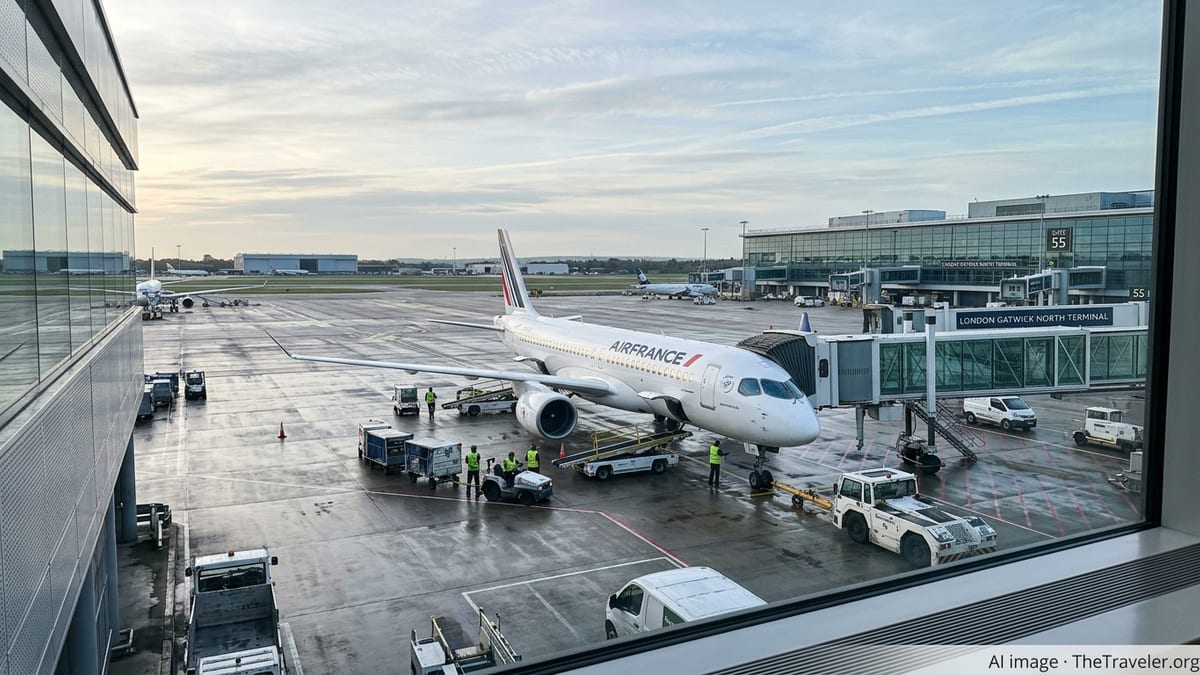
Disruption follows a turbulent week for UK air travel
Publicly available coverage indicates that today’s issues at Gatwick come after a difficult few days for aviation in the UK. A radar-related glitch in the UK’s air traffic control system earlier in the week temporarily halted departures at several major airports, including Gatwick, with knock-on effects for airline schedules that continued into Thursday and Friday as crews and aircraft were repositioned.
Reports also highlight targeted cancellations by major transatlantic and European carriers at several UK airports on May 29, as airlines adjust timetables to recover from earlier disruption and ongoing operational pressures. Gatwick, as one of the country’s busiest hubs for short-haul European services, has been particularly exposed to these rolling adjustments.
While air traffic control systems are reported to be operating normally today, the combination of residual congestion, tight aircraft rotations and strong late‑May demand has left little spare capacity. As a result, even relatively minor issues can translate into late departures and missed connections for passengers using Gatwick this morning.
In addition, a large-scale strike across Italian airports scheduled for Friday, May 29, has led to widespread cancellations on routes touching Italy. Gatwick’s busy network of flights to Rome, Milan, Venice and other Italian destinations is expected to feel the impact, further adding to today’s disruption picture.
Delays affecting morning and midday departures
Live flight boards and independent tracking tools on Friday show a pattern of delays building through the early morning departure wave at Gatwick. Short‑haul flights to key European business and leisure destinations are among those most affected, with some departures pushed back by 30 minutes or more as aircraft arrive late from earlier sectors.
Operational data for individual services suggests that, while many flights are still departing broadly on time, there is a noticeable cluster of delayed departures on routes that rely on tight turnarounds or that connect into congested airspace on the continent. Flights to hubs in western and central Europe, where air traffic volumes are already high, appear to be particularly susceptible.
Medium‑haul services later in the morning and around midday are also showing signs of stress, with a number of departures listed as delayed as airlines work to reset rotations affected by Thursday’s disruption. Some carriers have consolidated lightly booked services or pre‑emptively cancelled frequencies to create additional slack in their schedules.
Travel analysts note that this pattern is typical in the aftermath of a system‑wide air traffic issue, where the effects can persist for several days even after the original technical fault is resolved. Gatwick’s dense schedule and reliance on rapid turnarounds make it especially sensitive to such ripple effects.
Targeted cancellations across selected routes
Alongside delays, Gatwick is seeing a series of targeted cancellations today. According to airline operation summaries and media reports, a small but significant number of departures and arrivals have been removed from schedules on May 29 as carriers seek to stabilise the network.
Most of the cancellations involve short‑haul European routes, particularly services to Italy and other destinations affected by local industrial action or capacity restrictions. With more than a thousand flights reportedly cancelled across Italian airports alone today, several Gatwick services that either originate in or transit Italian airspace have been cut or rebooked onto alternative departures.
A limited number of long‑haul flights are also affected as airlines prioritise aircraft for the busiest transatlantic and leisure routes. Industry coverage points to a broader pattern of cancellations spread across multiple UK airports, with Gatwick featuring in a wider list of disrupted services operated by major European and North American carriers.
For passengers, these targeted cancellations can be harder to anticipate than broad weather‑related shutdowns, as they often appear as last‑minute changes on specific flights rather than airport‑wide ground stops. Travellers are being encouraged by consumer groups to check flight status repeatedly on the day of travel.
Rail and road access add to passenger uncertainty
Access to Gatwick on Friday is also being influenced by ongoing transport issues in the wider region. Recent “do not travel” alerts on certain rail routes in south‑east England and planned overnight works on sections of the motorway network serving the airport have contributed to longer journey times for some passengers heading to and from the terminals.
Traffic and rail monitoring sites indicate that while the main Gatwick Express and Thameslink services are running, earlier incidents and capacity constraints on central London corridors can quickly cascade into delays on airport‑bound trains. Road users have faced intermittent lane closures and reduced speeds on key stretches of the M25 and feeder roads near the Gatwick turn‑off over the past few days.
These ground transport challenges, combined with uncertainty over flight timings, mean some travellers are opting to arrive at the airport earlier than usual, increasing pressure on check‑in and security during the busiest morning hours. Airport guidance generally recommends allowing extra time when wider network disruption is in play, a message that appears particularly relevant today.
Travel advisors note that passengers with tight rail or coach connections after landing at Gatwick may need to build in additional contingency time, as even modest flight delays can cause missed onward services during peak periods.
What today’s travellers can expect at the terminal
Inside the terminals, today’s disruption is manifesting as longer queues at airline service desks and self‑service kiosks, especially where cancellations have left passengers seeking rebooking options. Social media posts and traveller forums from the morning of May 29 describe busy but generally orderly scenes, with most airport processes functioning but under strain at peak times.
Publicly available information from consumer rights organisations underscores that, under UK air passenger regulations, travellers whose flights are cancelled or significantly delayed may be entitled to rerouting, refunds and, in some cases, care such as meals or hotel accommodation. However, eligibility can depend on the cause of disruption and whether it is considered outside airline control.
Given the mix of contributing factors today, from earlier air traffic control issues to overseas strike action, guidance from advocacy groups stresses the importance of keeping records of all communications and expenses, and checking the specific terms of each airline’s disruption policy. Passengers are also being advised to use airline apps and official channels for the most up‑to‑date information on boarding times, gate changes and baggage handling.
With air traffic control systems reported as stable and airlines gradually working through backlogs, conditions at Gatwick may improve as the day progresses. For now, though, travellers using the airport on Friday, May 29, are being urged by travel experts to remain flexible, monitor their flights closely and allow extra time at every stage of their journey.