


More news on this day
Passengers flying through London Gatwick on Wednesday, 3 June are facing a patchwork of delays and a small number of cancellations, as early-summer demand combines with overseas disruption and routine flow restrictions across Europe.
Get the latest news straight to your inbox!
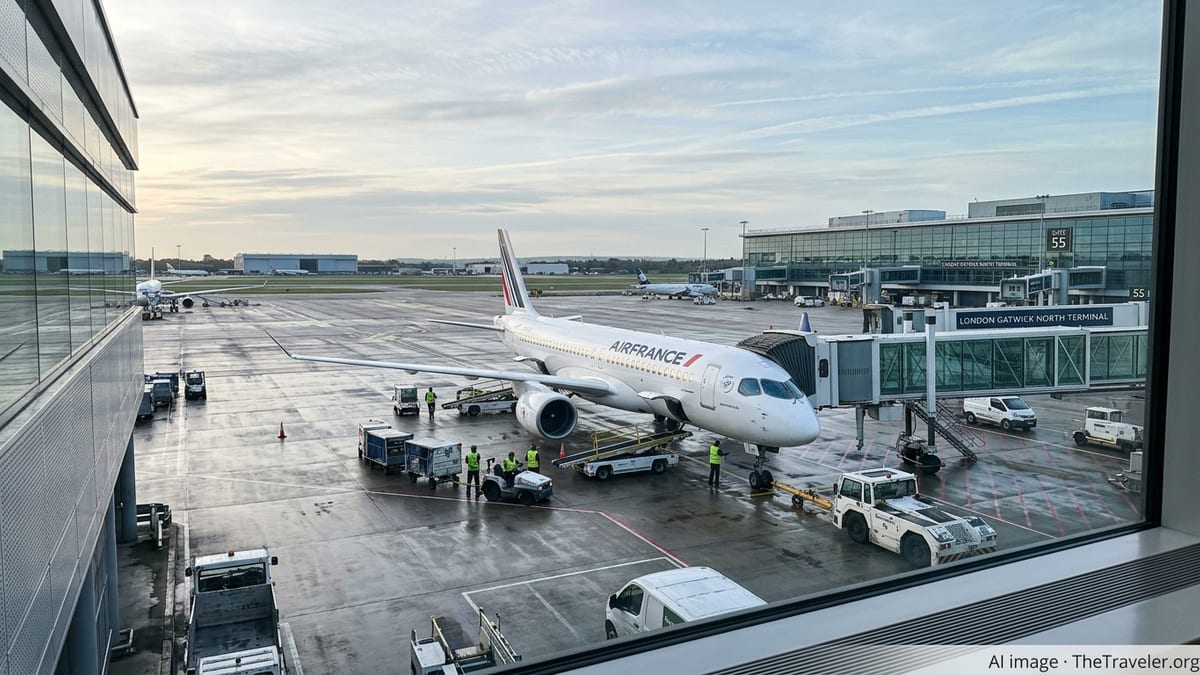
Overall picture at Gatwick on Wednesday morning
Publicly available flight-tracking boards for London Gatwick on Wednesday morning show the airport operating close to its planned schedule, but with clusters of delayed departures building through the mid-morning wave. The majority of affected flights are running 30 to 60 minutes behind schedule, with only a limited number of outright cancellations reported so far.
Short-haul leisure routes to Mediterranean destinations remain the most exposed to disruption, reflecting the peak in seasonal departures from Gatwick in early June. Data from several tracking services indicates that a number of services to Spain, Italy and Greece have been pushed back from their original departure times, with schedules adjusted across the day to absorb knock-on delays.
Arrivals into Gatwick are generally performing slightly better than departures, with most inbound services arriving within an hour of schedule. Where delays are occurring, they are often linked to aircraft arriving late from previous sectors elsewhere in Europe, rather than issues originating at Gatwick itself.
Impact of external strikes and weather on today’s schedule
Today’s operations at Gatwick are being shaped not only by local conditions but also by events elsewhere in Europe. Travel-industry updates highlight a nationwide general strike in Portugal on 3 June, expected to disrupt hundreds of flights to and from Portuguese airports. While Gatwick is not at the epicentre of that action, knock-on effects are visible on some services linking London with Lisbon, Porto and Faro, where schedules have been adjusted or consolidated.
Airline travel alerts also point to continuing disruption on selected routes in Central Africa and the eastern Mediterranean, with some carriers pre-emptively tweaking their timetables or consolidating services. For Gatwick-based aircraft that rotate through affected destinations, these timetable changes can feed back into later departures from London if aircraft and crew return later than planned.
Weather over southeast England is relatively benign today compared with recent stormy periods that have occasionally forced UK airports to thin out traffic. Forecasts for the Gatwick area indicate typical early-summer conditions, with no strong winds or thunderstorms expected to prompt large-scale air-traffic control restrictions over southern England. Any weather-related delays at Gatwick today are more likely to stem from conditions along flight paths elsewhere in Europe.
Airlines and routes most affected so far
Based on live departure boards and third-party trackers, the bulk of today’s delays at Gatwick are concentrated among short-haul European services operated by low-cost and leisure-focused carriers. These operators run dense schedules from Gatwick during the summer season, meaning that a relatively minor delay early in the day can ripple across multiple rotations.
Routes to southern Europe, including popular holiday destinations on the Spanish and Italian coasts and in the Greek islands, are showing the greatest variability in departure times. In several cases, morning flights have pushed back later than scheduled but have remained within a 60 to 90 minute window, suggesting that airlines are prioritising keeping services operating rather than cancelling outright.
Long-haul services from Gatwick, including flights to the Middle East, North America and the Indian Ocean, appear less affected in the early part of the day. These flights typically have longer scheduled turnarounds and more built-in buffer time, which can help absorb moderate disruption without necessitating cancellations.
Rail links and onward travel pressures
While Gatwick itself is not directly affected by industrial action on the London Underground, wider transport disruption in the capital this week is adding indirect pressure to the airport’s operations. Published coverage outlines a series of tube strikes on key Underground lines during the first days of June, prompting many passengers to rely more heavily on mainline rail and coach services to reach Gatwick.
National rail updates show some late-night and early-morning timetable changes on routes linking London with other parts of southern England, including adjustments to services connecting with Gatwick Airport. Although core airport rail links are running, the combination of altered schedules and increased demand means that some travellers are arriving closer to departure cut-off times than airlines recommend.
For passengers with tight connections via Gatwick, especially those changing between different airlines on separate tickets, this wider transport picture increases the risk that even modest flight delays can cascade into missed onward journeys. Travel forums and advisory sites continue to recommend generous connection times at Gatwick during the busy summer build-up.
What today’s disruption means for passengers
For most travellers using London Gatwick today, the experience is likely to involve longer queues and some waiting around rather than wholesale cancellations. Check-in and security areas are busier than in the shoulder seasons, reflecting a strong start to the year for UK aviation and rising passenger volumes through Gatwick compared with pre-pandemic levels.
Passenger-rights organisations stress that, under UK and EU regulations, travellers whose flights are significantly delayed or cancelled for reasons within an airline’s control may be entitled to care such as refreshments and, in some cases, financial compensation. However, where disruption stems from external factors such as nationwide strikes in other countries or wider air-traffic control restrictions, compensation rules can be more limited.
With the day still unfolding, flight-status boards for Gatwick will continue to shift as airlines respond to conditions across their networks. Travellers with flights later on Wednesday are being advised, in widely shared online guidance, to monitor real-time information from their airline, allow extra time to reach the airport and be prepared for gate or timing changes even if their service remains scheduled to operate.