


More news on this day
Major European airlines are postponing the return of key Dubai services, with British Airways, Air France and Lufthansa all extending flight suspensions or sharply reduced schedules as Middle East instability continues to affect Gulf airspace.
Get the latest news straight to your inbox!
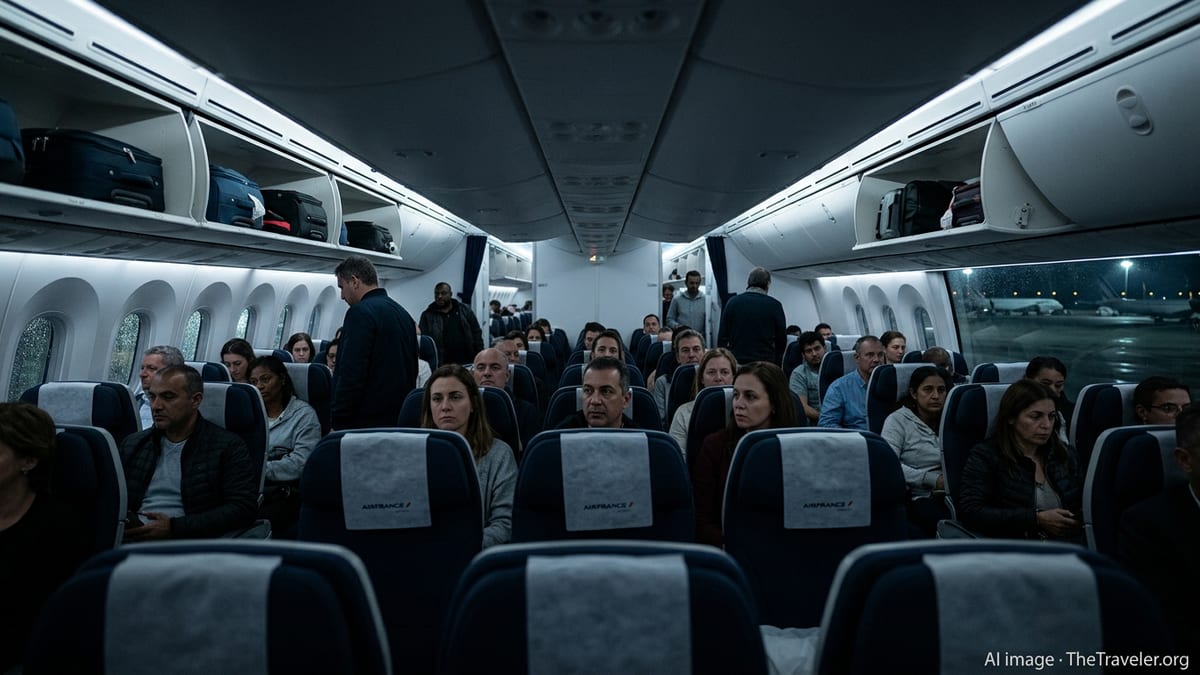
British Airways delays Dubai return and trims Middle East network
Recent updates from British Airways indicate that the carrier is pushing back the resumption of flights to Dubai, as well as other Middle East destinations, later into the summer than many passengers had anticipated. The airline, which typically operates multiple daily services between London Heathrow and Dubai during peak seasons, has already spent months with its Dubai route suspended following the regional airspace disruption that began at the end of February.
According to published coverage, British Airways now plans a more limited restart of services on its Gulf network once operations resume. Reports indicate that the airline intends to reduce flights to Dubai, Doha and Tel Aviv to one daily rotation, while permanently dropping Jeddah from its schedule. Capacity freed up by these cuts is expected to be reallocated to stronger long-haul markets such as India and parts of Africa, reflecting a strategic pivot away from some Middle East routes.
For customers, the delayed Dubai restart and reduced frequencies across the wider region translate into fewer non-stop options from the United Kingdom to the Gulf. Travellers who would typically fly directly on British Airways are increasingly being rerouted via alternative hubs or offered refunds and rebookings on later dates. Passenger comments shared in public forums suggest that many are bracing for additional schedule changes as the summer season approaches.
Industry analyses describe the carrier’s stance as part of a broader trend among European airlines, which are cautious about committing aircraft and crews to routes that remain exposed to sudden airspace closures or diversions. While some Gulf airports have restored regular operations, the risk of renewed disruption and the complexity of east–west routing through constrained corridors continue to weigh on planning.
Air France takes a stop‑start approach to Dubai operations
Air France has also adopted a guarded posture on Dubai, moving through several rounds of suspensions and limited resumptions as conditions in the Middle East evolve. Earlier in the year the airline briefly halted services between Paris and Dubai, citing the security environment in the wider region. Subsequent factbox updates from international newswires show the carrier repeatedly extending suspensions on some Middle Eastern routes, even as it evaluates when and how to rebuild its Gulf network.
Recent reporting indicates that Air France temporarily suspended Dubai flights alongside services to other regional destinations such as Tel Aviv, Beirut and Riyadh. Some of these routes have projected restart dates in early June, yet the schedule remains subject to change depending on airspace advisories and demand patterns. This stop‑start approach illustrates how quickly airlines are adjusting timetables in response to official bulletins and conflict‑zone assessments.
The airline’s strategy appears to prioritise flexibility over rapid expansion back into the Gulf. Capacity is being placed where demand is more predictable and routing is less exposed to sudden restrictions, including on transatlantic and intra‑European services. Analysts note that, for Air France, Dubai is an important link for both leisure and corporate travel, but not one that currently justifies extensive operational risk or complexity.
For travellers in France and neighbouring markets, the result is a patchwork of options to the United Arab Emirates. Some itineraries involve one‑stop connections via alternative hubs, while others rely on partner airlines that continue to operate more robust schedules into Dubai. Travel agents and booking platforms are advising passengers to monitor reservations closely and to be prepared for day‑of‑departure changes while the situation remains fluid.
Lufthansa Group keeps Dubai suspended into late summer
The Lufthansa Group has taken one of the most conservative stances among Europe’s major airline conglomerates when it comes to Dubai. Publicly available information shows that Lufthansa, along with group carriers such as SWISS and ITA Airways, has extended its suspension of flights to and from Dubai well into the second half of 2026. Some recent factbox summaries point to suspensions remaining in place until at least mid‑September.
Individual group airlines have issued their own updates. SWISS, for example, has confirmed that its Zurich–Dubai route will remain suspended until at least 13 September, after an earlier pause that was due to end in July. Trade publications report that the carrier is reallocating aircraft to more stable long‑haul markets, including North America and parts of Asia, in an effort to offset revenue losses from the Dubai suspension.
These prolonged cancellations have significant implications for connecting traffic between Europe and Asia. Dubai traditionally acts as a key transit point, and Lufthansa Group flights into the emirate feed onward journeys operated by local and partner airlines. With those links severed for now, passengers are increasingly routed through alternative hubs such as Doha, Istanbul or major European gateways, adding time and complexity to itineraries.
Aviation analysts highlight that the group’s cautious stance reflects both security assessments and commercial considerations. Operating into a region where airspace restrictions can change with little notice raises the risk of diversions, extended flight times and higher fuel costs. By holding off on a Dubai restart, the Lufthansa Group is effectively wagering that a later return, once conditions are clearer, will be more sustainable than a premature comeback followed by renewed disruption.
Regional disruption reshapes connections through Dubai
The combined decisions by British Airways, Air France and Lufthansa to delay or limit Dubai operations come at a time when the emirate’s main airport is still rebuilding its role as a global super‑hub. Industry digests tracking the Middle East crisis report that Dubai International Airport has climbed back to a little over half of its typical capacity, with home carriers such as Emirates and low‑cost operators like flydubai carrying a much larger share of overall traffic.
With many major European airlines either absent from Dubai or operating significantly reduced schedules, passengers travelling between Europe and Asia are being funneled through a narrower set of options. Gulf and Turkish carriers have added flights where possible, but their networks have not yet fully replaced the lost capacity from suspended European services. This has resulted in higher load factors on remaining flights and, in some cases, higher fares on routes where demand remains strong.
Indirect routings are also becoming more common. Travellers who might previously have flown non‑stop from London, Paris or Frankfurt to Dubai and then onward to Asia are now more likely to connect via secondary hubs. Airlines in South and Southeast Asia, along with Turkish and Gulf competitors, are competing to capture this displaced traffic, offering promotional fares and schedule tweaks to attract passengers affected by European suspensions.
Travel risk consultants note that the broader pattern of disruption is shaped by the interplay of geopolitical uncertainty, regulatory guidance and airline risk tolerance. As conflict‑zone bulletins for Gulf and Middle Eastern airspace remain active, carriers are factoring longer potential detours and contingency plans into their scheduling decisions. For Dubai, the result is a slower‑than‑hoped recovery in international connectivity from Europe, even as local operations stabilise.
What passengers should expect in the months ahead
For travellers planning journeys that involve Dubai in the coming months, the prevailing message from airline updates and travel industry briefings is to anticipate ongoing uncertainty. Schedules published for late summer and early autumn continue to show gaps where British Airways, Air France and Lufthansa once operated frequent services, and there is little guarantee that tentative restart dates will hold if the regional situation deteriorates again.
Airline communications emphasise that customers whose flights are cancelled are generally being offered standard options such as refunds, travel vouchers or rebookings on future departures. Consumer advocates note that passengers may also be eligible for care and assistance during extended delays under applicable air passenger rights regimes, although the exact entitlements vary by jurisdiction and circumstances.
Travel planners recommend building additional flexibility into itineraries touching the Gulf, particularly for long‑haul journeys that depend on tight connections. Booking with carriers that currently maintain more stable Dubai operations, or choosing routings that avoid the most constrained airspace, can reduce the risk of last‑minute disruption. At the same time, observers point out that conditions can improve quickly if tensions ease and regulators relax flight restrictions.
For now, the decisions by British Airways, Air France and the Lufthansa Group to delay or limit Dubai services underscore how sensitive global aviation remains to developments in the Middle East. Any sustained easing of geopolitical risks could see airlines move to restore capacity, but until that occurs, Dubai’s role as a bridge between Europe and Asia will continue to be shaped by caution rather than rapid expansion.