


More news on this day
Mounting frustration over pay, restrictive housing policies, and frozen bonuses among Gulf-based cabin crew is spilling into unprecedented industrial action, disrupting flights across Qatar and the United Arab Emirates and sharpening scrutiny of how the region’s powerhouse airlines treat both staff and passengers.
Get the latest news straight to your inbox!
Unprecedented Sickouts Hit Qatar Airways Schedules
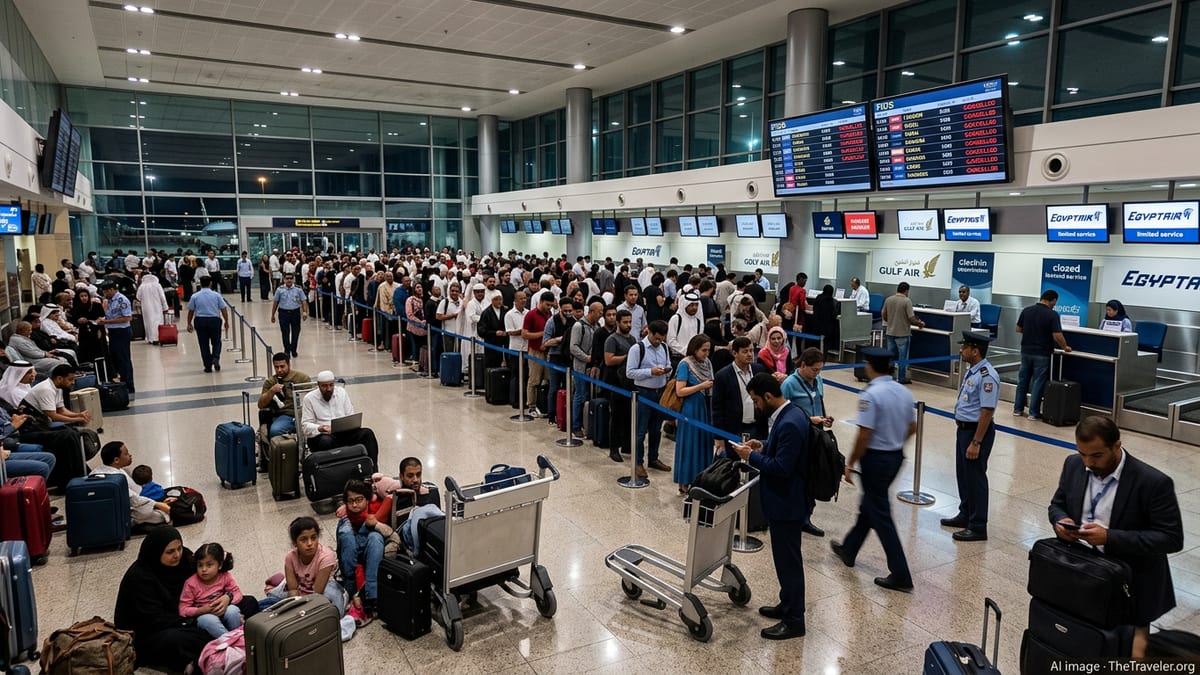
Operations at Doha’s Hamad International Airport are coming under pressure as Qatar Airways cabin crew stage what aviation outlets describe as a coordinated mass “sickout,” a form of unofficial industrial action used in countries where strikes are heavily restricted. Recent specialist coverage indicates that more than a hundred Qatar Airways flights have experienced delays or schedule changes as the carrier works to re-crew services and reposition aircraft around its hub.
Reports from aviation-focused publications state that the unrest intensified after the airline decided not to pay its usual annual profit-sharing bonus for the 2025–2026 financial year, despite posting multi-billion–riyal profits. Commentators note that the decision has been perceived internally as a breach of expectations in a company that positions itself globally as a premium employer and brand.
Publicly available background information shows that Qatar has long maintained tight controls on collective organizing, with formal strikes and unions restricted by law. In that environment, coordinated sick leave has emerged as a rare channel through which cabin crew can register dissatisfaction, while the carrier must still maintain published schedules for a globally connected network.
Industry analysts observing the disruption suggest that Qatar Airways faces a delicate balancing act between preserving its reputation for reliability and addressing a wave of discontent among front-line staff whose roles are central to its high-service model.
Housing Rules and Stagnant Allowances Fuel Worker Grievances
At the heart of the dispute are long-simmering complaints about company-controlled housing and allowances. Specialist aviation reporting in early June describes Qatar Airways cabin crew accommodation as tightly supervised, with curfews and movement controls that some crew members compare to confinement rather than corporate housing. Earlier international investigations into Gulf carriers have documented similar concerns about intrusive monitoring and behavioural rules for cabin crew in Qatar.
Recent coverage also highlights that a standard housing allowance figure for crew choosing to live outside company accommodation has reportedly remained unchanged for more than a decade, even as rents in Doha have risen sharply. Commentators say this gap has left many staff effectively tied to shared company housing on the outskirts of the city, limiting privacy and family life and intensifying a sense of inequality compared with senior or management employees.
Rights-focused organizations have, for several years, drawn attention to Gulf aviation employment models that link visas, housing, and employment contracts in ways that make it difficult for workers to challenge conditions without risking residency status. While Qatar has introduced broader labour reforms since the mid-2010s, published reports suggest that hierarchies and restrictive provisions remain especially visible in the aviation sector, where image and discipline are closely guarded.
The latest wave of unrest has revived debate over whether high-profile state-backed airlines should be held to stricter international labour benchmarks, particularly given their dependence on a largely expatriate cabin crew workforce drawn from dozens of countries.
Ripple Effects Across UAE Carriers and Gulf Hubs
While the most visible disruption has centered on Doha, attention is also turning to the wider Gulf aviation ecosystem, including carriers based in Dubai and Abu Dhabi. Publicly available commentary from crew forums and regional media points to growing unease among cabin crew at major United Arab Emirates airlines over long commutes from designated accommodation, cost-of-living pressures, and the absence of strong collective bargaining structures.
Reports from crew communities describe company housing blocks in outer districts of Dubai, where journey times to the airport can stretch well beyond an hour in heavy traffic despite relatively short geographic distances. Some staff accept the trade-off as part of a tax-free pay package, while others argue that time spent commuting without additional compensation, combined with unpredictable rosters, is eroding morale.
Analysts note that any sustained labour disruption in the UAE would rapidly reverberate across global aviation, given the dominant role of Dubai International and Abu Dhabi’s expanding hub in long-haul connectivity between Europe, Asia, and Africa. Even localized unrest or increased sickness absence can create knock-on effects when tight aircraft and crew rotations are built into complex wave-bank schedules.
For now, published coverage does not indicate large-scale strike action by UAE-based cabin crew. However, the tensions playing out in Doha are seen by some industry observers as a warning sign for the entire Gulf hub model, which relies on intensive flying patterns and controlled employment arrangements to sustain competitive fares and rapid network growth.
Passenger Compensation Rules Under Fresh Scrutiny
As delays and missed connections accumulate, passengers traveling through Qatar and UAE hubs are increasingly focused on their rights to refunds, hotel stays, and cash compensation. Guidance from regional consumer outlets explains that in the Emirates, passenger welfare obligations sit within a legal framework that includes the General Civil Aviation Authority’s Passenger Welfare Programme, the UAE Commercial Transactions Law, and the Montreal Convention.
Publicly available information summarizing UAE rules indicates that carriers are expected to provide meals and communication after relatively short delays and hotel accommodation for disruptions extending overnight. Individual airline notices detail circumstances in which travelers may receive refunds, rebooking, or partial reimbursement, including when passengers are downgraded to a lower cabin class or when long delays fall within the carrier’s control rather than being attributed to extraordinary events.
However, rights advocates and travel specialists note that industrial action by airline staff often sits in a grey area. Some carriers classify such events as operational issues under their control, making compensation more likely, while others treat them as exceptional circumstances, prompting disputes over eligibility. Online passenger accounts in recent months describe disagreements with airlines about the stated causes of delays and the level of support provided at Gulf hubs.
In Qatar, the legal framework around passenger compensation is shaped by the state’s implementation of international aviation treaties and its own consumer protection rules. Publicly accessible resources indicate that travelers can seek redress under the Montreal Convention for quantifiable losses resulting from long delays, though the process may be complex and unfamiliar for many international passengers transiting through Doha.
Global Aviation Confronts a New Wave of Labour Activism
The confrontation at Qatar Airways is unfolding against a wider backdrop of labour unrest in global aviation. Over the past two years, cabin crew and ground staff strikes at carriers in Europe and North America have caused large-scale disruptions, prompting debates over pay scales, scheduling practices, and the unpaid time that many flight attendants accumulate during boarding and ground delays.
Industry reports tracking recent disputes show that extended cabin crew strikes elsewhere have generated substantial revenue losses for airlines and forced management to reassess long-standing practices around duty time, rest periods, and starting wages. Observers argue that the Gulf is not immune to these pressures, even if the methods of protest differ in jurisdictions where formal strikes are tightly controlled.
Aviation analysts suggest that Gulf carriers now face a strategic choice between incremental adjustments to pay and housing policies or deeper structural change that brings working conditions closer to those in heavily unionized markets. The sickouts and growing online criticism from crew are seen as signs that reputational risk is expanding beyond traditional safety and service metrics to include labour standards.
For travelers, the immediate priority remains navigating delays, missed connections, and changing itineraries through some of the world’s busiest hubs. For the airlines at the center of the unrest, the longer-term test will be whether they can preserve global connectivity while addressing staff demands for fairer compensation and less restrictive living arrangements.