


More news on this day
Passengers traveling through Fort Lauderdale-Hollywood International Airport faced significant disruption as Allegiant Air, Frontier, Delta and other carriers registered 173 delayed services and 10 cancelled flights on routes spanning the United States, Canada, Costa Rica and other international destinations.
Get the latest news straight to your inbox!
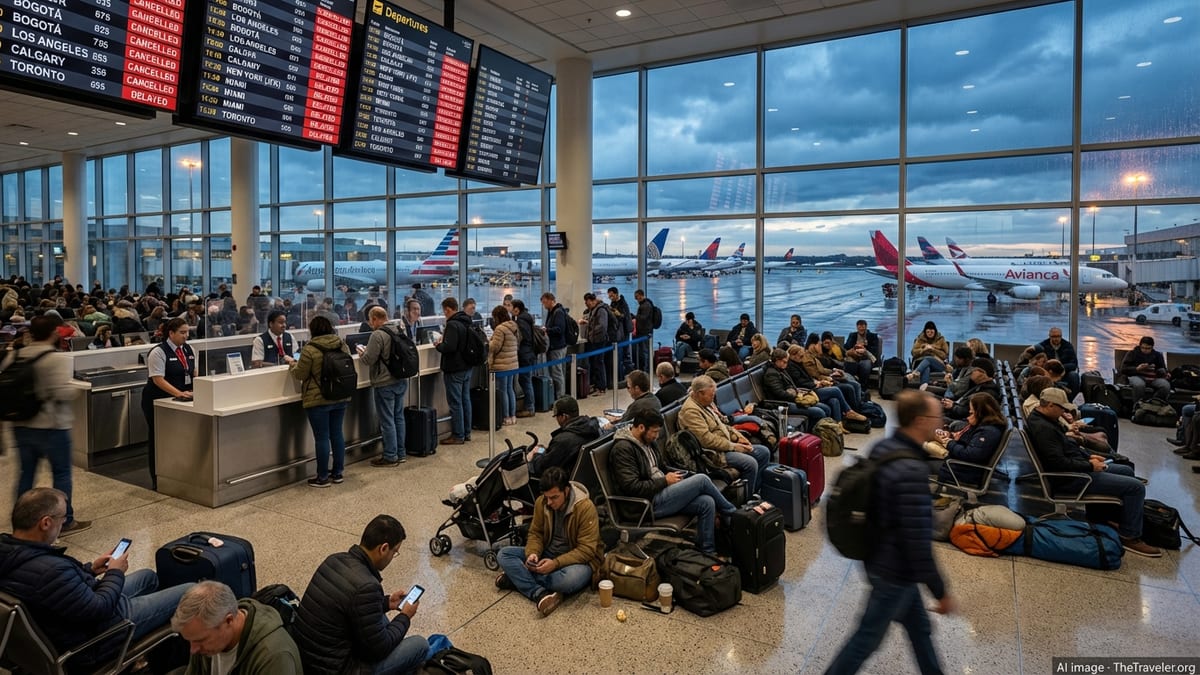
Fort Lauderdale Hub Feels Strain Across Busy Summer Network
The latest disruption underscores the growing operational pressures at Fort Lauderdale-Hollywood International Airport, a major South Florida gateway and operating base for several low cost and leisure carriers. Publicly available airport and airline data show that Fort Lauderdale functions as a key node for point to point traffic across North America and to parts of Latin America and the Caribbean, meaning irregular operations can quickly ripple across the wider network.
Fort Lauderdale serves a mix of large U.S. airlines alongside ultra low cost operators such as Allegiant Air, Frontier and Spirit, as well as international carriers linking the airport with Canadian cities and Central American destinations. When delays accumulate on peak travel days, aircraft and crews scheduled to operate later segments are often forced out of position, amplifying the effect of any initial hold up.
On the day of disruption, 173 delayed departures and arrivals connected to Fort Lauderdale were recorded, alongside 10 cancellations affecting domestic services within the United States and international routes including links to Canada and Costa Rica. These figures reflect performance across multiple airlines that use the airport, rather than a single carrier specific issue.
While the airport has expanded facilities and capacity in recent years, the combination of dense schedules, seasonal tourism flows and strong demand for low fare leisure travel continues to leave little margin when adverse conditions arise, whether from weather, congestion in surrounding airspace or downstream operational constraints at outstations.
Allegiant, Frontier And Delta Among Most Affected Carriers
The disruption has been particularly visible for passengers booked on Allegiant Air, Frontier Airlines and Delta Air Lines, all of which maintain notable operations at Fort Lauderdale. Allegiant and Frontier rely on tight aircraft utilization and point to point schedules that can be vulnerable to knock on effects when one sector experiences a long delay.
Publicly available airline performance data and network information indicate that Allegiant uses Fort Lauderdale as an important leisure gateway for travelers flying from smaller and mid sized U.S. cities into South Florida. Frontier and Delta connect Fort Lauderdale with a range of major domestic hubs as well as additional sun and city destinations, so delays on these carriers tend to affect connecting travel plans and same day returns in particular.
Delta, which brands one of the Fort Lauderdale terminals and offers frequent services to its main hubs, plays a central role in feeding traffic into broader domestic and international networks. This means that late running flights out of Fort Lauderdale can have secondary impacts for passengers connecting onward across the United States and further abroad.
Although the combined figures of 173 delays and 10 cancellations cover multiple airlines, they highlight how simultaneous operational challenges for several key carriers at a single airport can merge into a systemwide problem for travelers, especially during peak periods when spare seats and aircraft are scarce.
Impacts Stretch From U.S. Cities To Canada, Costa Rica And Beyond
The network structure at Fort Lauderdale ensures that any concentrated day of disruption is not confined to South Florida. Schedules show that flights from the airport reach a broad mix of U.S. metropolitan areas and regional cities, as well as Canadian gateways popular with snowbirds and holidaymakers, and leisure destinations across the Caribbean basin and Central America.
According to published coverage of recent operations, delayed and cancelled flights linked to the disruption were spread across U.S. domestic routes as well as transborder services to Canada and selected Central American destinations such as Costa Rica. For passengers, this translated into missed holiday connections, lost nights of hotel stays and, in some cases, the need to rebook onto itineraries several days later during one of the busiest stretches of the northern summer travel season.
Airlines generally prioritize rebooking for travelers facing outright cancellations, but heavy load factors during peak demand periods can limit options. Delays of several hours also complicate crew scheduling rules and aircraft rotations, creating further strains for airlines already managing tight timelines and cost sensitive route networks.
For Fort Lauderdale itself, these ripple effects highlight the airport’s role as a connector between North American origin markets and beach and resort destinations in the Caribbean and Central America. When operations falter, the impact is felt from small U.S. regional airports to major Canadian cities and onward to coastal tourism hubs in countries like Costa Rica.
Travelers Face Long Queues, Missed Connections And Limited Alternatives
For passengers on the ground, the operational statistics translated into long lines at check in, security and customer service counters as travelers sought new routings, meal vouchers or overnight accommodation. Social media posts and local media reports from similar disruption events at Fort Lauderdale describe crowded departure halls, extended waits for baggage, and uncertainty over revised departure times.
On leisure focused carriers such as Allegiant and Frontier, same day alternatives can be especially limited because many routes operate only a few times per week. When a flight is cancelled or heavily delayed, passengers may face the choice between waiting for the next available departure or seeking routings from nearby airports such as Miami, often at higher last minute fares.
Travelers heading to or returning from Canada and Costa Rica also face added complexity, given the need to coordinate cross border formalities and onward ground arrangements such as resort transfers or cruises. Missed departures on these routes can mean shortened vacations, rebooked hotel nights or extra costs for new activities once travelers finally reach their destinations.
Industry data gathered over recent summers indicate that irregular operations at busy leisure airports can have an outsize effect on families and infrequent flyers, many of whom book long planned holidays and may be less familiar with their rights in cases of delays and cancellations or the practical steps required to secure alternative travel.
What The Disruption Signals For Peak Season Travel
The latest wave of delays and cancellations tied to Fort Lauderdale’s operations arrives as airlines across North America adjust schedules for peak summer demand. Publicly available schedule filings and airport statistics point to robust growth in leisure oriented flying, with ultra low cost carriers adding seasonal frequencies and legacy airlines restoring capacity on sun routes.
Analysts note that while airlines have improved staffing levels and fleet availability compared with previous years, system resilience remains under pressure whenever severe weather, air traffic control constraints or local infrastructure issues overlap. On days like the one that produced 173 delays and 10 cancellations at and around Fort Lauderdale, those pressures become visible in crowded terminals and frustrated passengers throughout the network.
For travelers, the disruption serves as a reminder to build additional time into itineraries involving connections through busy leisure airports, particularly when traveling to international destinations such as Canada or Costa Rica where rebooking options may be more limited. Travel advisers often recommend early morning departures, flexible tickets where possible and close monitoring of flight status alerts during the 24 hours before departure.
Airport and airline performance data for Fort Lauderdale show that the facility remains a vital entry point to South Florida and a competitive alternative to Miami for cost conscious travelers. However, as the latest disruptions illustrate, high utilization and complex route networks mean that even relatively small operational shocks can quickly spread across borders, reshaping travel plans for thousands of passengers in a single day.