


More news on this day
Delta Air Lines Flight 2270 was diverted on May 26 after severe storms swept across Atlanta, disrupting operations at the carrier’s largest hub and unleashing cascading delays across the Southeast during one of the year’s busiest travel weeks.
Get the latest news straight to your inbox!
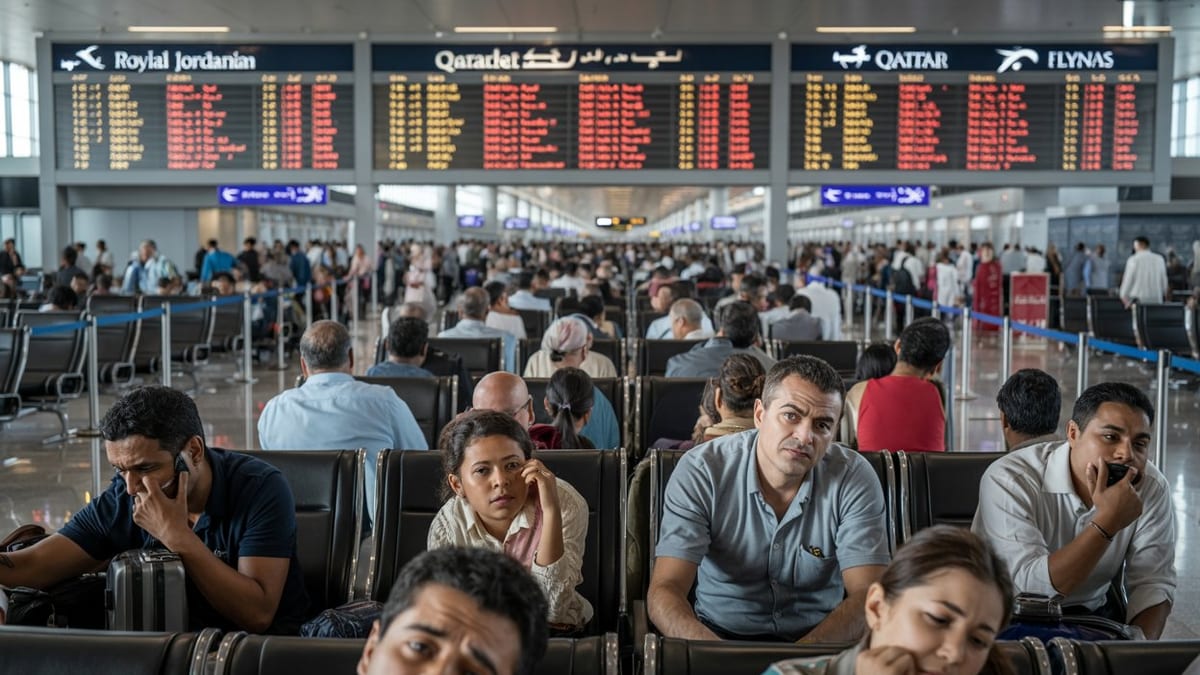
Storms Stall Atlanta as Key Delta Flight Diverts
Publicly available flight-tracking data shows that Delta Air Lines Flight 2270, operating between Philadelphia and Atlanta, was diverted on Tuesday, May 26, with its status updated from an on-time arrival to “Diverted” after 14:42 local time. The aircraft had been scheduled to land at Hartsfield-Jackson Atlanta International Airport, Delta’s primary hub, during a period of intense thunderstorm activity over the metro area.
Separate operational advisories from the airline issued in recent days highlight thunderstorms in the Atlanta area affecting travel between May 21 and May 22, with guidance that disruptions could spill into subsequent days as schedules were reset and aircraft repositioned. Those advisories warned that travel to, from, or through Atlanta may be affected by convective weather systems, emphasizing the sensitivity of hub operations to fast-changing storm conditions.
Meteorological patterns over the Southeast in late May frequently produce slow-moving thunderstorm clusters capable of disrupting air traffic flows into Atlanta. When those systems settle directly over the airport, arrivals can be halted, departures paused, and aircraft already in the air forced to divert to alternate airports until conditions improve and the airspace can safely reopen.
The diversion of Flight 2270 appears to fit that pattern, with the aircraft redirecting away from its planned arrival into a congested and weather-impacted hub. While specific details about the alternate airport were not immediately available in public feeds, the status change reflects how quickly a routine domestic service can be reshaped by severe weather around a single critical hub.
Ripple Effects Across Delta’s Atlanta Network
The disruption to Flight 2270 occurred against a broader backdrop of operational strain for Delta in the days surrounding the Memorial Day holiday. Independent disruption-tracking services report that the airline canceled more than a dozen flights and delayed close to 300 on May 24, with the largest impacts recorded at Atlanta as well as other major stations including Boston, Orlando, Mexico City, and Los Angeles.
Atlanta’s role as Delta’s principal connecting hub means any capacity reduction there can quickly cascade across the network. Even a relatively short ground stop as storms pass overhead can back up inbound flights waiting for gates, delay departures queued for takeoff, and push aircraft and crews out of position for later rotations. That creates a knock-on effect that can last well beyond the original storm window.
Recent flight records for other Delta services into and out of Atlanta show how closely performance is tied to weather stability. Operational summaries for the past several months indicate that the carrier generally maintains a strong on-time performance from its Atlanta hub, but with a measurable fraction of services experiencing significant delays or diversions during periods of adverse weather or air traffic restrictions.
For travelers, that means a single weather system over northern Georgia can lead to missed connections, overnight delays and schedule changes across multiple states. Flights that never touch Atlanta directly can still be affected if their aircraft or crews are routed through the hub earlier in the day.
Recent History of Weather-Driven Diversions
The diversion of Flight 2270 is the latest in a series of weather-related disruptions centered on Atlanta. In previous months, published coverage and passenger reports have described multiple Delta flights being forced to divert to airports across the Southeast when storms have stalled over the city, sometimes leaving travelers on board for extended periods while crews awaited new routing or gate availability.
In one recently reported case, a Delta flight from Atlanta was diverted to Omaha after severe weather made continuing along the planned route impossible, resulting in an unplanned overnight delay for passengers. Other shared accounts describe services bound for Atlanta being rerouted to cities such as Huntsville, Birmingham, or Charleston when intense thunderstorms or hail cells have temporarily shut down arrival flows into the hub.
These episodes illustrate how vulnerable even a highly scheduled hub operation can be when confronted with slow-moving convective weather. Unlike isolated showers, large thunderstorm complexes and associated hail or wind events can force airlines and air traffic control to rapidly curtail operations, triggering diversions similar to that recorded for Flight 2270 on May 26.
Operational analyses of past storms over Atlanta have also highlighted gate constraints and post-storm aircraft inspections as contributing factors to lingering delays. When aircraft must be checked for potential hail or debris damage before flying again, departure banks can thin out, further complicating efforts to recover the schedule after the weather has passed.
Passenger Impact and Travel Rights During Weather Chaos
The disruption around Flight 2270 and wider delays at Atlanta come at a time when many travelers are paying closer attention to their rights when flights are diverted or delayed. Consumer advocacy platforms tracking Delta’s performance have noted that the airline’s Memorial Day weekend disruptions affected thousands of passengers, particularly those relying on connections through heavily used hubs like Atlanta.
In the United States, compensation for weather-related flight problems is limited, as thunderstorms and other severe conditions are generally classified as outside an airline’s control. Publicly available guidance from travel-rights organizations indicates that in many weather-based diversions, carriers are not required to reimburse incidental expenses such as hotels or meals, though they may offer rebooking assistance or travel credits at their discretion.
Travel analysts advise that passengers facing diversions similar to Flight 2270’s should monitor their carrier’s mobile app and official alerts closely, as same-day rebooking options can open quickly once operations begin to stabilize. In hub-centric disruptions, seats on the first recovered flights often fill fast, especially during peak holiday travel periods when load factors are already high.
The experience of travelers on recently diverted Delta flights into alternate Southeast airports suggests that ground handling capacity, local hotel availability, and the timing of crew duty limits all play a role in how quickly passengers can be moved onward. When multiple flights divert simultaneously, support resources can be stretched thin, extending the overall impact on those onboard.
What Travelers Can Expect in the Days Ahead
With Flight 2270’s diversion underscoring the fragility of schedules during volatile spring weather, the focus for many Southeast travelers is now on the pace of operational recovery at Atlanta. Delta’s recent weather advisories for the region encourage customers to check their flight status frequently and to consider rebooking options if their travel dates are flexible.
As of late May, forecast patterns for the Southeast continue to call for scattered thunderstorms, meaning periodic slowdowns are still possible at major hubs. When combined with elevated holiday demand, that environment leaves little slack in the system to absorb additional disruptions without passenger impact.
Industry observers note that airlines typically prioritize restoring core hub operations first, bringing aircraft and crews back into alignment at major connecting points before fully normalizing outlying routes. In practice, that can mean that point-to-point services and smaller regional destinations feel the effects of a disruption window for longer than trunk routes.
For now, travelers across the Southeast are likely to see continued reminders of the weather event that diverted Delta Flight 2270. While operations at Atlanta can recover quickly once storms clear, the combination of a major hub, peak-season demand, and highly changeable late-spring weather means that even a single afternoon of thunderstorms can echo through the network for days.