


More news on this day
Passengers traveling between Lagos and Atlanta on Delta Air Lines have reported being stranded for days after repeated cancellations and long delays linked to mechanical issues on the busy Nigeria–United States route, underscoring broader operational strains at the carrier following a summer of high-profile disruptions.
Get the latest news straight to your inbox!
Mechanical Problems Disrupt a Key Transatlantic Link
Reports from travelers on the Lagos–Atlanta route describe multiple instances where Delta flights were delayed or cancelled after the airline cited mechanical problems with long-haul aircraft assigned to the service. The Lagos–Atlanta pairing connects one of West Africa’s largest aviation markets with Delta’s biggest hub, making it a vital corridor for business, family visits, and onward connections across North America.
Publicly available incident summaries and media coverage show that Delta has experienced several mechanical events affecting widebody operations tied to Atlanta in recent months, including precautionary returns to the airport and cancellations when issues were identified during preflight checks. In at least one widely reported case, a Delta international flight from Atlanta was cancelled after a mechanical fault was discovered during inspections at the gate, prompting an extensive rebooking effort for passengers.
Analysts note that mechanical disruptions on long-haul routes have an outsized impact because there are typically fewer daily frequencies and fewer spare aircraft available. When an aircraft operating a route such as Lagos–Atlanta is taken out of service, finding a replacement can take many hours or even days, especially during peak travel periods when fleet utilization is already tight.
Industry data on disruption patterns during the 2024 summer season also point to heavy pressure on transatlantic operations touching Atlanta, with the hub frequently appearing among routes and airports with elevated levels of delays and cancellations. In this environment, any mechanical issue on a Lagos–Atlanta rotation can quickly cascade into multi-day knock-on effects for travelers at both ends of the route.
Stranded Passengers Face Long Delays and Limited Options
Travelers on recent Lagos–Atlanta services have shared accounts of extended airport stays, missed connections, and difficulty obtaining timely rebookings when their flights were disrupted. Many passengers on this route rely on tight onward connections in Atlanta to reach final destinations across the United States, so a single cancellation can mean the loss of an entire itinerary and a scramble to secure alternative seats on already full flights.
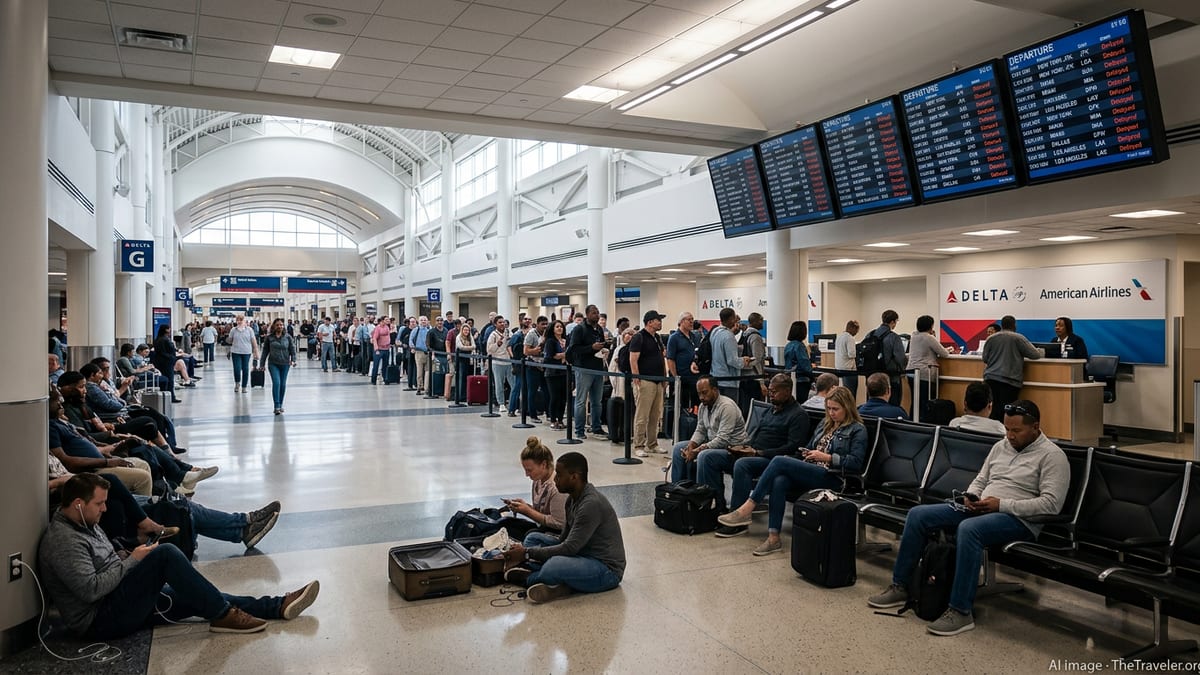
Accounts posted on social platforms and travel forums reflect scenes of long lines at customer-service counters, uncertainty over new departure times, and limited availability of hotel rooms when disruptions extend overnight. Some travelers describe being offered rebooking options several days later, effectively leaving them stranded in Lagos, Atlanta, or intermediate connection points while they wait for space to open up on subsequent flights.
Publicly available information from Delta and federal regulators indicates that the airline has at times struggled to keep pace with customer needs during periods of elevated disruption, particularly following the July 2024 technology outage that rippled through its global network. Although that event was not specific to Lagos–Atlanta, it highlighted how fragile complex hub-and-spoke operations can become when aircraft, crews, and passengers are misaligned across continents.
Consumer advocates say that long-haul travelers originating outside the United States, such as those departing Lagos, can be especially vulnerable when irregular operations strike. With fewer alternative carriers serving certain city pairs nonstop, and with many flights already heavily booked, stranded passengers may have little choice but to accept rebookings that leave them waiting for days.
Operational Strain at Atlanta Magnifies Lagos Impacts
Hartsfield–Jackson Atlanta International Airport serves as Delta’s primary hub and the main North American gateway for many Africa-bound and Africa-originating flights. When disruptions hit Atlanta, they can spread quickly across the airline’s network, including its Lagos services. During the major operational crisis that followed the 2024 CrowdStrike-related IT outage, publicly available statistics show that Delta cancelled thousands of flights systemwide over several days, with Atlanta bearing much of the burden.
Reports from that period describe passengers sleeping in terminals, long queues for rebooking, and widespread cancellations on domestic and international routes flowing through Atlanta. Subsequent analysis in U.S. media highlighted how system failures affecting crew scheduling tools and aircraft rotations magnified the impact of the initial outage, leaving the airline struggling to put aircraft and staff in the right place at the right time.
While the recent Lagos–Atlanta mechanical disruptions are operationally distinct from the IT meltdown, they occur against this backdrop of broader strain at Delta’s hub. Industry observers note that when an airline’s schedule is already tightly wound, even isolated mechanical events can be harder to recover from, particularly on long-haul flights that require specific aircraft types and rested long-range crews.
Independent disruption reports have also flagged the Atlanta–Lagos route among those that experienced relatively high levels of interruptions during periods of network stress, suggesting that operational challenges on this corridor are part of a wider pattern. As a result, passengers traveling between Nigeria and the United States via Atlanta have faced an elevated risk of extended delays and missed onward connections.
Passenger Rights and Compensation Under Renewed Scrutiny
The Lagos–Atlanta disruptions arrive at a moment when passenger protections are under intense scrutiny in the United States. The U.S. Department of Transportation has opened investigations into how airlines, including Delta, handled large-scale disruptions in 2024, focusing in part on whether travelers were properly informed of their rights to refunds and compensation when flights were cancelled or significantly delayed.
Regulators have emphasized that, under U.S. rules, passengers are generally entitled to a cash refund when a carrier cancels a flight or makes a significant schedule change and the traveler chooses not to be rebooked. Guidance published by transportation authorities also outlines expectations around meal vouchers, hotel accommodations, and ground transport when disruptions are within an airline’s control, such as many types of mechanical issues.
Legal specialists point out that international itineraries, including flights between Lagos and Atlanta, may involve overlapping frameworks, including U.S. consumer regulations, Nigerian civil aviation rules, and the contractual conditions of carriage set by the airline. This can create confusion among passengers about exactly what assistance or reimbursement they can claim when they are stranded far from home for days.
In response to recent crises, Delta has publicly announced measures intended to “make things right” for affected customers, including expanded change-fee waivers and reimbursement policies during specific disruption windows. Travel-rights advocates, however, continue to call for clearer, more automatic compensation standards across the industry to reduce the burden on individual passengers to negotiate relief after stressful, multi-day delays.
Planning Strategies for Travelers on the Lagos–Atlanta Route
For travelers still planning to fly between Lagos and Atlanta in the coming months, analysts suggest taking a more cautious approach to itinerary design. Given the potential for mechanical or operational disruptions on a long-haul route that feeds into a busy hub, they recommend avoiding tight connections in Atlanta and allowing extra time before important events, such as business meetings, weddings, or international cruise departures.
Travel-advice outlets also recommend monitoring flight status closely in the days leading up to departure, using both the airline’s app and third-party tracking tools, and keeping contact details updated so that schedule-change notifications arrive promptly. In situations where repeated delays begin to accumulate, some travelers may find it worthwhile to proactively explore rebooking on alternative routings or dates rather than waiting at the airport for rolling departure estimates.
Seasoned long-haul passengers on this corridor increasingly advocate for flexible accommodation plans, including refundable hotel bookings where possible and travel insurance that specifically covers extended delays and missed connections. They note that while no policy can eliminate disruption risk, such measures can soften the financial impact when multi-day delays occur.
As Delta works to stabilize its global operation after a turbulent period, the Lagos–Atlanta experience illustrates the stakes for travelers on critical long-haul routes. For passengers, the recent episodes of being stranded for days underscore the importance of understanding rights, building flexibility into itineraries, and preparing for the unexpected when crossing continents through a heavily trafficked hub.
Delta Air Lines: July 2024 Travel Disruption Advisory
Washington Post coverage of U.S. investigation into Delta disruptions