


More news on this day
Dozens of holidaymakers remain stranded on the Cape Verde island of Boa Vista after an easyJet service to Porto was abruptly cancelled, leaving passengers scrambling for alternative routes home and prompting renewed scrutiny of how airlines manage major disruption.
Get the latest news straight to your inbox!
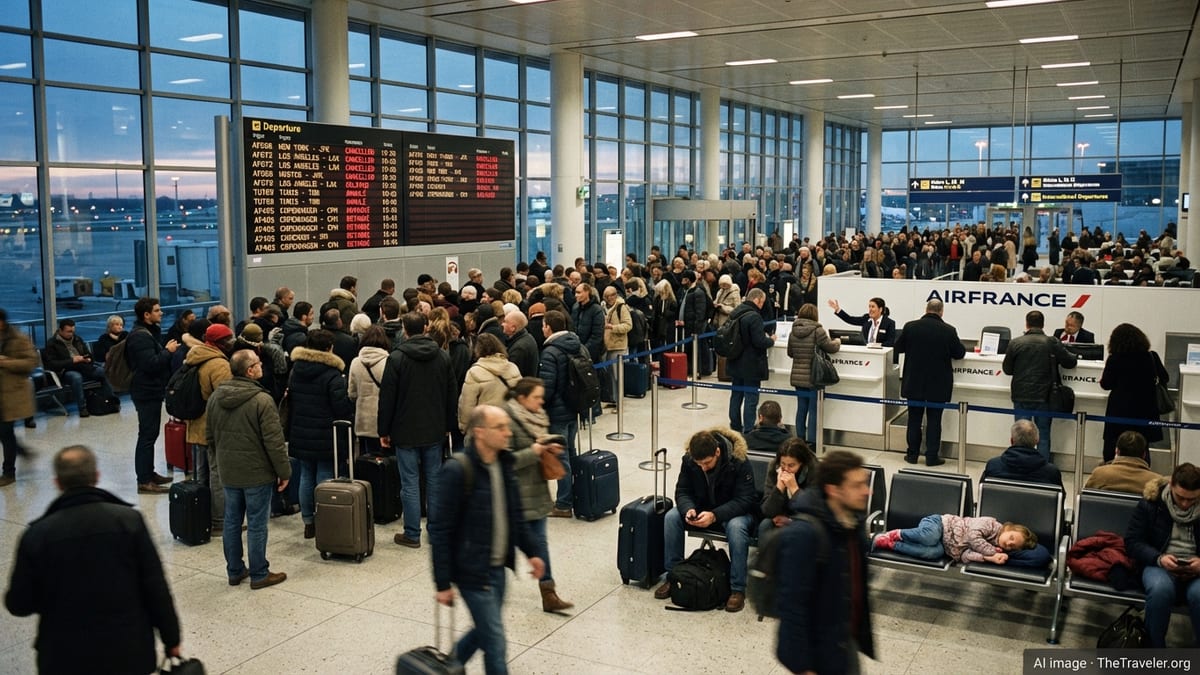
Porto-bound flight from Boa Vista cancelled at short notice
According to multiple Portuguese media reports, the disruption centers on easyJet flight U2 6872 from Boa Vista’s Aristides Pereira International Airport to Porto’s Francisco Sá Carneiro Airport, scheduled to depart on Tuesday 25 August at around 10:05 local time. Flight-tracking data list the service as cancelled, with no departure from Cape Verde or corresponding arrival in northern Portugal recorded for that date.
Passenger accounts cited in local coverage indicate that some travelers received late-night notification on Monday that the flight would not operate, while others learned of the cancellation only after attempting to check in at the airport the following morning. Estimates of the number of affected travelers vary, with figures ranging from around 130 people to more than 180 Portuguese nationals reported as unable to leave the island as planned.
Several travelers were reportedly returning from package holidays on Boa Vista, a popular sun-and-beach destination for Portuguese visitors. With the only direct link of the week to Porto removed from schedules, many found themselves reliant on a combination of tour operators, travel agencies and easyJet’s own rebooking channels to secure seats on later services or on connections via other islands and mainland hubs.
The cancellation follows a period of strong seasonal demand on routes between Portugal and Cape Verde, where flight capacity can already be tight in late summer. The removal of a single rotation on a relatively thin route has therefore created a noticeable backlog of passengers still trying to return home days after their original travel date.
Airline cites weather-related disruption in Europe
Publicly available information from airline statements reported in Portuguese outlets indicates that easyJet attributed the Boa Vista–Porto cancellation to knock-on effects from adverse weather in central Europe. The aircraft assigned to operate flight U2 6872 reportedly remained in Basel the previous day after air-traffic control restrictions linked to poor meteorological conditions, preventing it from positioning to Cape Verde in time for Tuesday’s departure.
The airline’s explanation categorizes the disruption as a consequence of wider operational constraints rather than a technical fault with the aircraft itself. Weather and air-traffic control restrictions are commonly cited causes when carriers are forced to thin out schedules or cancel individual sectors late in the planning cycle, particularly during the busy summer period when fleets operate close to maximum utilization.
While the decision to cancel a flight under these circumstances can be operationally unavoidable, it often leaves travelers facing complex itineraries, especially on leisure routes to island destinations with limited daily services. In this case, Boa Vista’s relative isolation and the predominance of charter and low-cost traffic have combined to narrow the range of same-day alternatives once the direct Porto service disappeared from the timetable.
Industry observers note that airlines have some flexibility to rearrange aircraft and crews, but such options can quickly diminish when poor weather disrupts multiple routes across several bases. The decision over which flights to cancel can depend on numerous operational and commercial factors, sometimes leaving peripheral or lower-frequency routes more exposed to disruption.
Stranded passengers weigh rebooking, refunds and expenses
Coverage in Portuguese media indicates that easyJet has offered affected passengers a choice between rebooking on the next available flight or receiving a full refund of their unused ticket, in line with its standard policies for cancellations. The carrier has also indicated a willingness to reimburse what it describes as reasonable additional expenses for customers who organize their own alternative travel arrangements back to Portugal.
Public guidance on the airline’s delays and cancellations pages explains that travelers whose flights are cancelled can normally switch free of charge to another easyJet service on the same route or to nearby airports within the same country, subject to availability. If travelers are unable to make use of the rebooking options offered, they can opt for a refund and then seek separate transport, later submitting claims for eligible costs such as accommodation, meals and replacement flights.
For those still on Boa Vista, the main challenge appears to be seat availability on subsequent services from Cape Verde to Portugal. Reports suggest that some passengers have been able to secure places on later flights or on alternative routings via other islands or mainland airports, while others remain on waiting lists. The pace at which the backlog can be cleared will depend on how quickly the airline can free capacity and whether travelers choose to split up across different flights or routes.
Travel specialists note that passengers affected by cancellations within or from the European Union may hold additional rights to care and, in some scenarios, compensation under EU air passenger rules, although entitlement can be influenced by the nature of the disruption and whether it is deemed outside the airline’s control. In practice, many travelers first seek immediate assistance with rebooking and accommodation before pursuing any formal claims once they are safely home.
Cape Verde’s growing links to Portugal under spotlight
The incident has drawn attention to the rapid expansion of air links between Portugal and Cape Verde in recent years, a trend that has increased leisure traffic while also exposing more travelers to the impact of disruptions on island routes. EasyJet, which entered the Cape Verde market in late 2024 with flights connecting Portuguese cities to the island of Sal, has since widened its network to include Boa Vista as well as other islands such as Praia and São Vicente.
Boa Vista, known for long sandy beaches and large all-inclusive resorts, has become a key winter and shoulder-season escape for Portuguese tourists. Charter operators and scheduled low-cost carriers together underpin the island’s connectivity with Europe, but the relatively modest number of weekly flights on each route means that any single cancellation can have disproportionate effects, particularly during peak travel weeks.
The current situation also highlights the logistical complexity of moving stranded travelers off smaller islands when aircraft rotations are tightly planned. Options can include temporary use of larger aircraft, adding extra flights, or rerouting passengers via other islands if inter-island connections and seats are available, each of which may require coordination with local airport authorities, ground handlers and tour operators.
As operations stabilize after the weather disruption in central Europe, attention is likely to focus on how quickly carriers serving Cape Verde can normalize schedules and reduce backlogs. For passengers delayed on Boa Vista, the priority remains securing confirmed seats back to mainland Portugal, whether directly to Porto or via alternative gateways.
Ongoing questions over communication and disruption handling
The Boa Vista disruption has also prompted discussion in Portuguese media and online forums about how airlines communicate with passengers when flights are cancelled at short notice. Some travelers have described receiving late-night text messages or app notifications, while others reportedly learned of the cancellation only after contacting travel agencies or arriving at the airport, underlining variations in how information filters through to customers who booked through different channels.
EasyJet’s publicly available information emphasizes the role of its mobile app and online “disruption hub” for real-time updates, rebooking options and claims processes. However, the experience of passengers stranded in Cape Verde reflects the practical difficulties of managing travel plans from a resort environment, where reliable connectivity, access to alternative bookings and on-the-spot customer support can be more limited than at major European hubs.
Consumer groups frequently advise travelers to monitor airline apps and flight trackers closely in the days and hours before departure, especially during periods of unsettled weather or widespread operational strain. For routes to island destinations, where capacity is constrained and services are often infrequent, proactive monitoring can be particularly important so that passengers can move quickly to secure scarce seats if cancellations occur.
As of Thursday 27 August, reports suggest that not all affected travelers have yet left Boa Vista, although the number still stranded on the island appears to be falling as rebooked flights depart. The episode is likely to feed into broader debates in European aviation about how carriers plan capacity, prioritize routes during disruption and support passengers when cancellations leave them unexpectedly grounded far from home.