

More news on this day
Travelers heading from Atlanta to Peru faced days of disruption after a Delta Air Lines service to Lima was abruptly canceled this week, leaving passengers sleeping in terminals, struggling to access their checked bags and searching for scarce alternatives out of the world’s busiest airport.
Get the latest news straight to your inbox!
Late Cancellation Turns Routine Route Into Days of Disruption
Reports from passengers and local coverage indicate that a Delta-coded service from Atlanta to Lima, Peru, scheduled for late evening departure, was canceled shortly before boarding, halting travel plans for dozens of international flyers. The flight, operated as DL6078 on a partner carrier, had been due to leave Hartsfield Jackson Atlanta International Airport around 11 p.m., part of the nightly stream of long haul departures bound for Latin America.
Flight tracking data shows that DL6078, which typically links Atlanta with Lima’s Jorge Chávez International Airport, was listed as canceled for its June 16 departure. That cancellation came after weeks of otherwise routine operation on the route, turning what is usually an overnight transcontinental journey of around seven hours into an open ended ordeal for those already in the terminal and for connecting passengers arriving from other U.S. cities.
Accounts compiled from published coverage and social media posts describe an immediate scramble as travelers tried to rebook onto limited remaining seats to Peru. With Atlanta serving as a major hub for Delta and a key connection point for South America bound itineraries, the sudden removal of a prime late night departure created a bottleneck that rippled across multiple subsequent flights.
For passengers who had already checked bags through to Peru, the situation was further complicated by the practical challenge of retrieving luggage or rerouting it to new flights. Publicly available information suggests that some travelers opted to remain booked with Delta and its partners, while others attempted to piece together multi segment routes on competing airlines to avoid losing more days of travel.
Passengers Camp Out in Atlanta Airport Terminals
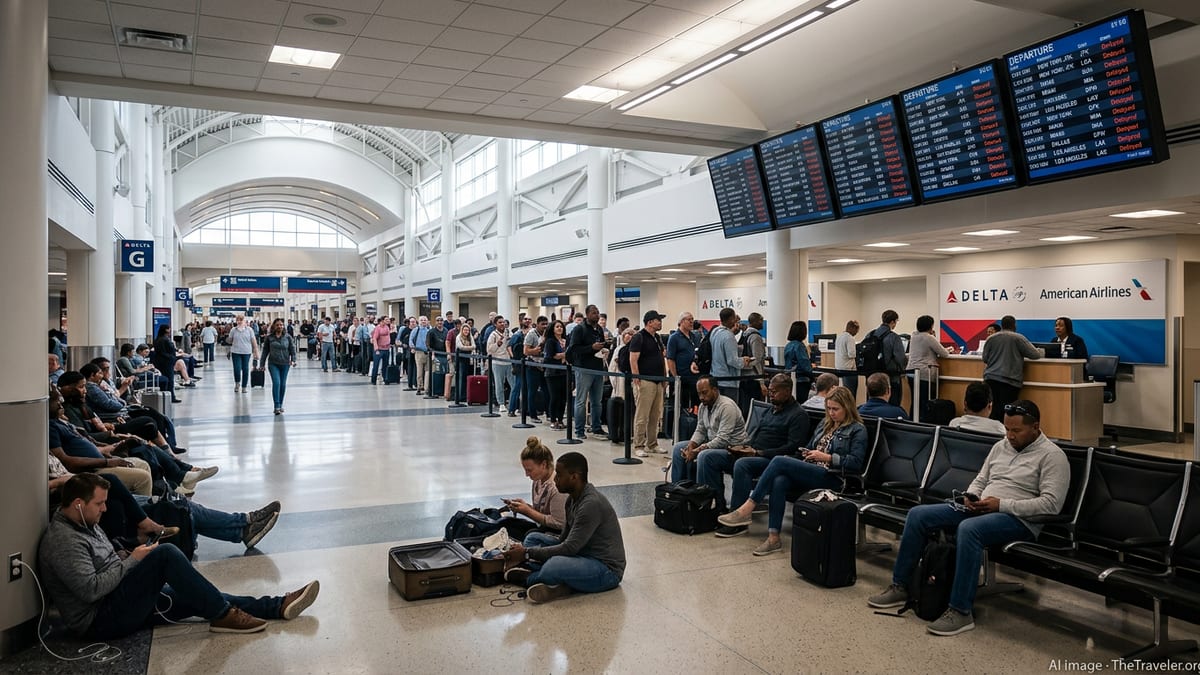
Descriptions from the concourses at Hartsfield Jackson paint a picture of a makeshift overnight encampment as stranded travelers weighed their options. Accounts compiled by travel news outlets and local media refer to passengers stretched out along rows of seats and on the floor using sweaters, jackets and carry on bags as pillows while they waited for updated itineraries.
Atlanta’s role as Delta’s primary hub means that disruption on a single international route can leave passengers with few immediate alternatives, particularly for late night departures. Once DL6078 was removed from the schedule, travelers with tight vacation windows or onward connections into Peru’s domestic network faced the possibility of missing tours, internal flights or time sensitive commitments in Cusco, Arequipa and other destinations.
Some reports note that passengers arriving from other U.S. cities to connect onto the Lima service found out about the cancellation only after landing in Atlanta. With most same night alternatives already full or departed, those travelers joined the growing group of people settling in for an unplanned night in the airport, queuing at service desks and monitoring app notifications for rebooking updates.
The scenes echo other recent episodes of airport gridlock where weather, crew scheduling and operational constraints have collided, leaving airline staff and passengers to navigate crowding, long waits at customer service counters and uncertainty about when normal operations will resume.
Operational Strain Highlights Fragility of Hub Connections
The disruption on the Atlanta to Lima route underscores how dependent many international itineraries are on a single tightly timed connection through a carrier’s hub. Delta normally offers a daily nonstop from Atlanta to Lima, including flight DL151, an Airbus A330 service scheduled for a late afternoon departure. When a late evening partner operated departure like DL6078 is canceled, the redundancy built into the schedule can quickly evaporate.
Flight tracking platforms show that Delta’s mainline DL151 continues to operate on most days between Atlanta and Lima, providing an anchor for the route even as codeshare services fluctuate. However, with high summer demand and limited widebody capacity, available seats on subsequent departures can be scarce, particularly for groups or families trying to stay together on the same aircraft.
Travel industry observers note that hub operations can be especially vulnerable when irregular operations affect banks of connecting flights. A cancellation on a popular international route does not only strand origin passengers in Atlanta; it can also cascade through inbound connections from smaller U.S. cities whose travelers rely on the hub to access South America without changing airlines mid journey.
The Peru disruption comes amid a broader environment of tight airline staffing, congested summer schedules and ongoing infrastructure work at major airports. Construction updates affecting both Lima and Atlanta, referenced in public advisories, add another layer of complexity for carriers and passengers attempting to navigate last minute changes.
Communication, Compensation and Traveler Rights in Focus
As details of the Atlanta Peru disruption spread, online discussions turned quickly to questions about notification, compensation and traveler rights when long haul flights are canceled at short notice. Passenger accounts referenced in news coverage suggest a mixed experience with alerts from airline apps and texts, with some travelers learning of the cancellation in advance and others discovering it only at the gate.
Consumer advocates point to the importance of understanding each carrier’s contract of carriage and any applicable national regulations when disruptions occur. While the United States does not mandate cash compensation for most delays or cancellations, airlines commonly provide meal vouchers, hotel accommodations or ground transportation in certain situations, especially when problems stem from internal operational issues rather than severe weather or air traffic control restrictions.
Guides covering Delta’s policies indicate that travelers may be eligible for rebooking on the next available flight, refunds for unused portions of tickets in some cases, and limited reimbursement for extra expenses such as overnight stays when the airline is directly responsible for the disruption. However, these benefits are subject to conditions, and documentation of out of pocket costs is typically required for any after the fact claims.
For international travelers heading to Peru, the stakes are often higher than for domestic itineraries, as missed connections can cascade into nonrefundable tours, hotel nights and regional flights booked on separate tickets. Travel planners frequently recommend purchasing flexible or changeable fares where possible and considering travel insurance that explicitly covers missed connections and trip interruption on complex, multi leg journeys.
Lessons for Future Trips to Peru via Atlanta
The Atlanta Peru episode serves as a cautionary case study for travelers planning South America trips routed through major hubs. One practical takeaway highlighted by recent coverage is the value of building in ample connection time when linking domestic legs to long haul departures, particularly during peak travel months and late night departure windows.
Travel experts often advise avoiding the last flight of the night on critical international segments when an earlier option exists, or at least having a contingency plan if that departure is disrupted. On the Atlanta to Lima corridor, that might mean targeting the mainline afternoon Delta service where possible, or considering alternate routings on other carriers through Miami, Houston or Dallas if schedules and budgets allow.
Another lesson is the importance of keeping essential items, medications and a change of clothes in carry on luggage, especially for overnight flights. Passengers stranded in Atlanta reported difficulty accessing checked bags once the cancellation took effect, a common challenge when luggage has already been processed through security and sorting systems.
For the many travelers who still rely on Atlanta as the starting point for Peruvian adventures, the recent chaos is unlikely to dampen long term demand for the route. It does, however, reinforce how quickly a single canceled flight can transform a long anticipated journey into an airport marathon, and how preparation, flexibility and an understanding of passenger rights can help mitigate the impact when plans fall apart.