

More news on this day
An American Airlines customer’s account of an 11-hour disruption at Dallas Fort Worth International Airport is drawing attention to how concentrated hub operations and app-first customer service can leave travelers stranded when irregular operations cascade across a major airport.
Get the latest news straight to your inbox!
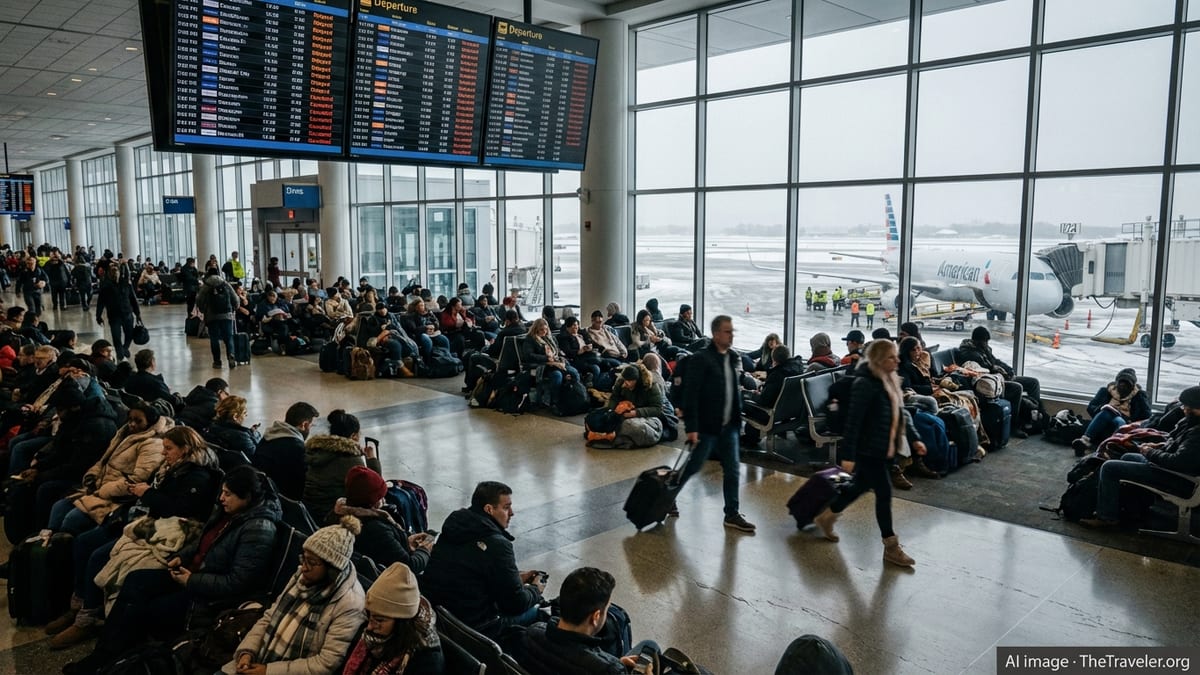
Passenger Recounts Daylong Disruption at American’s Largest Hub
In a detailed post shared on a popular airline discussion forum in mid-June, a traveler described arriving at Dallas Fort Worth International Airport for an evening departure to Boston only to see the trip unravel across eleven hours of rolling delays, gate changes and last-minute schedule shifts. The passenger ultimately abandoned the journey after the overnight replacement flight was itself canceled shortly before departure, characterizing the experience as an exhausting sequence of shifting explanations and limited practical assistance.
The report centers on an American Airlines itinerary routed through Dallas Fort Worth, the carrier’s largest hub and a key connection point for domestic and international traffic. According to the account, the original flight was repeatedly delayed into the late-night hours before being scrubbed, with the airline moving passengers to a 6 a.m. departure the following day. That early-morning service was then reportedly canceled about an hour before boarding, leaving travelers to seek alternative options for reaching New England.
The traveler calculated that the net compensation for the ordeal amounted to just over six dollars, underscoring a long-standing frustration among many U.S. passengers that time lost to non-refundable hotels, missed events and reworked itineraries is rarely matched by financial redress. The post has generated extensive discussion among frequent flyers, many of whom report similar experiences with long, uncertain waits when operations at a major hub begin to buckle under strain.
American Airlines has not issued a public statement specific to this individual case, but its broader operational material emphasizes efforts to improve reliability in 2026 and to manage high-volume hubs such as Dallas Fort Worth more proactively during disruptive events.
Weather, Hubs and a System Under Strain
The episode at Dallas Fort Worth unfolded during a period in which several major U.S. hubs have been grappling with storms and associated air traffic restrictions. Recent travel alerts from American Airlines highlight inclement weather around Chicago, while separate notices warn of severe weather disruptions in the Northeast corridor, illustrating how regional conditions can ripple through a tightly wound network of banked hub schedules.
Industry briefings on airline operations in 2026 note that American, like its competitors, has leaned heavily on hub concentration and sophisticated forecasting tools designed to cancel and consolidate flights hours before weather or traffic programs fully develop. The intent is to preserve wider network stability, but individual passengers can experience these decisions as a string of short-notice cancellations and rebookings, particularly when they are connecting through a single dominant hub.
Travel analysis focused on Dallas Fort Worth frequently cites the airport’s exposure to convective thunderstorms, hail and high winds during peak travel months. Operational observers argue that placing such a large portion of American’s schedule through a weather-prone city increases the likelihood that a local storm can snowball into widespread delays and cancellations over the course of a day. The 11-hour ordeal described by the Boston-bound passenger has therefore resonated as a case study in how a marginally bad weather day can translate into a lost day of travel.
Publicly available on-time performance data show that while American has improved its overall completion factor in 2026 compared with some previous years, delays at hubs like Dallas Fort Worth and Chicago can still spike sharply during afternoon and evening banks, when aircraft and crews are tightly scheduled and recovery options are limited.
Digital-First Support Faces Real-World Test
The passenger’s account from Dallas Fort Worth has also collided with a broader debate about how American Airlines staffs its customer service functions at airports. Separate reporting on disruptions at Washington Reagan National Airport in June describes how the airline’s shift toward digital-only support and reduced front-line staffing left some passengers facing QR codes and app flows instead of traditional customer service counters when thunderstorms forced mass cancellations.
According to that coverage, American has invested heavily in app-based rebooking tools that can automatically find new routings and seat assignments when flights cancel or misconnect. The system is designed to function at scale, offering customers self-service options without requiring long queues at service desks. However, recent disruptions at multiple hubs have shown that when hundreds of passengers are all trying to use the same digital channels at once, slow load times, error messages and limited alternative options can leave travelers feeling as if they have few avenues for help.
In the Dallas Fort Worth case, commenters responding to the traveler’s account describe long waits to reach human agents and difficulty obtaining clear information about when a final decision would be made on whether a delayed flight would operate. Several note that while the app might eventually display a rebooking, passengers often learn about changes only after spending hours near the gate, uncertain whether to book hotels, exit security or make independent arrangements.
American’s publicly available customer guidance encourages travelers to use its website and mobile app for same-day changes and disruption management, but consumer advocates argue that entirely digital workflows can feel impersonal and fragile in high-stress scenarios, especially for travelers who are less comfortable with technology or who rely on in-person assistance due to language, disability or family needs.
Passenger Rights, Policies and Limited Compensation
The small compensation amount reported by the Dallas Fort Worth passenger has renewed attention on what U.S. travelers can reasonably expect when domestic flights are delayed or canceled. American Airlines sets out its obligations in an updated conditions of carriage document, which distinguishes between disruptions within the airline’s control, such as certain mechanical issues, and those driven by weather or air traffic constraints.
Under the carrier’s published policies, passengers whose trips are significantly disrupted may be rebooked on the next available flight, sometimes with hotel or meal accommodations if they are away from home and the cause is directly attributable to the airline. However, cash compensation for delays is not mandated in the United States, and customers affected by irregular operations generally have no automatic right to fixed payments for lost time, unlike in some international jurisdictions.
Consumer-rights organizations note that this framework means two travelers can emerge from an 11-hour ordeal with very different outcomes, depending on the specific cause of the disruption, the discretion of agents and the level of documentation they retain. Some passengers receive hotel vouchers or travel credits, while others receive nominal goodwill gestures or nothing at all. Social media and forum posts show ongoing confusion about how these determinations are made and what evidence passengers should gather if they plan to pursue reimbursement or file complaints with regulators.
Advisories produced for travelers in 2026 recommend that passengers caught in major disruptions at U.S. hubs keep boarding passes, receipts and screenshots of delay notifications, and that they familiarize themselves with both airline policies and any applicable federal guidance regarding lengthy tarmac delays or cancellations. These resources stress that proactive documentation is often crucial when seeking after-the-fact relief.
Broader Pattern of High-Profile Disruptions
The Dallas Fort Worth account is emerging against a backdrop of other high-profile airline disruptions this year, many of which have captured public attention through viral videos, niche aviation sites and passenger forums. Recent examples involving American Airlines include a cockpit-door malfunction on a Boeing 737 at Dallas Fort Worth that required unusual ground procedures and created knock-on delays for subsequent flights, as well as a widely discussed seat dispute on a Miami departure that ended with an entire aircraft being deplaned.
Beyond any one carrier, long-haul diversions and emergency landings have transformed routine itineraries into multi-stop odysseys for passengers on transatlantic and domestic routes alike. Reports detailing diversions of European and U.S. flights due to onboard incidents, disruptive passengers or mechanical concerns describe journeys extended by several hours or redirected to unexpected cities, sometimes with limited immediate support at the diversion airport.
Aviation analysts point out that these events, while still relatively rare compared with the overall volume of flights, are now documented in real time by passengers with smartphones and amplified across social platforms. As a result, individual stories such as the 11-hour ordeal at Dallas Fort Worth can shape perception of an airline’s reliability and customer care practices far beyond the subset of travelers directly affected.
For American Airlines, which has publicly promoted investments in hub infrastructure and operational resilience at Dallas Fort Worth, the latest viral account illustrates the reputational stakes when those systems are tested by a bad operational day. For travelers, it is another reminder that in a hub-and-spoke system, the difference between a smooth connection and an 11-hour marathon can hinge on a single weather cell, a scheduling decision or a cascading series of digital prompts.