


More news on this day
More than 5,000 flights across the United States were delayed on Wednesday as a sprawling area of severe weather swept from the Midwest into the South and Mid Atlantic, snarling operations at several of the country’s busiest hubs and creating knock on disruptions throughout the national air network.
Get the latest news straight to your inbox!
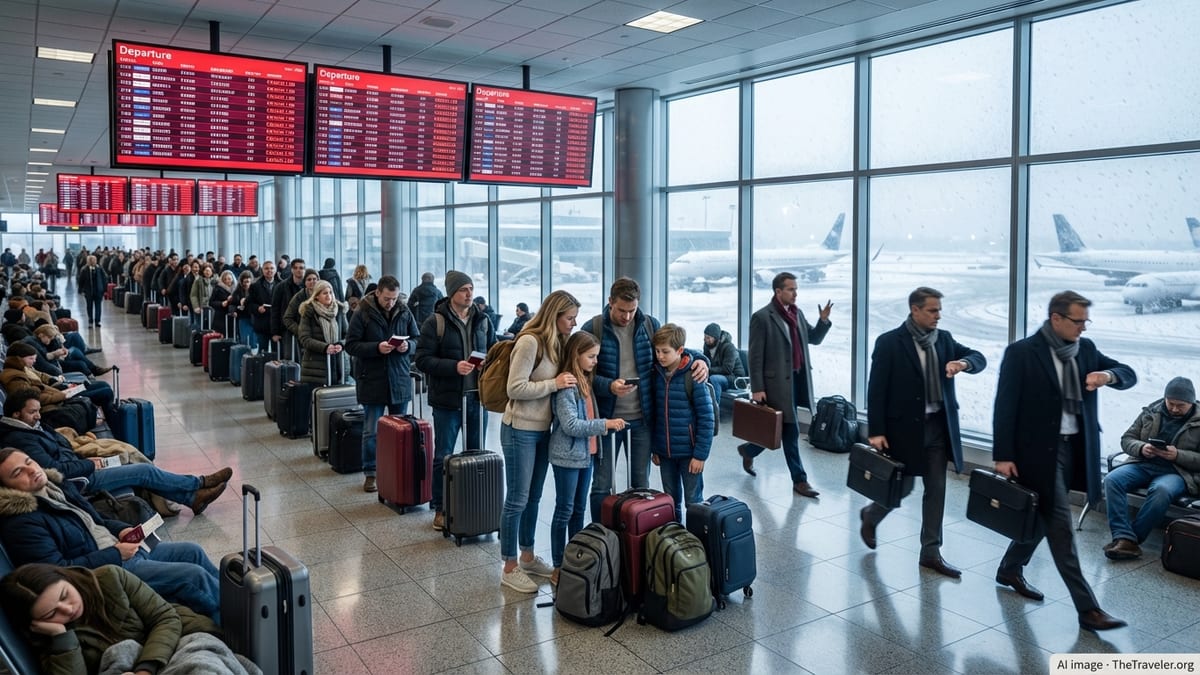
Storm Systems Batter Key Travel Corridors
The latest wave of disruptions comes as strong thunderstorms and heavy rain track along a cold front stretching from the Ohio Valley toward the East Coast, intersecting some of the most heavily traveled summer flight corridors. Forecast discussions describe damaging wind gusts, intense rainfall and frequent lightning, conditions that often force air traffic controllers to slow arrivals and departures for safety.
In the Midwest, the Chicago region has faced repeated rounds of severe weather this week, including recent tornadoes and straight line winds that damaged communities around the metro area. Those earlier storms left the ground saturated and heightened the risk of additional flooding and lightning related slowdowns as new cells developed over northern Illinois and Indiana.
Farther south, a developing tropical system in the western Gulf of Mexico is funneling deep tropical moisture into Texas and the lower Mississippi Valley, with meteorologists warning of widespread, potentially life threatening flooding in parts of Texas, Louisiana, Mississippi and neighboring states over several days. That pattern is steering clusters of thunderstorms across key air routes linking the Southeast with the rest of the country, complicating efforts by airlines to keep schedules on track.
Forecasters note that while some of the storms are highly localized, the combined effect across multiple regions is a broad zone of unstable weather at precisely the altitudes and locations used by commercial jets, forcing reroutes, holding patterns and temporary ground stops that ripple through the system.
Chicago O’Hare And Midway Among The Hardest Hit
Chicago’s O’Hare International Airport, one of the world’s busiest connecting hubs, has seen some of the most acute disruptions, with a recent ground stop issued for inbound flights as evening thunderstorms swept across the airfield. Publicly available data from federal aviation trackers showed average departure delays at O’Hare stretching to more than an hour at the height of the storms, with some flights held even longer as lightning remained in the vicinity of ramps and runways.
Chicago Midway International Airport has also endured repeated impacts as storms flare south and west of the city. Earlier this week, coverage from local media documented a flurry of tornado touchdowns and destructive winds across northeast Illinois, including areas not far from Midway, underscoring the vulnerability of airport operations when severe convection develops quickly over the metro region.
The dual pressure on O’Hare and Midway is particularly disruptive because both serve as crucial links between smaller Midwestern cities and coastal destinations. When severe weather forces airlines to trim arrival rates or launch fewer departures from Chicago, connecting passengers often miss onward flights, and aircraft that were scheduled to move to other hubs arrive out of position, amplifying delays far from the original storms.
Travelers transiting Chicago have reported rolling pushback times, aircraft waiting for extended periods on taxiways and gate holds as ramp crews temporarily suspend work when lightning is detected. These operational pauses, even when lasting only 15 or 20 minutes at a time, can cascade into hours of schedule disruption when repeated several times over the course of a stormy afternoon or evening.
Atlanta And The Southeast Struggle With Tropical Moisture
In the Southeast, Hartsfield Jackson Atlanta International Airport is contending with its own weather related challenges as deep tropical moisture surges inland from the Gulf. Aviation industry outlets have highlighted significant disruption at the Atlanta hub this week, noting that large numbers of delayed flights for a single major carrier can quickly propagate to partner airlines and connecting airports in North America, Europe and the Middle East.
Delta Air Lines has issued a weather related travel waiver for parts of the Southeast, allowing affected customers more flexibility to rebook trips without additional fees when itineraries touch impacted cities. The company’s exception notices reference severe weather across the region, signaling that planners expect instability to persist long enough to justify broad policy changes for ticketed passengers.
Atlanta’s position as the primary connecting point for vast swaths of the Southeast means any reductions in takeoff or landing capacity have national implications. When storms along the Gulf Coast or across Georgia force traffic management initiatives, flights that would normally pass smoothly through Atlanta’s banks of connections may be rerouted, stacked in holding patterns or, in some cases, canceled outright to keep later operations flowing.
Airlines have been working to adjust crew schedules and aircraft rotations to match evolving forecasts, but the combination of convective thunderstorms, a slow moving tropical disturbance and summer demand leaves little margin to absorb extended ground delays without affecting passengers across the network.
East Coast Hubs Face Knock On Delays
Major East Coast airports, including hubs around the Mid Atlantic and Northeast, are also experiencing delays as the same frontal system pushes eastward. Forecasts call for severe thunderstorm risks stretching from parts of the Ohio Valley into the Mid Atlantic and New England, placing airports along the busy Interstate 95 corridor under periods of heightened weather concern through the day.
When storms sweep through these densely populated regions, controllers often implement flow restrictions that reduce the number of aircraft allowed into crowded terminal airspace. Even modest limitations at multiple airports between Washington, New York and Boston can quickly add up to thousands of delayed flights nationally, particularly during peak summer travel periods when schedules are tightly packed.
Carriers serving the corridor are using a mix of short term tactics to cope, including swapping larger aircraft onto fewer departures, consolidating lightly booked flights and encouraging passengers with flexible plans to move travel to off peak times. However, with leisure demand elevated and many flights already near capacity, options for same day rebooking remain limited in some markets.
Reports from flight tracking services show growing clusters of delays not only at the primary coastal hubs but also at secondary airports that feed them, as thunderstorms brush across approach paths or prompt brief ground stops to keep arriving traffic separated from active cells.
What Travelers Can Expect In The Coming Days
With forecasters calling for continued storms across parts of the Midwest, South and East through at least the end of the week, passengers are likely to see lingering schedule disruptions even after the most intense weather cells pass. Airlines frequently need additional time to reposition aircraft and crews following major events, and morning operations can open the day already behind schedule if overnight flights were affected.
Travel industry analysts suggest that passengers flying through storm prone regions build extra time into tight connections, monitor their flight status closely through airline apps and consider earlier departures when possible, especially if traveling to important events or on international itineraries that offer fewer daily options.
Publicly accessible aviation data indicates that, while the majority of delayed flights are ultimately completed, secondary impacts such as missed connections, late night arrivals and unplanned overnight stays remain a risk when large, slow moving storm systems interact with the country’s busiest hubs. Travelers might also encounter longer lines at customer service counters and call centers as carriers work through rebooking backlogs.
As the severe weather pattern gradually shifts east into the Atlantic, conditions should improve first over the central United States, with airports in the Plains and upper Midwest likely to see more stable operations ahead of those along the Gulf Coast and Eastern Seaboard. Until then, more than 5,000 delayed flights serve as a pointed reminder of how quickly thunderstorms and tropical moisture can disrupt even the most carefully choreographed summer schedules.