


More news on this day
Delta Air Lines says it has restored an automated system used to calculate aircraft weight and balance after a technical failure on November 22 caused extensive delays for travelers flying through Atlanta and across the United States just days before the busy Thanksgiving period.
Get the latest news straight to your inbox!
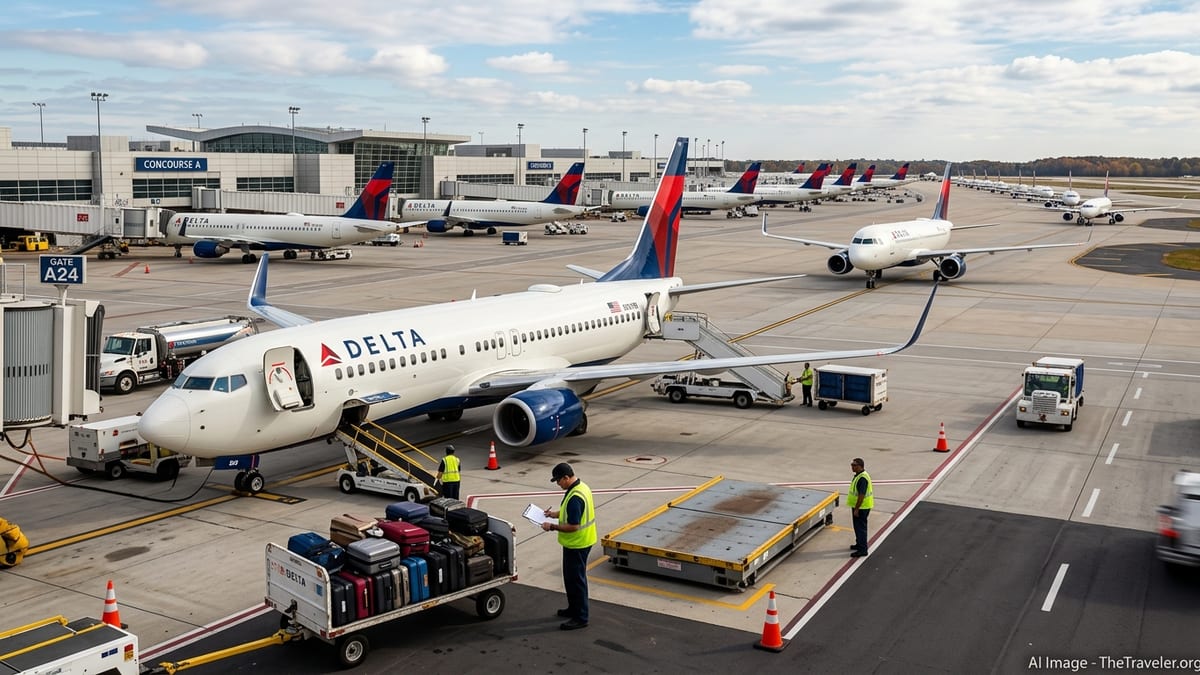
What happened to Delta’s weight and balance system
On Sunday, November 22, Delta experienced a malfunction in the automated system it uses to calculate the weight and balance of departing aircraft. The tool, known internally as the Automated Load Instruction System, generates instructions for loading baggage and cargo and helps ensure each aircraft’s total weight and center of gravity stay within certified safety limits. According to Delta and federal aviation documents, adherence to those limits is critical to safe operations, because exceeding them or mis-distributing load can affect an aircraft’s structural integrity and performance during takeoff and landing.
The outage meant that for part of the day Delta staff could not rely on their normal electronic process to produce final weight-and-balance figures before departure. Delta told media outlets that its teams reverted to manual workarounds while technicians worked to restore automation. In practice, that required additional checks and paperwork by dispatchers, ramp crews and pilots, which lengthened turnaround times at the gate and slowed the flow of departing flights through the system.
In parallel, the Federal Aviation Administration confirmed it issued a ground stop at Hartsfield-Jackson Atlanta International Airport for Delta-operated flights bound for the carrier’s main hub. That order, requested by Delta, was later converted into a ground delay program as conditions stabilized. The FAA’s measures were limited to Delta and its regional affiliates rather than all airlines at the airport, but they had a systemwide impact on the carrier’s schedule because Atlanta is its largest hub and connecting point.
Scale of the disruption at Atlanta and across the network
Flight-tracking data from FlightAware and statements from Delta indicate that the weight-and-balance automation problem rippled well beyond Atlanta. By late afternoon on November 22, more than 1,000 Delta and Delta Connection flights had been delayed, representing a significant share of the airline’s roughly 5,000 scheduled departures and arrivals for the day. Delta has said that around 70% of its delays and cancellations reported that day were directly tied to the automation issue, with the remaining disruption linked to poor weather and air traffic control programs affecting New York City and other parts of the Northeast.
At Hartsfield-Jackson, which is consistently ranked among the world’s busiest airports, the pressure was particularly intense. By early evening, more than 1,100 flights into and out of Atlanta across all airlines were showing late arrivals or departures, with several dozen cancellations also recorded. With outbound flights leaving the gate later than planned, arriving aircraft often had to wait longer for parking positions, which created additional congestion on the taxiways and at terminal gates. Airport officials described the incident as primarily affecting Delta’s operations rather than the broader airport infrastructure.
Travelers reported delays at Delta stations across the United States, including major coastal hubs and mid-continent airports. Posts on social media and traveler forums on November 22 referenced delayed Delta departures from cities such as New York, Washington, Boston, Miami, Minneapolis, Nashville, San Antonio and others. Several passengers described waiting on board for one to four hours while crews awaited final weight-and-balance paperwork or manual clearances. While these accounts are anecdotal and varied by route, they align with the carrier’s acknowledgement that the outage affected large portions of its domestic network, not only flights touching Atlanta.
How long the outage lasted and how Delta responded
Delta said publicly on Sunday that the technical problem was isolated to its own systems and not related to FAA-wide air traffic technology. According to the airline and independent reports, the most acute phase of the disruption occurred during the morning and early afternoon of November 22 Eastern time. The FAA’s ground delay program for Atlanta-bound Delta flights was scheduled to run until at least early afternoon before being lifted late morning local time as conditions improved and throughput at the hub increased.
By later in the day, Delta stated that its automated weight-and-balance tool had been restored and that flights were again able to use the normal electronic process. Even after automation returned, the airline cautioned that knock-on effects would continue as aircraft and crews gradually moved back into position. Recovery operations extended into the evening on Sunday and into Monday, November 23, with some residual delays still appearing in schedules as the carrier worked through displaced customers and aircraft rotations.
In line with U.S. Department of Transportation rules and its own customer commitments, Delta said it was rebooking affected travelers on the next available flights and providing hotel rooms and meal vouchers where necessary, particularly for passengers facing overnight disruptions. The airline also confirmed that customers whose flights were canceled and who chose not to travel could request refunds. Some travelers reported via online forums that they received rebookings and electronic credits, though experiences varied depending on routing, availability of alternative flights and the length of the delay or cancellation.
Intersection with the recent nationwide ground stop
The November 22 automation failure occurred less than ten days after a separate, systemwide aviation event in the United States. On Friday, November 13, the FAA ordered a nationwide ground stop that lasted for several hours after an outage related to a router upgrade interrupted a key federal system. That rare action halted most commercial departures across the country and resulted in tens of thousands of delayed or canceled flights over subsequent days as airlines untangled aircraft and crew schedules.
Hartsfield-Jackson’s general manager, Ricky Smith, described that earlier November 13 ground stop, which affected all major U.S. carriers, as a significant test for Atlanta ahead of the Thanksgiving rush. In comments last week, he said the airport was approaching normal operations again and projected handling about 4 million passengers between mid-November and the end of the month. Against that backdrop, the Delta-specific weight-and-balance outage on November 22 added another layer of disruption at the same hub just as peak holiday traffic was building.
There is currently no public indication from regulators or the airline that the November 22 Delta issue was linked to the FAA’s earlier nationwide outage. The federal ground stop was tied to a government system, while Delta has characterized Sunday’s episode as a problem within a carrier-operated tool. However, the proximity of the events has heightened traveler sensitivity to technology failures in aviation, and industry observers are likely to scrutinize how both government and private systems are upgraded and tested in the coming months.
Implications for travelers and what to watch next
For travelers, the immediate priority in the aftermath of the November 22 disruption is to confirm the status of existing and upcoming bookings with Delta, especially for itineraries involving connections through Atlanta. As of November 23, published schedules were trending back toward normal, but pockets of delay remained possible where aircraft and crews were still repositioning. Customers are advised to monitor their reservations via Delta’s website or mobile app and to pay close attention to check-in times, gate assignments and connection windows over the Thanksgiving travel period.
Passengers who experienced significant delays or cancellations on November 22 and 23 and incurred out-of-pocket expenses may wish to retain receipts and documentation in case of future claims or goodwill gestures from the airline. While U.S. rules do not mandate compensation for delays caused by most technical issues, carriers sometimes provide credits or miles on a discretionary basis. International itineraries that fall under certain consumer protection regimes may be subject to different conditions, and affected travelers should review the specific terms of their tickets and any relevant regulations.
Looking ahead, Delta has not yet publicly detailed the root cause of the weight-and-balance system failure or any long-term changes to prevent recurrence. In previous episodes at other airlines where similar tools malfunctioned, carriers have typically undertaken internal reviews and, in some cases, software or infrastructure upgrades. For now, the airline says the system is functioning again, and it is focused on operating its remaining November schedule with cancellations as a last resort. Given the combination of high passenger volumes, recent national and carrier-specific technology outages, and seasonal weather risks, travelers across the United States should continue to build extra time into their journeys, verify flight status frequently, and be prepared for conditions that can change quickly during the holiday period.