


More news on this day
Early Saturday checks show Miami International Airport and Fort Lauderdale–Hollywood International Airport operating with manageable delays after a disruptive Thanksgiving holiday, but aviation officials warn that schedules could remain fluid through the end of the long weekend and are urging returning passengers to confirm flight details before heading to the airport.
Get the latest news straight to your inbox!
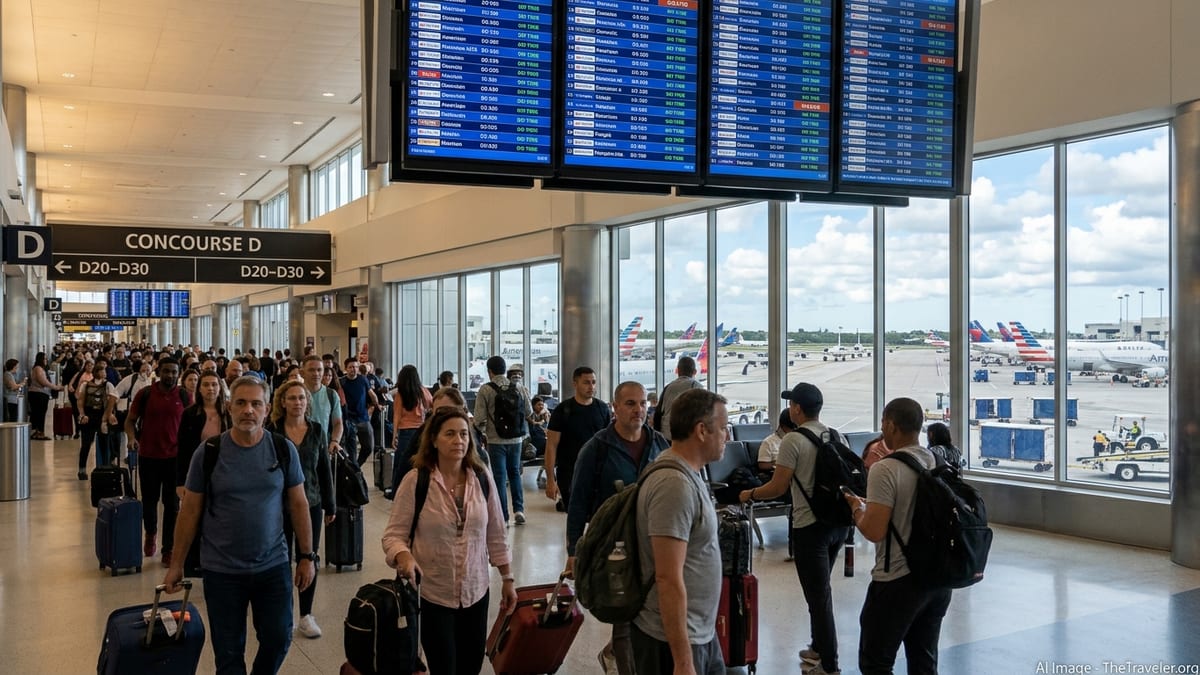
Disruptions ease after runway overrun and stormy Thanksgiving
The relatively calm start to Saturday follows a difficult stretch for South Florida air travel that began when a FedEx cargo aircraft overran a runway at Miami International Airport on the night of Wednesday, November 25, 2026. The incident forced the airport to operate temporarily with only one of its four runways, triggering a ground stop and contributing to long delays on the eve of Thanksgiving as airlines and air traffic controllers rerouted traffic and revised schedules.
By Thanksgiving Day, Thursday, November 26, delays at Miami remained elevated as airlines worked through the backlog and dealt with unsettled weather along the East Coast. Flight-tracking services report hundreds of delayed flights and several dozen cancellations nationwide that day, with Miami International among the airports under extended-delay advisories. Nearby Fort Lauderdale–Hollywood International Airport also recorded significant numbers of late departures and arrivals, although its disruption levels remained below those at Miami.
Those local issues compounded broader national pressures. Federal forecasts issued ahead of the holiday had already projected the busiest Thanksgiving air-travel period in roughly 16 years, with tens of thousands of daily flights scheduled across the United States. A combination of heavy traffic and storm systems affecting key Northeast corridors around New York and Washington added further strain, leading to knock-on delays for flights connecting through or originating in South Florida.
Passenger volumes remain high through Monday
Although early-morning reports for Saturday, November 28, indicate that operations at both Miami and Fort Lauderdale are largely stable, airport officials and local forecasts emphasize that the Thanksgiving return rush is still under way. Fort Lauderdale–Hollywood International Airport expects around 735,000 passengers to pass through its terminals over the seven-day period from Tuesday, November 24, through Monday, November 30, with Saturday, Sunday and Monday among the heaviest days for both departures and arrivals.
Miami International Airport is working through an even larger flow of travelers. Ahead of the holiday, the airport projected approximately 1.95 million passengers between Friday, November 20, and Tuesday, December 1, as South Florida’s major hub handles a mixture of domestic holiday traffic, international visitors and cargo operations. While those figures are forecasts rather than final counts, they help explain why relatively minor schedule changes can quickly translate into longer lines and busier concourses, particularly at peak hours.
As of early Saturday, federal air-traffic status pages listed Miami with no nationwide ground stops or destination-specific restrictions, indicating that the immediate emergency period after the FedEx runway overrun has passed. However, both national and local data show that high traffic volumes can still lead to airport-wide or route-specific delays at short notice when thunderstorms or localized congestion develop, particularly in the afternoon and evening.
What recent delays mean for flyers this weekend
For travelers returning from Thanksgiving gatherings on Sunday, November 29, or Monday, November 30, the lingering effects of the holiday surge mean that flexibility remains important. While Saturday’s early operations appear more typical of a busy travel day than of a system under acute stress, residual congestion in airline networks can persist for several days after major events such as a runway closure or nationwide weather disruption, as aircraft and crews are repositioned and tightly scheduled rotations are restored.
Passengers connecting through Miami or Fort Lauderdale should be aware that even if local weather is favorable, delays elsewhere can ripple through to South Florida. Flights arriving from the Mid-Atlantic and Northeast, in particular, may still be affected by unsettled conditions and earlier congestion. This can shorten connection windows or trigger gate changes with limited notice, especially during afternoon and evening peaks when arrival banks are densest.
Travelers whose flights were canceled on Thanksgiving Day or on the preceding Wednesday may also still be moving through the system over the weekend. Airlines often accommodate disrupted passengers on later departures when space becomes available, which can leave remaining seats tighter than usual on popular return days and reduce options for same-day rebooking if additional problems arise.
Recommended arrival times and how to check on your flight
In response to the combination of high demand, recent weather issues and the midweek runway incident, Miami International Airport’s leadership has urged passengers to allow extra time at the terminal. The airport’s director has been advising travelers to arrive about three hours before their scheduled departure during the Thanksgiving period, particularly for morning and evening peaks when check-in, checked baggage and security lines tend to be longest.
At Fort Lauderdale–Hollywood International, guidance remains in line with many U.S. airports of similar size. Passengers on domestic flights are generally told to arrive at least two hours before departure, while international travelers are encouraged to be at the airport roughly three hours ahead. Given the current traffic levels and the potential for weather-related slowdowns on local highways, some travelers may find it prudent to add additional buffer time, especially if they are unfamiliar with the terminals or are traveling with young children or oversized baggage.
Before leaving home or a hotel, passengers are strongly advised to verify their flight status directly with their airline. The most up-to-date information typically appears in airline mobile apps and on carrier websites, which can show changes in departure time, terminal assignment and gate number. Travelers with connecting itineraries should check every flight segment, not just the first leg, to reduce the risk of discovering a missed connection only after boarding the initial flight.
Steps to take if your flight is delayed or canceled
Given the recent history of delays and cancellations, passengers flying to, from or through South Florida this weekend should review what to do if their itinerary is disrupted. When a delay is posted, airlines usually update estimated departure and arrival times in their apps and on airport display boards. If it becomes clear that a delay will jeopardize a connection, travelers can often use self-service tools in airline apps or at airport kiosks to move to a later onward flight without waiting in line at a service desk, subject to availability and each carrier’s policies.
In the event of a cancellation, many airlines will automatically attempt to rebook passengers on the next available flight on the same route. However, those alternative options can fill quickly during busy travel periods, so it is important to review and accept or adjust new itineraries promptly. If the proposed routing or timing does not work, contacting the airline through multiple channels, such as app chat, call centers and airport agents, can sometimes surface additional alternatives.
Under U.S. federal rules, passengers whose flights to, from or within the United States are canceled are entitled to a refund if they choose not to travel and decline any rebooking or alternative transportation offered by the airline. That right applies regardless of whether the cancellation stems from weather, air-traffic control restrictions, mechanical issues or other causes. Refunds typically cover the unused portion of the ticket and any associated government taxes and fees, though processing times can vary by carrier and payment method.
What travelers should monitor through Monday
Looking ahead to the remainder of the Thanksgiving travel period, the key variables for Miami and Fort Lauderdale are weather along major flight routes, the pace at which national traffic returns to normal after the mid-November ground stop and the ability of airlines to keep aircraft and crew assignments on schedule. While there is no current indication of a renewed ground stop or additional runway closures in Miami, even isolated storms over busy hubs elsewhere in the country can cause fresh waves of delays.
Passengers scheduled to fly on Sunday or Monday should plan to monitor their reservations starting about 12 hours before departure. This is often the point at which airlines finalize aircraft assignments, crew rosters and overnight maintenance, and when significant schedule adjustments tend to appear. A second check a few hours before leaving for the airport can confirm whether departure times have shifted and whether any gate or terminal changes have been posted.
Those picking up family or friends at Miami International or Fort Lauderdale–Hollywood International can also benefit from watching live arrival boards or airline apps rather than relying solely on original schedules. With high passenger volumes and the possibility of residual delays, estimated arrival times can move up or back by 15 minutes or more, affecting when arriving travelers clear customs, retrieve bags and reach curbside pickup. Staying informed can help reduce crowding in terminal pickup areas and make the final leg of the Thanksgiving journey smoother for both visitors and residents.