


More news on this day
Back-to-back disruptions on Delta Air Lines’ Lagos–Atlanta service in late August 2026 left scores of passengers stranded at Murtala Muhammed International Airport, intensifying scrutiny of one of West Africa’s busiest transatlantic routes.
Get the latest news straight to your inbox!
Two Cancellations in Three Days on a Critical Transatlantic Link
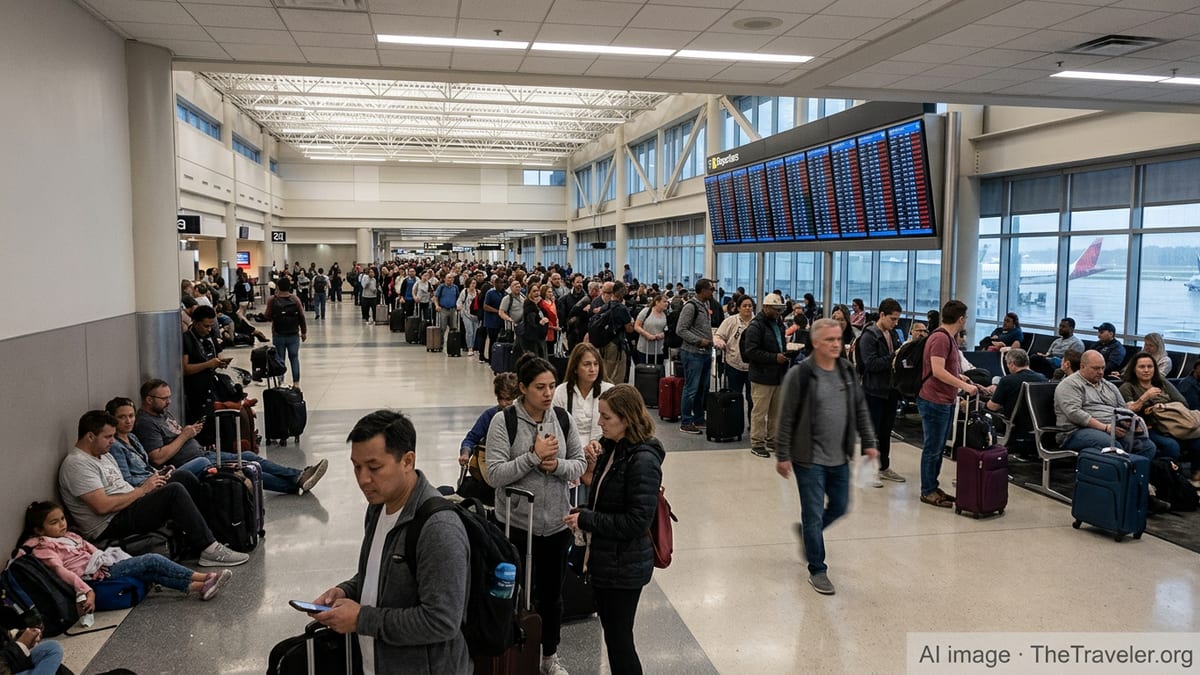
Publicly available reports from Nigerian and international outlets indicate that Delta’s Lagos–Atlanta operation suffered two significant disruptions in quick succession, affecting passengers booked on services in the August 23–25, 2026 window. Coverage points to flight DL9895, scheduled to depart Lagos for Hartsfield–Jackson Atlanta International Airport on Sunday, August 23, as the first service that failed to operate as planned, leaving many travelers stranded in Lagos when the aircraft did not depart as scheduled.
Follow-up reporting describes a second disruption affecting the same route on Tuesday, August 25, when customers again received notifications that their Lagos–Atlanta flight would not run. Notices shared with passengers referenced limitations on crew availability as a factor in the latest cancellation, a phrasing that aligns with standard industry language used when airlines cannot staff a flight within duty-time and mandatory rest rules.
The Lagos–Atlanta link is a key part of Delta’s Africa network and a primary nonstop option for travelers heading from Nigeria to the United States. Disruptions on such a long-haul corridor can have outsized impacts, as many passengers are connecting in Atlanta to domestic and international destinations across North America.
Tracking data and published coverage suggest that the disruptions extended beyond a single aircraft or time slot, with passengers booked on the affected days reporting missed onward connections, unexpected overnight stays, and difficulties obtaining clear information on rebooking options.
Passenger Strain at Lagos Airport as Rebooking Options Tighten
Accounts compiled by Nigerian media and travel-focused outlets indicate that many passengers on the disrupted flights were forced to seek last-minute accommodation in Lagos, in some cases at their own expense. Travelers described needing to make additional hotel bookings while they worked through alternative travel plans, whether by waiting for a later Delta departure or seeking options on other carriers offering connections to the United States.
For travelers not resident in Lagos, an unplanned stay in the city can add significant cost and logistical complexity. Extra nights in hotels, airport transfers, meals, and the need to adjust visas or travel permissions can quickly increase the financial impact of a cancellation, particularly when entire families or group bookings are involved.
The disruption also came at a time when load factors on transatlantic routes remain high, according to wider aviation data, limiting the number of open seats available for same-week rebooking. This environment can leave travelers on disrupted flights facing several days’ delay before an alternative departure is available, especially in peak travel periods when long-haul services already operate near capacity.
Some reports note that while passengers were eventually offered rebooking options or refunds in line with applicable conditions of carriage, the immediate experience at the airport involved crowded queues at service desks and uncertainty over how quickly new itineraries could be confirmed.
Mechanical, Crew and Operational Factors Under Scrutiny
Legal and aviation-industry commentary in Nigeria links the twin Lagos–Atlanta disruptions to a combination of technical, crew-related and broader operational challenges. Publicly available information collated by local legal analysts suggests that the first disruption involved an operational or mechanical issue affecting the planned aircraft, while subsequent communications to travelers regarding the August 25 cancellation cited limited crew availability.
Such overlapping causes are familiar in long-haul operations, where a technical problem on one rotation can ripple into crew scheduling and aircraft positioning on subsequent days. If a jet and its crew remain on the ground longer than planned or reposition to a different station, the original schedule can become difficult to maintain without spare aircraft or standby staff.
Industry observers point out that major carriers have faced heightened operational pressures since a series of large-scale disruptions in recent years, including global IT outages and severe weather events at key hubs. Delta itself has been the subject of extensive coverage around the July 2024 technology-related disruption that led to thousands of cancellations and widespread passenger stranding, reinforcing public sensitivity to any fresh reliability issues on important routes.
The Lagos–Atlanta situation is being viewed in that wider context, with commentators noting that even localized route problems can quickly attract scrutiny when they affect markets with limited long-haul alternatives and high dependence on a small number of carriers.
Passenger Rights and Potential Avenues for Redress
Analysis in Nigerian legal publications highlights that passengers affected by the Lagos–Atlanta disruptions may have specific rights under local and international passenger-protection frameworks, depending on ticket type, point of purchase and governing regulations. These frameworks commonly provide that, when cancellations are attributable to airline operational issues rather than extraordinary circumstances such as airspace closures, travelers may be entitled to assistance such as accommodation, meals and ground transfers during extended delays.
Publicly available guidance also notes that affected travelers can typically request rebooking on the next available service, subject to seat availability, or choose a refund for the unused portion of their journey. In some cases, passengers may pursue additional compensation or file complaints with aviation regulators if they believe that the support provided did not meet the standards set out in applicable rules.
Consumer advocates regularly encourage travelers to retain boarding passes, booking confirmations and any written communication from airlines regarding the reason for disruption, as this documentation can be relevant when seeking refunds, claiming on travel insurance or escalating complaints to oversight bodies.
In markets such as Nigeria, where regulators and courts have handled previous disputes involving long-haul cancellations, published case law and commentary indicate that outcomes can depend on how clearly a disruption is documented and whether the airline’s stated reasons align with what passengers experienced on the day.
Implications for Confidence in West Africa–US Connectivity
The twin disruptions on the Lagos–Atlanta route are likely to feed into a broader discussion about the resilience of air links between West Africa and the United States. With relatively few nonstop options and strong demand from business, diaspora and leisure travelers, any perceived fragility on a key route can influence booking decisions, especially among passengers with time-sensitive itineraries.
Travel-industry reporting suggests that some customers affected by the August disruptions are reassessing future travel plans, including considering alternative routings via European or Middle Eastern hubs. While such options can add connection time, they may offer additional daily frequencies and more flexibility for rebooking when disruptions occur.
At the same time, analysts note that Delta remains one of the principal foreign carriers connecting Nigeria directly to the United States, and that many travelers value the convenience of a single long-haul leg into a major U.S. hub. How quickly operations stabilize on the Lagos–Atlanta service, and how effectively disrupted passengers feel their cases are handled, may shape perceptions of the route in the months ahead.
For now, the back-to-back cancellations serve as a reminder of how vulnerable complex long-haul networks can be to compounding operational challenges, and of how acutely travelers feel the impact when those challenges play out on corridors with limited redundancy.
Punch Nigeria coverage of Lagos–Atlanta cancellations
Vanguard report on disrupted Delta Lagos–Atlanta flights
NigeriaLawyer analysis of passenger rights after disruptions