


More news on this day
Severe thunderstorms over Southeast Michigan on June 14 have triggered extensive flight disruptions at Detroit Metropolitan Wayne County Airport, rippling across key US routes to New York City, Cincinnati, Philadelphia, Chicago, Washington D.C. and other destinations as Endeavor Air, PSA Airlines, Delta Air Lines, Republic Airways and additional carriers collectively face hundreds of delays and schedule changes at the height of the summer travel rush.
Get the latest news straight to your inbox!
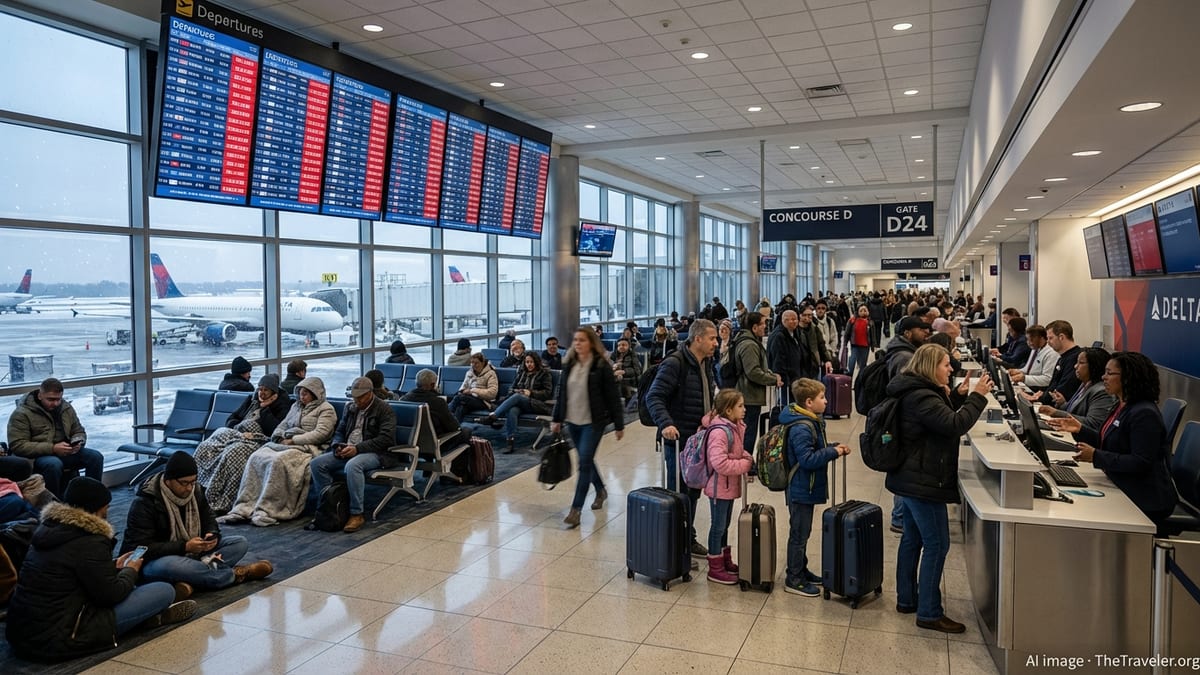
Storms Over Detroit Snarl a Major Midwest Hub
Detroit Metropolitan Wayne County Airport, one of the country’s busiest connecting hubs, saw operations slow sharply on Sunday after thunderstorms swept across Southeast Michigan. Publicly available aviation data and local broadcast coverage indicate that air traffic managers implemented a ground stop as storms moved through the region, limiting arrivals and departures and forcing airlines to hold aircraft at gates and on nearby ramps.
The weather pattern arrived as weekend leisure traffic was building, compounding the impact for travelers connecting through Detroit to major East Coast and Midwest cities. Early indications from real time tracking services and airport dashboards show elevated delay levels on flights linking Detroit with New York City, Cincinnati, Philadelphia, Chicago and Washington D.C., as well as secondary destinations across the eastern half of the United States.
Preliminary counts from independent disruption trackers point to roughly 347 delayed flights tied to the Detroit weather system and associated air traffic control programs, affecting both mainline and regional carriers. The figure includes late departures and arrivals rather than outright cancellations, but the knock-on effects have extended throughout the afternoon and into evening banked departure waves.
With Detroit serving as a major connecting point for passengers traveling between smaller Midwestern communities and coastal cities, the slowdown has quickly cascaded across multiple airline networks. Many affected travelers are not simply flying to or from Detroit, but are relying on tight connections that are especially vulnerable when storms move through a hub.
Regional Carriers Shoulder a Large Share of Disruptions
Regional affiliates that operate flights under the brands of larger network airlines appear to be carrying a significant portion of the disruption burden. Endeavor Air, which flies many Delta Connection routes from Detroit, has seen numerous departures to cities such as New York, Cincinnati and Chicago held on the ground or assigned extended departure times while thunderstorms pass and air traffic control restrictions remain in place.
Similarly, PSA Airlines and Republic Airways, which operate American Eagle and other branded regional services along the East Coast and Midwest, have reported elevated delay levels on routes feeding Philadelphia, Washington-area airports and other key nodes. These regional jets often operate with shorter turn times and tighter daily schedules, meaning that an early delay can echo through multiple subsequent flights.
Historic performance data from the US Bureau of Transportation Statistics shows that carriers such as Endeavor, PSA and Republic typically maintain relatively strong on-time records compared with some low-cost peers, but they are also particularly exposed to weather and airspace constraints at congested hubs. When a ground stop or ground delay program is activated, regional flights are frequently among the first to be rescheduled or held in favor of longer-haul operations.
Travel industry analysts note that regional carriers have less slack in their fleets and crew rosters than larger mainline operators. Once a storm cell and related air traffic initiatives disrupt the schedule out of a hub like Detroit, it can be difficult for these airlines to recover quickly, especially on busy summer weekends when aircraft and crews are already heavily utilized.
Mainline Networks From Detroit to the Coasts Feel the Ripple
Delta Air Lines, which maintains its largest Midwest hub at Detroit, has also been contending with a surge in delayed flights on domestic routes. Public flight status boards and third party tracking platforms show extended taxi-out times and creeping departure estimates for Delta-operated services to major markets including New York’s LaGuardia and JFK airports, Chicago O’Hare, Washington Reagan National and Cincinnati.
According to airline reliability analyses published in recent days, US carriers have already been operating with thinner buffers heading into the peak summer period, with national on-time performance sliding compared with prior years. Against that backdrop, even a single day of intense thunderstorms over a major hub can push delay tallies into the hundreds as each affected flight causes downstream disruptions on later segments.
Republic Airways, which runs flights under the banners of several large US airlines, has seen its Detroit-linked operations interact with delays at other airports that have faced their own weather issues in recent weeks, such as New York JFK and Chicago. This interconnectedness means that passengers booked on itineraries involving multiple hubs are particularly exposed when storms strike one or more parts of the network on the same day.
For many travelers, the disruption is most visible in the form of rolling delay estimates on departure boards and mobile apps, with flights initially pushed back in 30 or 60 minute increments as controllers reassess airspace capacity. While some services ultimately depart closer to their scheduled times, others can slip into multi-hour delays, increasing the risk of missed connections and overnight misalignments between aircraft and crews.
Impact on Travelers in New York, Cincinnati, Philadelphia, Chicago and Washington
The storm-driven bottleneck in Detroit is being felt by passengers across several large metropolitan areas. Travelers bound for New York City report crowded gate areas and congested rebooking queues as multiple flights from Detroit to LaGuardia and JFK stack up in holding patterns on departure boards. Because these routes operate frequently and are often heavily booked, even modest delays can quickly eliminate available seats on alternative flights.
In Cincinnati, where many itineraries rely on connections through Detroit to reach the broader national network, delays have translated into missed onward flights and extended layovers. Similar patterns are emerging for passengers in Philadelphia and Chicago, where late arriving aircraft from Detroit can cause short-haul evening flights to depart behind schedule, compressing operating windows before overnight curfews and maintenance requirements.
Washington D.C. area airports, already accustomed to traffic management initiatives because of constrained airspace, are also seeing Detroit-related knock-on effects. When arrival flows from the Midwest are slowed due to storms, controllers may adjust spacing between aircraft, making it harder for airlines to recover lost time later in the day. This can leave late evening services particularly vulnerable to further delay or, in some cases, last minute schedule changes.
Although the majority of today’s disruptions have taken the form of delays rather than cancellations, the practical impact on individual travelers can still be significant. Missed family events, disrupted business schedules and additional out-of-pocket costs for meals and lodging remain common outcomes when flight times stretch far beyond their original plans.
Broader Reliability Concerns and Advice for Affected Passengers
The Detroit disruptions are unfolding against a broader backdrop of concern about US airline reliability. Recent analyses of national flight statistics highlight a multiyear deterioration in on-time performance, driven by a combination of weather volatility, air traffic control staffing limitations and tightly scheduled airline networks. Industry observers caution that the current summer travel season may see more frequent severe delay days as a result.
For passengers caught up in today’s issues, publicly available guidance from consumer advocates emphasizes the importance of monitoring flight status proactively and acting quickly when delays appear likely to jeopardize connections. Travelers are encouraged to use airline apps and reservation systems to explore same-day alternatives, including routing through different hubs where capacity remains available.
Consumer groups also note that US regulations distinguish between disruptions considered within an airline’s control and those attributed to weather or air traffic management. In many cases, thunderstorms and related airspace restrictions are categorized as outside the carrier’s direct responsibility, limiting the scope of compensation such as meal vouchers or hotel accommodations. Passengers are advised to review their airline’s customer service commitments and to keep receipts for significant additional expenses.
With weather-related disruptions at major hubs like Detroit appearing more common, travel planners suggest building extra buffer time into itineraries, particularly when flying through congestion-prone airports or scheduling tight same-day connections. Today’s wave of delays illustrates how quickly a single storm system can cascade through multiple airline networks, affecting cities far beyond the immediate path of the weather.