


More news on this day
Air travel across the United States faced widespread disruption on June 14, as reports indicated at least 572 flights were canceled and more than 3,240 were delayed at airports from Michigan and Pennsylvania to New York, Dallas, Atlanta, Burlington, Miami and Memphis, affecting major carriers including Southwest, Delta, United, American, JetBlue, Envoy, Republic and others.
Get the latest news straight to your inbox!
Storm Systems and Congested Skies Drive Disruptions
Publicly available tracking data and airline advisories on June 14 pointed to a combination of strong storm systems and already busy summer traffic patterns as the primary drivers of the latest wave of cancellations and delays. Thunderstorms and heavy rain moved through parts of the Midwest and Northeast, affecting operations in Michigan, Pennsylvania and New York, while separate systems impacted Texas and the Southeast.
In North Texas, travel alerts issued for Dallas Fort Worth highlighted the risk of severe weather and shifting storm cells, prompting advance schedule changes and same-day cancellations across several carriers. Similar weather-related operational advisories were in effect for northeastern markets, including New York City, where low clouds, gusty winds and convective activity created challenging conditions for airport arrival and departure flows.
Industry data and aviation analytics platforms showed delays rapidly stacking up at major hubs as airlines and air traffic managers attempted to space out departures, reroute aircraft around storm cells and manage ground stops. With peak summer schedules already running close to capacity, even modest weather disruptions created cascading knock-on effects throughout the day.
Major Hubs From Atlanta to Miami Hit Hard
The problems were particularly acute at some of the country’s busiest connecting hubs. Atlanta, one of the largest transfer points in the U.S. network, saw a high number of delayed departures as carriers adjusted operations around storm cells in the Southeast and along common flight corridors. Flight status boards reflected rolling departure pushes as aircraft waited for new takeoff slots and updated routings.
In Florida, Miami International experienced a similar pattern, with departures to other storm-affected regions slowing the flow of traffic. The combination of inbound delays from the Northeast and Midwest and outbound disruptions toward Texas and the interior Southeast left many aircraft and crews out of position, heightening the risk of late-day cancellations.
Smaller and mid-sized airports such as Burlington in Vermont and Memphis in Tennessee also reported clusters of delayed and canceled flights, in part due to their reliance on feeder connections through larger hubs. When hub operations slow or pause, regional routes operated by partners such as Envoy and Republic Airlines often see some of the earliest schedule adjustments as carriers attempt to preserve core trunk routes.
Impact on Southwest, Delta, United, American and Others
The disruption on June 14 cut across much of the U.S. airline industry. Public tracking dashboards showed significant impacts on large network carriers including American Airlines, Delta Air Lines and United Airlines, as well as on major point-to-point operators such as Southwest Airlines and JetBlue Airways. Regional affiliates and contract carriers, including Envoy and Republic, were also heavily affected as connections into and out of their hub partners slowed.
Operational data suggested that many cancellations were preemptive decisions made earlier in the day to reduce the number of aircraft and crews exposed to the most severe weather and airspace constraints. While such schedule thinning can limit rolling delays and last-minute disruptions, it also leads to a higher number of same-day cancellations concentrated over a few hours.
Historical statistics from the U.S. Department of Transportation show that extreme weather, congested airspace and late-arriving aircraft consistently rank among the leading causes of flight disruption nationwide. Recent days have followed that pattern, with storms moving across multiple regions and interacting with a densely scheduled summer timetable.
Travelers Face Long Lines and Limited Rebooking Options
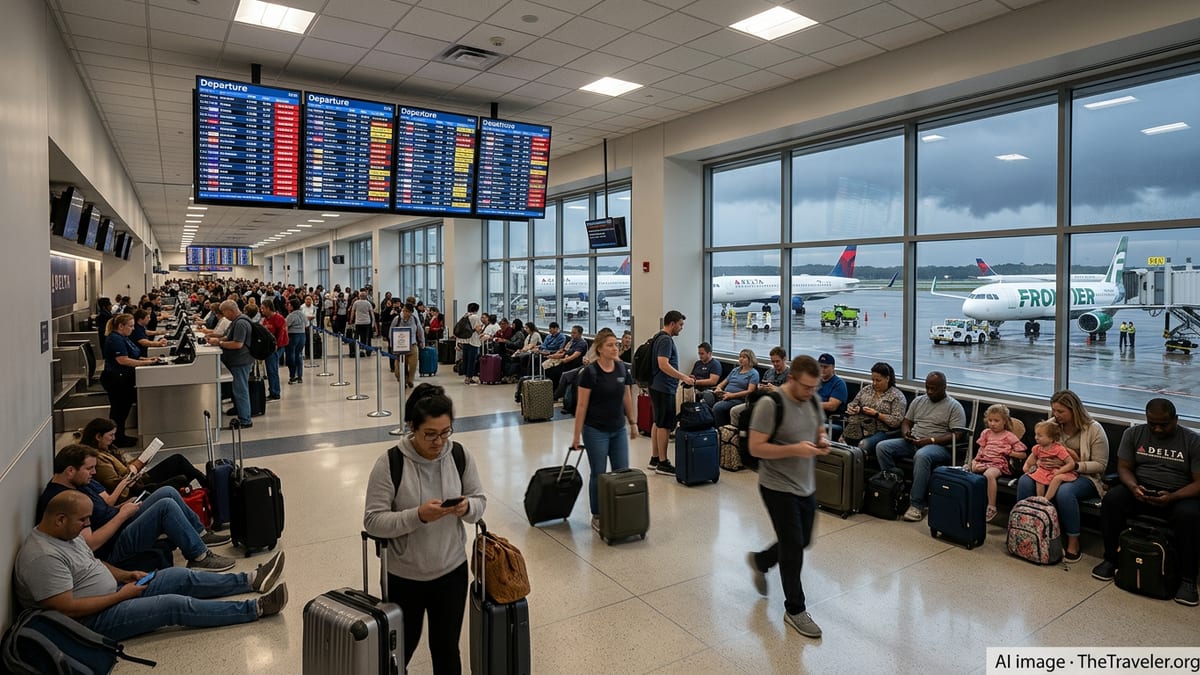
For passengers, the numbers translated into long lines at check-in counters and rebooking desks in airports across the country. With cancellations clustered around busy connecting hubs such as Atlanta, Dallas, Miami and New York, many travelers found themselves seeking alternative routings or overnight accommodations when same-day options ran out.
According to published guidance, airlines typically attempt to rebook affected customers on the next available flight, either on the same carrier or in some cases on partner airlines. However, when disruptions occur during peak periods with fuller planes, the pool of open seats can be limited, stretching the recovery period across several days for some itineraries.
Travel advisory sites and consumer resources continued to emphasize the importance of monitoring flight status frequently, using airline apps and airport information screens, and confirming gate changes and departure times before heading to the airport. Given the scale of delays on June 14, travelers with flexible plans were encouraged by public guidance to consider later travel dates or alternate airports where possible.
Broader Questions About Summer Reliability
The latest wave of cancellations and delays has also renewed public discussion about the resilience of the U.S. air travel system during the peak summer season. With passenger volumes tracking near or above pre-pandemic levels and airlines operating lean schedules, even routine weather patterns can produce outsized operational challenges.
Industry analysts point to a combination of factors: dense scheduling at major hubs, limited spare aircraft and crew resources, ongoing staffing adjustments at airlines and air traffic facilities, and the growing frequency of disruptive weather events. When several of these elements intersect on the same day, the outcome can be a spike in cancellations similar to the 572 flights scrubbed and thousands delayed on June 14.
Publicly available performance data show that while on-time rates have improved over some recent periods, weather-sensitive days remain a persistent weak spot for carriers. As summer progresses, observers will be watching closely to see whether airlines and airports can manage similar storm systems with fewer knock-on impacts on travelers or whether days like June 14 become a recurring feature of the busy season.