


More news on this day
Air travelers headed to Dallas Fort Worth International Airport faced another round of disruption Tuesday as the Federal Aviation Administration issued a ground stop and related traffic-management programs that slowed arrivals and rippled across airline schedules.
Get the latest news straight to your inbox!
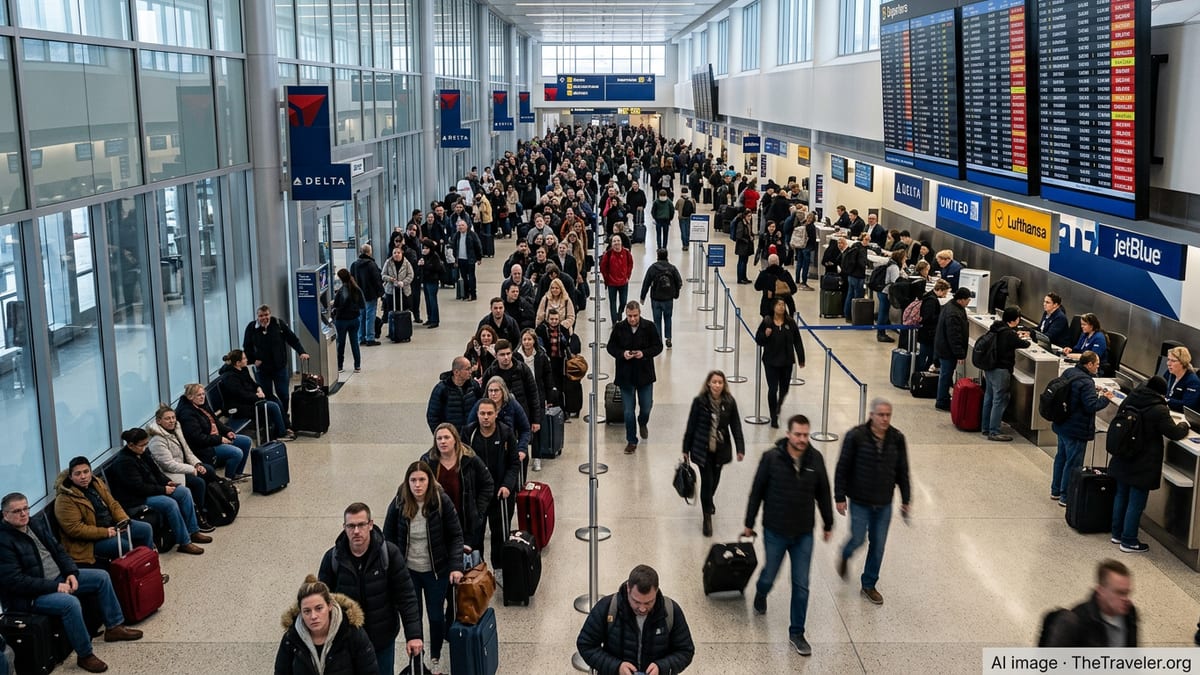
What the FAA action means for travelers
A ground stop is an FAA air-traffic control measure that temporarily holds certain flights on the ground at their departure airports before they take off for a constrained destination. For passengers, it can look like a late boarding time, an extended wait at the gate, or a departure that pushes back and then pauses for clearance.
When ground stops are in effect, airlines often adjust schedules in real time, swapping aircraft, rebooking connections, and delaying outbound legs so crews and planes remain in position for later departures. That can widen the impact beyond a single airport, especially at major hubs such as DFW.
Publicly available FAA advisories and status pages also show that DFW has been operating under broader traffic-management measures in recent days, including ground delay programs and periodic arrival constraints tied to weather patterns in the region.
Timing and scope: ground stop followed by delay programs
FAA planning advisories over the weekend indicated DFW was placed under a ground stop window as part of a national operations plan that also referenced thunderstorms affecting multiple airspace sectors, including the Dallas-Fort Worth area. That same planning bulletin referenced an active DFW ground delay program during the evening push.
By Tuesday afternoon, the FAA’s airport status page for DFW showed the airport operating with comparatively modest general delays, indicating gate holds and taxi delays of 15 minutes or less for departures and airborne delays of 15 minutes or less for arrivals at the time of the update. Those conditions can change quickly, particularly during convective weather cycles that force arrival-rate reductions.
Separate FAA daily air-traffic planning language for Tuesday highlighted thunderstorms as a risk factor in several major markets, and it noted weather patterns capable of slowing traffic in Houston and other parts of the South, conditions that frequently interact with flows into North Texas.
Why DFW keeps seeing repeat disruption
In North Texas, thunderstorms are among the most common triggers for rapid shifts in airport arrival rates, including temporary ground stops. Even when storm cells are not directly over the airfield, lightning, low ceilings, wind shifts, and routing restrictions in surrounding airspace can reduce the number of aircraft that can safely arrive each hour.
DFW’s role as one of the country’s biggest connecting hubs can amplify the effects. When arriving aircraft are delayed, gates fill up and turn times stretch, which can cause departing flights to wait for a parking spot or for an incoming aircraft to arrive and be serviced.
FAA materials also show ongoing runway and airfield construction planning in the DFW area. Long-duration runway work does not automatically cause day-to-day disruption, but when paired with weather-driven arrival constraints, reduced flexibility can make recovery slower.
What passengers can do right now
Travelers with flights into or out of DFW should rely on airline flight-status tools for the most precise information, since the FAA’s airport status pages describe general conditions rather than individual flight outcomes. A flight can be significantly delayed even when the overall airport snapshot looks improved, especially during recovery from earlier holds.
If your itinerary includes a connection at DFW, checking the inbound aircraft assignment can be helpful: when a delayed inbound aircraft is scheduled to operate your next leg, delays can cascade even if the weather improves. For tight connections, passengers may want to review same-day rebooking options early rather than waiting until boarding time.
For those already at the airport, a ground stop can mean longer gate-area waits, limited flexibility for seat changes on full flights, and shifting departure times as traffic-management programs are revised. When delays extend into the evening, later departures can also be affected by crew duty-time limits, which can turn a delay into a cancellation on some routes.