


More news on this day
Dallas Fort Worth International Airport is no longer under a formal ground stop, but travelers heading into the busy Texas hub on Tuesday continue to face major delays and lingering disruption after thunderstorms triggered extensive air traffic controls overnight.
Get the latest news straight to your inbox!
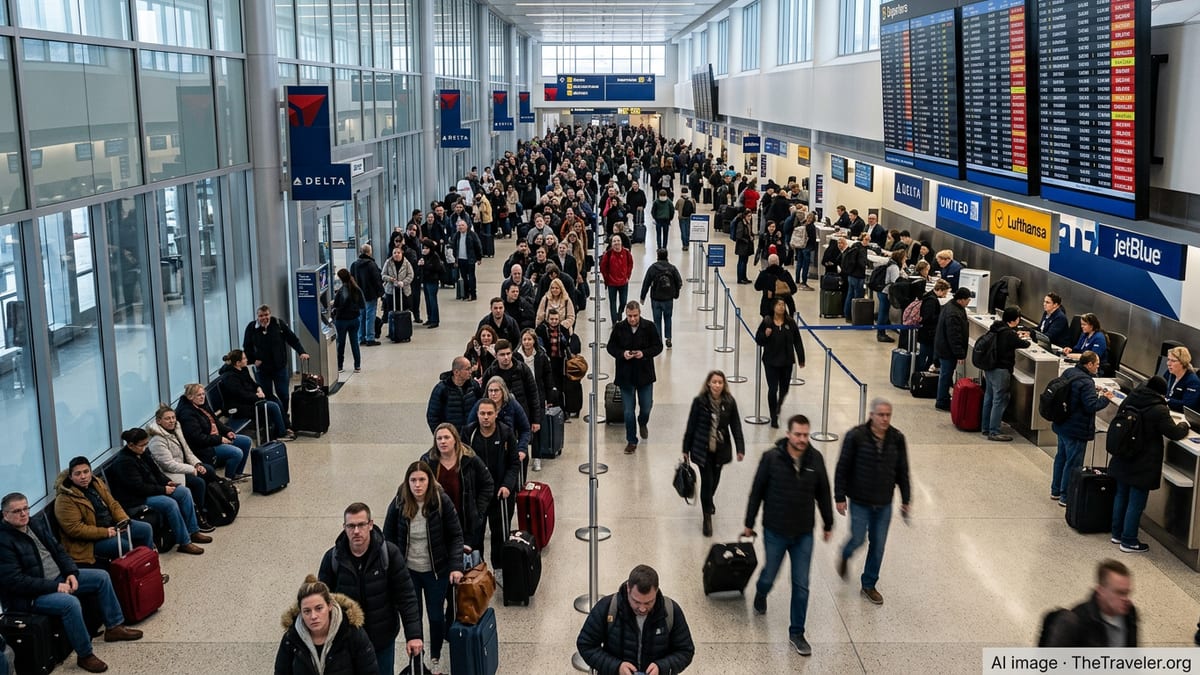
Ground stop lifted, but delays linger across inbound network
According to publicly available Federal Aviation Administration status information early on September 22, 2026, an earlier ground stop for Dallas Fort Worth International Airport was tied to thunderstorms in North Texas. The restriction has since been lifted, yet the same FAA snapshot shows average arrival delays still running well over three hours for flights bound for DFW.
FAA traffic management data updated in the early morning hours indicates that departure traffic headed to Dallas Fort Worth is experiencing delays averaging more than three hours, linked specifically to convective weather in the region. While that program primarily affects departures from other airports, the knock-on effect is being felt by travelers waiting to land at DFW as aircraft are held at their origins or slowed en route.
Live arrivals boards from independent flight-tracking services on Tuesday show a dense pattern of late inbound flights into DFW, with many services arriving more than an hour behind schedule and some significantly later. The disruption is most evident on routes feeding the airport from the Midwest and East Coast, where thunderstorms near North Texas have forced air traffic managers to meter arrivals more conservatively.
Published coverage also indicates that delays are not limited to DFW alone. Airlines that rely heavily on the airport as a hub, particularly American Airlines, are experiencing elevated delay counts across their networks after Monday’s storms and the associated airspace restrictions.
Why lifting a ground stop does not end the disruption
A ground stop is an air traffic management measure that temporarily halts or strictly limits flights destined for a specific airport from taking off from their origin. Once the FAA removes that restriction, flights can begin departing again, but the restart is rarely immediate or smooth for travelers. Aircraft, flight crews, and airport gates must be realigned after hours of disruption, which is why major delays often persist long after a ground stop ends.
Analyses from travel-industry outlets note that when a major hub such as DFW is affected, disruption tends to cascade throughout an airline’s system. A single aircraft can be scheduled to operate several flights in a day; if the early legs are delayed or canceled while a ground stop is in effect, later legs will also be pushed back or reassigned, even after traffic management programs are relaxed.
Publicly available Department of Transportation statistics underscore how quickly weather and airspace constraints at a large hub can produce extended waits. In the Air Travel Consumer Report for early 2026, American Airlines flights into and out of DFW were among those listed with tarmac delays of more than three hours on days with significant weather or congestion, illustrating how cascading impacts can stretch well beyond the initial triggering event.
Travel forums and social media posts in recent months have frequently highlighted lengthy waits on the ground and at gates when storms affect DFW. Discussions from earlier episodes describe aircraft holding for gates, diversions to alternate airports, and passengers experiencing multi-hour delays as operational teams work through backlogs even after formal ground restrictions have ended.
How Tuesday’s delays compare with other recent disruptions
This latest weather-driven disruption at DFW comes on the heels of separate ground stop events elsewhere in the country tied to equipment issues rather than storms. On September 21, 2026, for example, a construction-related telecom line problem in the Northeast led to significant delays at major airports including Newark, New York area facilities, and Philadelphia, according to national news coverage. Although those issues have largely been resolved, the cumulative effect is a system already stretched thin heading into Tuesday.
Recent coverage focused on ground stops across the United States notes that while equipment outages and weather are very different triggers, the traveler experience can look similar: flights held at the gate, extended tarmac waits, and missed connections. In both cases, once the immediate constraint is fixed and the formal ground stop is lifted, airlines still face hours of work rebalancing aircraft and crewing plans.
At DFW, the added complication is the airport’s role as one of the largest hubs in the country. With American Airlines scheduling hundreds of daily departures and arrivals, even a few hours of heavy thunderstorms at peak times can throw off flying programs well into the evening. Data from flight-tracking sites on Tuesday show clusters of delayed arrivals through the morning and midday hours, suggesting that many travelers will feel the aftershocks of the earlier ground stop throughout the day.
By contrast, nearby Dallas Love Field, which primarily handles Southwest Airlines flights, has been showing only minor general departure delays of around 15 minutes or less, according to FAA airport status pages. That contrast highlights how the specific impact of a ground stop depends on the size of the hub, its route network, and the intensity of the traffic management programs imposed.
What passengers flying into DFW today should expect
For travelers heading into Dallas Fort Worth on September 22, published airport status data and flight boards point to a day marked by extended holds, gate changes, and tight connection windows. Average arrival delays of multiple hours on certain flows mean that itineraries with short layovers are particularly vulnerable to missed onward flights, especially for those connecting to regional destinations served by smaller aircraft with less schedule frequency.
Travel-industry guidance recommends a simple hierarchy of checks on days like this. The first step is to monitor the operating airline’s app or website, which typically shows gate information, revised departure and arrival times, and any rebooking options. The second is to cross-check the FAA’s national airspace status summaries to see whether a ground stop or formal delay program is in place for DFW at the time of departure, which can help explain long waits or repeated pushbacks of scheduled times.
Passengers already en route to DFW may experience additional holding in the air as traffic controllers space out arrivals around lingering cells of thunderstorms. This can lead to flights landing significantly behind schedule even if they departed only slightly late. Once on the ground, travelers could encounter congestion at immigration, baggage claim, and ground transportation as multiple delayed flights arrive in quick succession.
Those with flexibility in their plans may find it worthwhile to consider later connections, rebooking to nonstop flights, or even postponing same-day connections to international departures that have limited daily frequencies. Customer-facing guidance from airlines and consumer advocates alike often stresses the value of building buffer time into complex itineraries during seasons of volatile weather, particularly when a major hub is recovering from an earlier ground stop.
Tips for minimizing disruption on future weather-driven ground stops
While the current disruption at DFW is rooted in thunderstorms, the operational lessons are similar to those drawn from other recent ground stop events across the United States. Travelers who regularly pass through large hubs can take several steps to reduce the impact of future weather-related controls, starting with selecting itineraries that allow ample time for connections through airports prone to storms at certain times of year.
Publicly available guidance from the Department of Transportation emphasizes that airlines are not required to provide hotel or meal compensation when delays are caused by weather, so building resilience into an itinerary is especially important. Longer connections, early-morning departures when schedules are less backed up, and nonstop flights where possible all reduce the risk of being stranded by a chain reaction of missed flights.
On the day of travel, making use of airline mobile apps, text alerts, and airport display screens can help passengers react quickly when schedules shift. Same-day changes, standby options, or rerouting through alternative hubs may be available before a ground stop tightens, but these options can disappear once a large volume of flights is affected and seats fill up.
For those already caught in a delay, understanding the difference between a ground stop, a ground delay program, and routine congestion can provide useful context. FAA status pages define each term and indicate whether traffic is being limited because of weather, equipment, or volume. On a day like Tuesday at DFW, that nuance helps explain why the formal ground stop has ended even as inbound travelers continue to face some of the longest delays in the country.