


More news on this day
Escalating Houthi attacks on airports in Saudi Arabia have triggered the cancellation or suspension of 89 flights connecting Bangladesh with the kingdom, leaving more than 14,600 passengers facing days of uncertainty over their travel plans.
Get the latest news straight to your inbox!
Missile strikes on Saudi airports ripple into Bangladeshi travel plans
Published coverage indicates that between 6 and 12 October 2026, Houthi forces in Yemen carried out a series of missile and drone attacks on airports in Saudi Arabia, including Riyadh’s King Khalid International Airport and facilities in Dammam. The strikes killed at least a dozen people at Riyadh’s main airport and injured more than 300, prompting Saudi authorities to halt most commercial operations at several gateways while security assessments continued.
According to reports from Dhaka-based outlets, the closure of King Khalid International Airport following the 10 October attack, combined with restrictions at King Fahd International Airport in Dammam, has severely disrupted air links between Bangladesh and Saudi Arabia. Services on some routes have been reduced to a fraction of their usual capacity as airlines temporarily suspend operations or reroute aircraft.
Information compiled by the Civil Aviation Authority of Bangladesh (CAAB) and published in local media shows that the restrictions on Saudi airports have affected both direct and transit services. With Saudi Arabia serving as a key hub for onward connections to the Gulf and beyond, the impact has extended well past point-to-point routes between Dhaka and Saudi cities.
CAAB data: 89 flights and 14,655 passengers affected so far
CAAB figures cited by Bangladeshi newspapers and news sites indicate that, as of Wednesday, 89 flights originating from Dhaka and operating either directly to Saudi Arabia or via Saudi hubs had been cancelled or suspended. These disruptions have affected an estimated 14,655 passengers, a number that continues to evolve as schedules are further adjusted.
The tally covers both direct flights from Hazrat Shahjalal International Airport in Dhaka to Saudi destinations and transit flights that use Riyadh or Dammam as connection points. Earlier snapshots released this week pointed to 51 disrupted flights, then 89, and most recently more than 100, illustrating how rapidly the situation has developed as attacks and security measures continue.
Reports indicate that at least four carriers operating between Bangladesh and Saudi Arabia have been hit by the cancellations. Biman Bangladesh Airlines, US-Bangla Airlines, Saudia and Riyadh Air have all seen segments scrubbed from their schedules, with national and Saudi carriers bearing the brunt of the impact on popular pilgrimage and labour routes.
National and Saudi carriers suspend key routes
Biman Bangladesh Airlines, the country’s flag carrier, has temporarily suspended all flights on its Dhaka–Riyadh and Dhaka–Dammam routes. Initial notices referenced suspensions through 17 October; subsequent statements reported in the Bangladeshi press indicate that the halt has been extended at least one additional day to 18 October, with further reviews dependent on security assessments in Saudi Arabia.
To partially offset the loss of capacity to Riyadh and Dammam, Biman has moved larger Boeing 777 aircraft onto its Dhaka–Madinah service in place of Boeing 787s, increasing available seats to Saudi Arabia on that corridor. Publicly available flight information suggests an additional 148 seats per flight compared with the smaller aircraft, but the extra capacity has not been sufficient to accommodate all stranded travellers.
Private carrier US-Bangla Airlines has also suspended operations on the Dhaka–Riyadh–Dhaka route, with notices reported by Bangladesh’s state news agency indicating that flights are on hold until at least 21 October. Saudi operators Saudia and Riyadh Air have each cancelled multiple Dhaka–Riyadh services after operations at King Khalid International Airport were curtailed in the wake of the missile and projectile strikes.
Airlines have been advising passengers to monitor official communication channels and to contact sales offices or travel agents for rebooking options. However, with key Saudi airports operating under heightened restrictions, alternatives remain limited and many journeys are being postponed rather than rerouted.
Thousands stranded as workers and pilgrims scramble for options
The disruptions have left large numbers of Bangladeshi travellers stuck at home or in transit. CAAB data and airline figures aggregated in local coverage suggest that nearly 15,000 passengers have had their plans interrupted so far, including workers heading to or returning from jobs in Saudi Arabia and people travelling for Umrah and other religious visits.
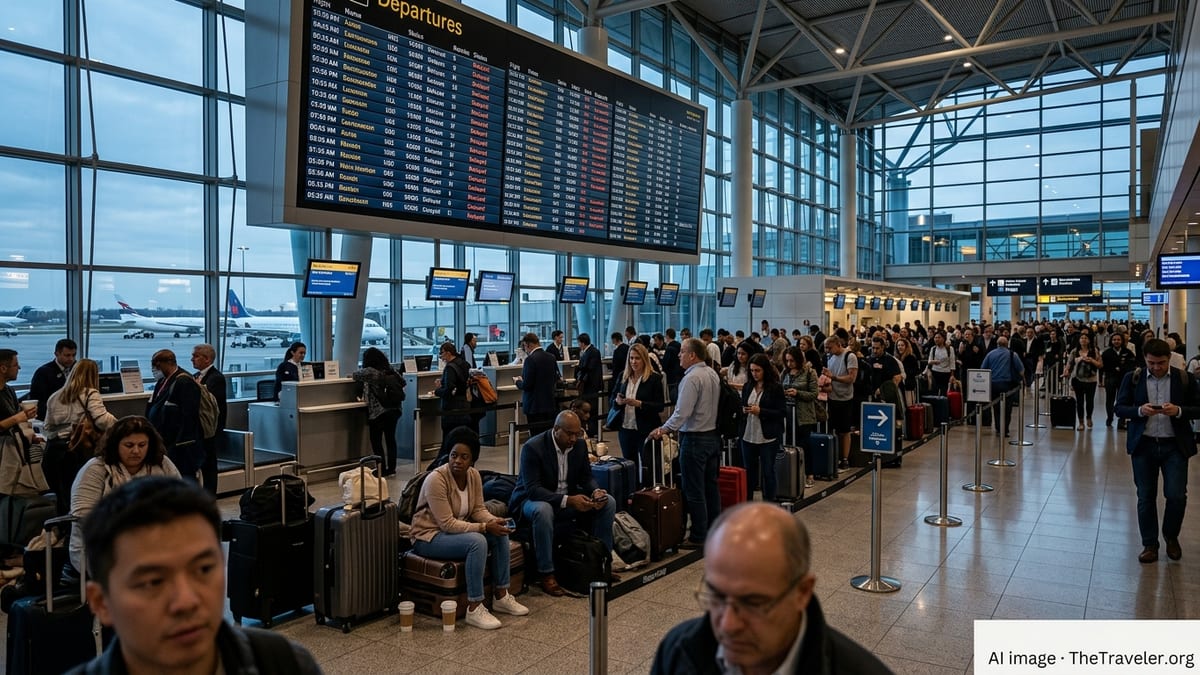
At Dhaka’s main international airport, reports describe crowds of passengers waiting for updates on rebooked flights or refunds. Some have been offered alternative itineraries via Jeddah or Madinah, where flights are still operating, though seat availability is tight and additional overland travel inside Saudi Arabia can add cost and complexity.
Travel agencies in Bangladesh have reported a surge in inquiries from customers worried about visa validity, work reporting dates and hotel bookings in Saudi Arabia. With the timing and scale of further attacks uncertain, many travellers are weighing whether to delay trips altogether or hold on to existing reservations in the hope that restrictions ease in the coming days.
Observers note that Saudi Arabia is entering a period of heavy international travel linked to conferences, business events and religious tourism, which could compound the impact of any prolonged shutdown at Riyadh and Dammam. For Bangladeshi passengers, who rely heavily on these routes for employment-related travel, the stakes are particularly high.
Ongoing security concerns keep outlook uncertain
The October attacks mark one of the most serious escalations in Houthi strikes on Saudi aviation infrastructure in recent years. A missile attack on Riyadh’s King Khalid International Airport on 10 October was followed a day later by a separate projectile hitting a passenger terminal, prompting questions in international coverage about the effectiveness of Saudi air defenses and the potential for further incidents.
Regional reporting indicates that Saudi authorities have responded by tightening airspace controls and limiting traffic at targeted airports while investigations and repairs are carried out. The kingdom has also announced strikes on Houthi weapons sites in Yemen, but cross-border attacks have continued, keeping risk assessments for airlines under constant review.
Bangladesh’s aviation regulator has stated through public notices and media briefings that it is tracking developments closely. CAAB has continued to release updated counts of affected flights and passengers, giving travellers and industry stakeholders an evolving picture of the disruption’s scale.
With Biman, US-Bangla and Saudi carriers all signalling that their schedules could change again at short notice, the near-term outlook for Bangladesh–Saudi air travel remains highly uncertain. For now, passengers are being urged through public advisories to check flight status before travelling to the airport and to plan for potential delays, as security concerns in Saudi Arabia continue to reverberate across one of Bangladesh’s most vital international air corridors.