


More news on this day
From Florida to Singapore and the South Pacific, Disney and the world’s largest cruise brands are accelerating a post-pandemic buildout of bigger ships, broader fleets and new private destinations, signaling a new phase of global competition for vacationers at sea.
Get the latest news straight to your inbox!
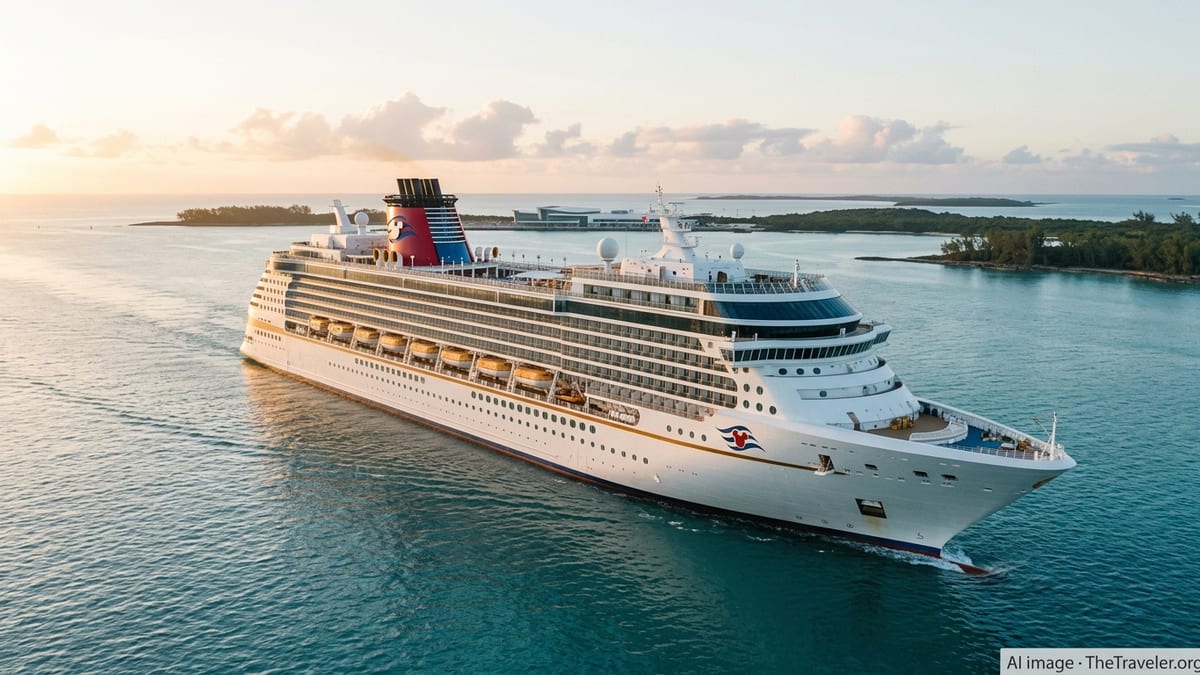
Disney Cruise Line Leads a Rapid Fleet Expansion
Disney Cruise Line is in one of the most ambitious growth phases in its history, with new vessels and itineraries designed to push the brand far beyond its traditional Caribbean strongholds. Publicly available company fact sheets and fleet updates describe an expansion that will see Disney add multiple ships between 2026 and 2031, nearly doubling capacity compared with a decade ago.
Disney Adventure, refitted from a former unfinished vessel and delivered to the company in late 2025, began sailing from Singapore in March 2026. It is the first Disney ship based year-round in Asia and one of the largest in the fleet, accommodating thousands of guests on itineraries across Southeast Asia. Industry coverage notes that the deployment is intended to draw both first-time cruisers and long-time Disney fans in a rapidly growing source market.
Closer to North America, Disney Destiny is scheduled to enter service from Port Everglades in Fort Lauderdale in November 2025, operating four- and five-night cruises to the Bahamas and Caribbean. Planning documents highlight a heroes-and-villains concept inspired by Disney, Pixar and Marvel stories, reflecting the company’s strategy of building ships around highly themed experiences that can command premium pricing.
Disney is also layering in new routes and seasonal deployments. Fall 2025 and spring 2026 itineraries include expanded sailings in Australia and New Zealand on Disney Wonder, alongside continued use of the company’s private destinations in the Bahamas. With additional newbuilds already ordered, analysts expect Disney’s presence in Europe and the Pacific to widen through the late 2020s.
Carnival Bets on Larger Excel Ships and New Island Destinations
Carnival Cruise Line, the largest brand within Carnival Corporation, is taking a different but equally expansive approach as it modernizes its fleet. Company announcements outline an “innovation itinerary” centered on large Excel-class ships, expanded family accommodations and a growing portfolio of exclusive destinations.
The line already sails three Excel-class vessels, Mardi Gras, Carnival Celebration and Carnival Jubilee, each exceeding 180,000 gross tons and capable of carrying more than 6,000 guests. A fourth Excel ship, Carnival Festivale, is slated to homeport at Port Canaveral starting in 2027, operating week-long Caribbean cruises. Corporate materials describe Festivale as LNG-powered and equipped with music-focused entertainment zones and significantly more interconnecting staterooms to cater to multigenerational groups.
Carnival is pairing these ships with major investments ashore. A new Bahamian destination, Celebration Key, is due to open in 2025 as a purpose-built port and beach resort exclusively for the company’s brands. At the same time, Half Moon Cay in the Bahamas is undergoing expansion work to accommodate larger ships and increased visitor volumes, including Excel-class vessels for the first time.
Deployment plans for 2026 and 2027 itineraries show Carnival concentrating capacity from major U.S. homeports such as Miami, Port Canaveral, Galveston and Baltimore, with more frequent calls at its private and enhanced islands. Industry observers say the strategy underscores how private destinations are becoming central to product differentiation and revenue growth as competition intensifies.
Royal Caribbean Scales Up With Icon-Class Mega‑Resorts
Royal Caribbean International, already known for some of the largest ships in the world, is using its new Icon class to expand what it markets as “mega-resort at sea” vacations. Company deployment schedules and investor presentations list three Icon-class vessels, including Icon of the Seas, Utopia of the Seas and Star of the Seas, entering service in the mid-2020s.
Icon of the Seas, which began sailing from Miami in 2024, was followed by Utopia of the Seas on shorter itineraries from Port Canaveral. Star of the Seas is scheduled to join the Port Canaveral lineup in 2025, with marketing materials emphasizing expanded waterparks, family neighborhoods and entertainment districts designed to keep guests onboard for more of their vacation spending.
Royal Caribbean’s growth is intertwined with its private island strategy. The line continues to channel Icon-class ships through Perfect Day at CocoCay in the Bahamas, a destination that features water attractions, beach areas and upgraded cabanas aimed at day-trippers from its largest vessels. By concentrating its newest ships on routes that include the private island, the company seeks to control more of the guest experience and onboard revenue.
Fleet schedules through 2026 show Royal Caribbean assigning its newest ships to high-demand Caribbean and Bahamas itineraries from Florida, with additional capacity in Alaska and Europe on slightly smaller but still large vessels. Travel analysts note that this deployment mix positions the brand to serve both mass-market and premium segments while testing the upper limits of ship size and onboard density.
Norwegian Focuses on Premium Design With Prima and Prima Plus
Norwegian Cruise Line is expanding in a more boutique direction, focusing on design-forward ships that emphasize space, upscale amenities and flexible dining rather than sheer passenger counts. The Prima class, introduced with Norwegian Prima in 2022 and Norwegian Viva in 2023, is being extended through a larger Prima Plus subclass.
Norwegian Aqua, the first Prima Plus vessel, is scheduled to debut in April 2025 and sail from Port Canaveral. Company press materials describe Aqua as approximately 10 percent larger than her earlier sisters, with expanded outdoor areas, new entertainment concepts and enhanced accommodations for suites and club-level guests. A second Prima Plus ship, reported under the working name Norwegian Luna, is planned for 2026, further widening the brand’s footprint in the contemporary premium space.
Norwegian’s itinerary strategy for these ships combines familiar routes with longer, more varied sailings. The line is deploying Prima-class vessels on Caribbean, Mediterranean and Northern Europe itineraries that include both marquee ports and lesser-known destinations, appealing to repeat cruisers seeking variety. The focus is on delivering a higher-end onboard product rather than matching rivals on maximum capacity.
Analysts following the sector suggest that Norwegian’s approach aims to differentiate it from the largest mass-market lines. By concentrating on design, service and flexible spaces while still adding new tonnage, the company is betting that a sizable segment of travelers is willing to pay more for a less crowded, more premium-feeling experience.
New Destinations Signal a Shift in Global Cruise Geography
Across the industry, the latest ship orders and deployment announcements point to a broader geographic reshaping of cruising. Disney’s move into Singapore with Disney Adventure, combined with its continuing seasonal operations in Australia and New Zealand, expands mainstream family cruising deeper into the Asia-Pacific region. Travel industry coverage indicates that this could stimulate new port development and shore excursion offerings across Southeast Asia.
Private destinations in the Bahamas and the Caribbean are emerging as focal points for fleet planning. Carnival’s Celebration Key and expanded Half Moon Cay, Royal Caribbean’s ongoing investments at CocoCay, and Disney’s dual-island strategy in the Bahamas and on Lighthouse Point in Eleuthera are all designed to keep guests within curated environments where spending can be closely managed by the cruise brands.
The combination of larger ships and more controlled destinations is reshaping the economics of the sector. Larger vessels allow companies to spread operating costs over more passengers, while private ports and purpose-built facilities increase opportunities for shore-side revenue that remains within the corporate ecosystem. Industry analysts note, however, that this model also raises questions about environmental impact and the capacity of local infrastructure in nearby communities.
With new ships scheduled to enter service nearly every year through the end of the decade, the competitive race among Disney and the major cruise lines is likely to remain intense. For travelers, the immediate impact will be more choice: from blockbuster mega-ships packed with attractions to smaller, design-led vessels and itineraries that reach farther into Asia and the South Pacific.