


More news on this day
Europe’s most visited cities and islands are entering a new phase of tourism management as swelling visitor numbers, local protests and new regulations collide with travelers’ appetite for “authentic” experiences.
Get the latest news straight to your inbox!
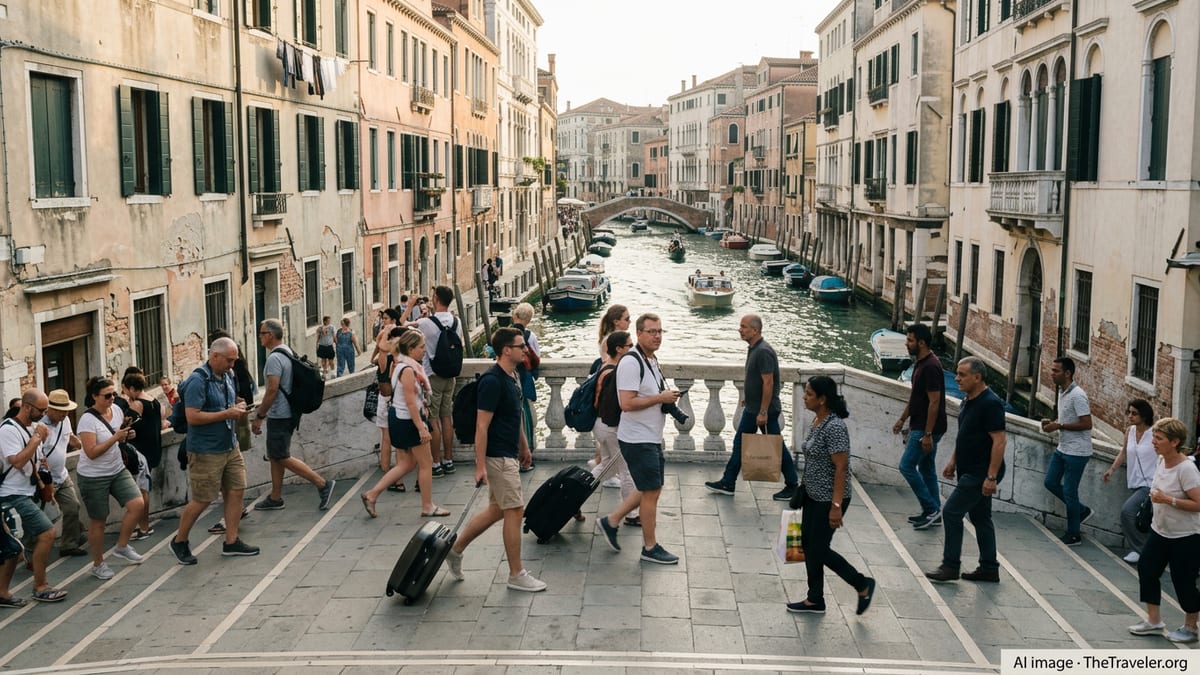
From Record Crowds to Resident Backlash
Across Europe, destinations that built their brands on postcard views and open-door hospitality are now confronting the strain of record tourism. Published coverage shows that visitor numbers in countries such as Spain, Greece and Italy have surpassed pre-pandemic highs, putting fresh pressure on housing, public services and fragile historic sites.
Reports from Spain indicate that protests against overtourism and housing shortages have become a recurring feature in Barcelona, the Balearic Islands and the Canary Islands, with residents highlighting the spread of short-term rentals and packed city centers. Observers note that similar concerns are surfacing in Portugal and southern France, where locals increasingly question who their cities are really for.
In Greece, Santorini has become a symbol of this tension. Coverage from 2024 and 2025 describes days when more than 10,000 cruise ship passengers arrive in a single day, overwhelming narrow streets and putting pressure on water, waste and transport systems. Local debates have intensified over whether the island can continue to expand visitor numbers without sacrificing liveability for its roughly 20,000 residents.
While overtourism is not new, analysts say the post-pandemic surge combined with a decade of cheap flights and social media exposure has pushed many destinations to a tipping point. The response is now moving beyond marketing campaigns to hard caps, new taxes and restrictions that directly shape how, when and where visitors can travel.
Taxes, Caps and Bans: What Is Changing on the Ground
One of the clearest shifts is financial. A growing list of European hotspots is raising or introducing tourist taxes designed both to generate revenue for local services and, in some cases, to nudge visitors toward more sustainable choices. Information compiled by European travel outlets shows that Amsterdam has increased its tourist tax to 12.5 percent of the accommodation cost, one of the highest city rates in Europe, while also charging levies on cruise day-trippers.
Venice has extended its controversial day-tripper fee on selected days, adding a separate charge for those who enter the lagoon city without staying overnight. In Greece, a new climate resilience levy means many visitors now pay a daily fee on top of accommodation, with higher rates during peak summer months. Cities such as Lisbon and popular regions in Portugal and Spain also maintain nightly per-person taxes that add up quickly on longer stays.
Capacity limits are becoming more common at headline attractions. The Acropolis in Athens, for example, now operates with a cap of around 20,000 visitors per day, with timed entry slots that must be booked in advance. In the cruise sector, municipalities along the Adriatic and Mediterranean coasts have introduced or discussed limits on daily passenger numbers, with case studies highlighting caps in places such as Dubrovnik and new limits in French Riviera ports.
Some destinations are going further by rethinking the type of tourism they want. Published plans in Cannes, Amsterdam and other cities point to reduced cruise traffic, stricter controls on large tour groups and, in some cases, a deliberate pivot from volume to higher-spend, longer-stay visitors. These policies mark a departure from the previous emphasis on constant growth in arrival numbers.
Barcelona, Amsterdam and Santorini as Test Cases
Barcelona has emerged as one of Europe’s most closely watched laboratories for managing visitor pressure. According to municipal documents and local media, the city has approved a tax framework that allows its tourist levy to rise to higher ceilings in coming years. More striking is the decision announced in 2024 to phase out all licensed tourist apartments within the city by late 2028, returning thousands of homes to the long-term housing market.
City reports explain that the move is intended to ease a severe housing crunch, particularly in central neighborhoods, and to rebalance the relationship between residents and short-stay visitors. Barcelona has also strengthened rules on new hotel openings and spread tourism marketing toward less visited districts and the wider metropolitan area.
Amsterdam is pursuing a different but equally assertive path. Public information shows that the city has raised its already high tourist tax, tightened regulations in its historic center and moved to limit certain types of nightlife and “party tourism.” Proposals to reduce or relocate cruise operations and to curb new hotel developments reflect a broader strategy of what local planners have described as “quality over quantity.”
In the Aegean, Santorini illustrates the challenges of applying these ideas on a small island. Reports from Greek and international outlets describe debates over reinstating a cap on cruise passengers, with earlier limits of around 8,000 people per day discussed as a benchmark. At the same time, concerns are mounting over a continuing building boom, the spread of luxury cave-style suites and the pressure on basic infrastructure during the long summer season.
The Authenticity Paradox for Travelers
For international visitors, these shifts are reshaping what counts as an “authentic” European holiday. Surveys and travel commentary suggest that many travelers now seek meaningful local contact, quieter neighborhoods and environmentally responsible options, yet they still want access to headline sights at peak times. This tension is particularly evident in social media driven hotspots, where viral views can draw ever larger crowds to once-obscure alleys, cafes and beaches.
The new rules can simultaneously protect and erode authenticity. Higher taxes and capacity limits may preserve historic centers and local life, but they can also push prices upward and concentrate tourism in regulated corridors. In some cases, limitations on short-term rentals are freeing apartments for residents and long-stay visitors, potentially leading to more stable, lived-in neighborhoods rather than transient party zones.
Analysts warn of a risk that some cities end up with a “tiered” experience, where well-informed or higher-spending visitors secure timed tickets and boutique stays that feel calm and curated, while budget travelers face crowded public spaces and fewer affordable options. How destinations design their policies and reinvest tourism revenue into public services will likely determine whether the pursuit of authenticity remains accessible to a broad range of visitors.
At the same time, a countertrend is visible in the growing interest in secondary cities and lesser-known islands. Travel advisories and guide publishers increasingly highlight alternatives to famous hotspots, pointing to quieter Greek islands, inland Spanish towns or under-the-radar corners of Italy and France as places where traditional life remains more visible and prices lower.
How Visitors Can Adapt in Europe’s New Era
The emerging policy mix means travelers planning European trips in 2026 and beyond need to pay closer attention to rules and costs. Tourist taxes, day-trip levies and climate surcharges can add a noticeable sum to a family holiday, especially in cities that charge per person per night. Timed entries to major attractions now often need to be reserved weeks in advance, changing how flexible an itinerary can be.
Travel organizations advise checking official tourism and city information before booking to understand local restrictions on short-term rentals, vehicle access and cruise visits. Choosing off-peak months, midweek stays and lesser-known neighborhoods can both reduce personal crowd exposure and align more closely with the sustainability goals that many destinations now promote.
For those seeking more authentic experiences, experts suggest prioritizing longer stays in fewer locations, using local public transport, supporting year-round businesses and exploring beyond the most photographed viewpoints. As European hotspots recalibrate the balance between visitor numbers and quality of life, the most rewarding trips may increasingly be the ones that adapt to and engage with this new reality rather than trying to outrun it.