


More news on this day
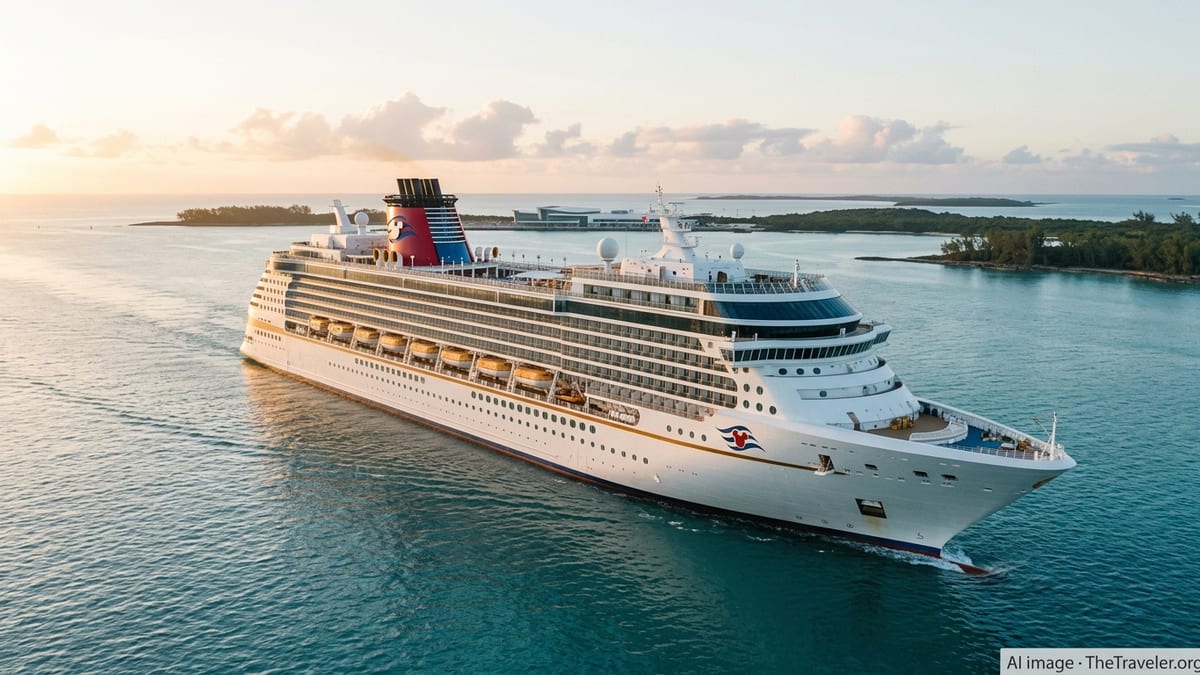
Disney is accelerating its cruise ambitions, outlining a plan to grow Disney Cruise Line to 13 ships by around 2030, including an unprecedented three new vessels scheduled for delivery in 2029 alone.
Get the latest news straight to your inbox!
From Niche Operator to Global Cruise Player
Publicly available filings and presentations from The Walt Disney Company indicate that Disney Cruise Line is in the midst of its most aggressive expansion since the brand launched in the late 1990s. The company currently operates a mid-sized fleet, but has moved rapidly in recent years to place additional orders, positioning its cruise business as a central pillar of Disney Experiences.
Recent investor communications describe a path from today’s eight-ship fleet toward 13 ships entering service by the end of the decade or shortly after. Earlier guidance referenced 2031 as the outer boundary for reaching 13 vessels, but the latest timelines associated with shipyard orders and construction windows suggest Disney is working to compress that trajectory toward 2030, with a notable surge in capacity in 2029.
The expansion follows the successful introduction of newer, larger ships and strong advance bookings that have encouraged Disney to lean more heavily into premium family cruising. Industry analysis highlights that Disney’s market share in the global cruise sector remains comparatively modest, leaving room for growth in both North American and international source markets.
At the same time, the company has emphasized its ability to reposition ships between homeports worldwide, underscoring a strategy that treats itineraries and deployment as flexible tools to match demand, rather than locking vessels permanently to any single region.
Three Newbuilds Targeted for 2029
Shipbuilding order books and Disney’s own cruise documentation point to 2029 as a pivotal year. According to those plans, three new ships are due to be delivered in 2029 alone, a scale of one-year expansion the line has not previously attempted. These deliveries sit within a broader schedule that stretches from the late 2020s into the early 2030s.
Two broad categories of new vessels are emerging. One is an extension of the line’s larger, family-focused ships that build on the Wish-class design, featuring expansive themed spaces, advanced entertainment technology, and higher passenger capacities. The other is a trio of somewhat smaller ships that fall between the original Magic-class vessels and the more recent Dream- and Wish-class ships in size.
Industry reports indicate these three smaller ships are planned at roughly 100,000 gross tons with capacity for up to 3,000 guests, compared with the larger ships that exceed 140,000 gross tons and carry significantly more passengers. The 2029 deliveries are expected to include ships from this new mid-size class, aimed at broadening Disney’s deployment options and reaching ports that cannot easily accommodate the largest vessels.
Shipyard schedules published by Meyer Werft and summarized in cruise order books support the view that Disney has locked in multiple 2029 delivery slots. If construction and sea trials proceed on schedule, these vessels would enter commercial service in quick succession, sharply lifting Disney’s available passenger cruise days.
Balancing Mega-Ships With a New Mid-Size Class
The decision to pursue a mixed fleet, combining very large ships with a new mid-size class, is central to Disney’s path to 13 ships. Corporate materials and environmental planning documents describe the three mid-size ships as a distinct class, smaller than the Dream- and Wish-class but still significantly larger than the original Magic and Wonder.
By opting for mid-size tonnage around 100,000 gross tons, Disney appears to be targeting a balance between capacity and flexibility. These ships can visit a wider range of ports and regions, including destinations with draft, berth, or terminal constraints that limit the operation of the largest cruise ships. For a brand that relies heavily on destination storytelling and curated itineraries, that added flexibility is strategically important.
The mixed-fleet approach also reflects a response to evolving traveler expectations. While mega-ships remain popular for resort-style vacations, a growing segment of guests is seeking more intimate experiences, longer itineraries, and access to less crowded destinations. The new mid-size class allows Disney to experiment with those formats without sacrificing the family-focused amenities and entertainment that define the brand.
Fleet planning materials suggest that existing ships, including the oldest vessels, will continue to operate alongside the newbuilds for at least part of the next decade. This overlap is what allows the fleet count to reach 13, even if certain older ships are eventually reassigned, refurbished, or retired once the expansion wave is complete.
Financial Momentum and Capacity Growth
According to recent financial reporting and conference call transcripts, Disney’s cruise business has delivered rising revenue as new ships have joined the fleet, even as increased capacity has required substantial upfront investment. External analyses of regulatory filings estimate that Disney Cruise Line generated revenue in excess of 3 billion dollars in the most recent fiscal year, aided by the addition of newer ships.
In investor discussions, company leaders have pointed to cruise as a high-return growth area inside the broader Experiences segment, which also includes theme parks and resorts. The plan to reach 13 ships aligns with a multi-year capital expenditure program that prioritizes cruise capacity, new private destinations, and expanded port infrastructure partnerships.
At the same time, publicly available information notes that cruise profitability can be sensitive to factors such as fuel prices, labor costs, and deployment decisions. With three ships arriving in a single calendar year, Disney will need to fill a significant number of additional berths without diluting pricing power, particularly in shoulder seasons and less established markets.
Industry commentators suggest that the company is betting on pent-up demand for family travel, strong brand loyalty, and the appeal of Disney’s characters and storytelling to sustain higher load factors as the fleet grows. Early booking patterns for recent ship launches have given the company confidence that the market can absorb further capacity if itineraries are carefully tailored.
Sustainability and New Itinerary Possibilities
Disney’s environmental strategy documents outline goals for reducing emissions intensity across its cruise operations by 2030, including a focus on more efficient ship designs and alternative fuels. The three new mid-size ships scheduled around the end of the decade are highlighted as part of this effort, incorporating modern propulsion systems and updated hull and energy-management technologies.
These sustainability targets are shaping not only technical specifications but also deployment patterns. New ships are expected to make greater use of shore power where available, optimize routing to reduce fuel consumption, and support visits to private destinations that can be more tightly managed from an environmental standpoint.
The combination of additional ships and more efficient designs opens new itinerary options. As the fleet approaches 13 ships, Disney is positioned to maintain year-round programs in core markets such as the Caribbean and Bahamas while expanding selectively into Europe, Alaska, and Asia-Pacific, as well as emerging cruise regions.
Travel industry observers note that this strategy effectively turns Disney Cruise Line from a niche adjunct to Disney’s theme park business into a near-global cruise brand. If construction stays on schedule and demand continues to track current trends, the arrival of three new ships in 2029 could mark a visible tipping point, closing in on the company’s goal of operating a 13-ship fleet by around 2030.