


More news on this day
A flight scheduled to carry Ukrainian President Volodymyr Zelenskyy from Moldova to Norway was delayed this week after Moldovan authorities temporarily closed the country’s airspace in response to a Russian drone incursion, adding a fresh aviation-security scare along a key route between Ukraine and northern Europe.
Get the latest news straight to your inbox!
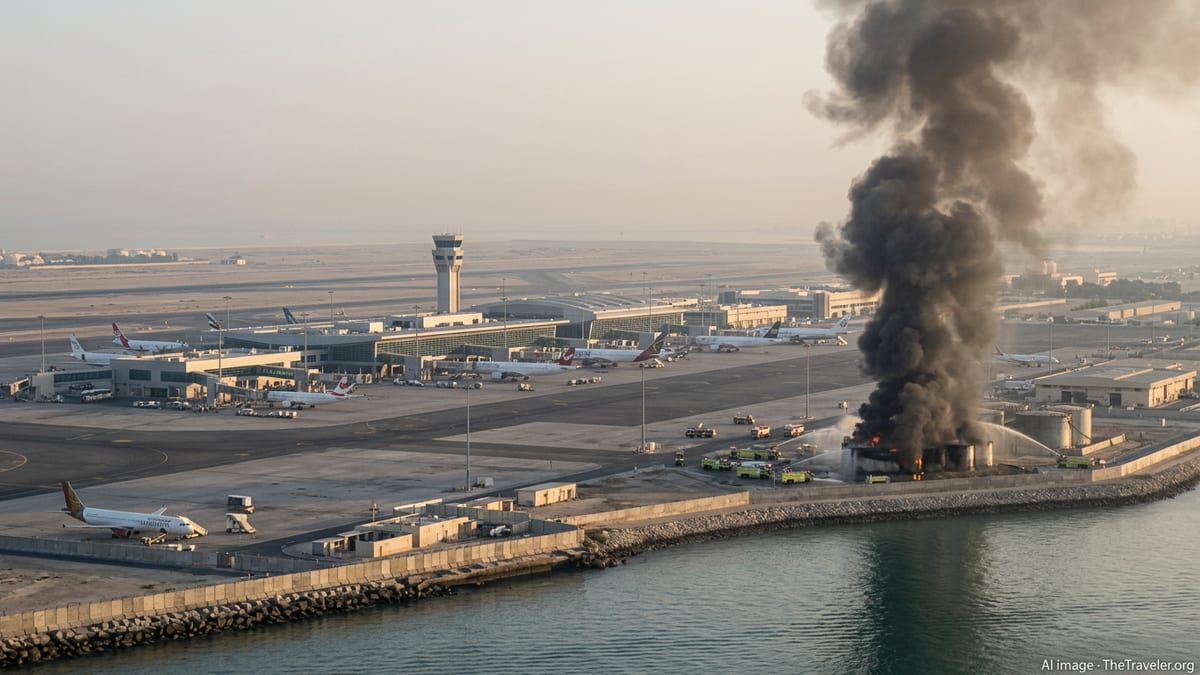
Airspace closure over Moldova halts departures
According to published coverage, Moldova closed its airspace on Tuesday afternoon after a Russian drone crossed into the country and later crashed in the northern Riscani district, triggering several small fires but causing no injuries. The precaution led to the suspension of multiple departures from Chișinău International Airport, including the flight slated to take Zelenskyy onward to Oslo for the funeral of Norway’s King Harald V.
Reports indicate that three flights were affected during the closure window. Once Moldovan aviation authorities assessed that the threat had passed and lifted restrictions, departures resumed and the aircraft carrying the Ukrainian leader was able to take off later than originally scheduled. Coverage does not indicate broader disruption to arrivals, and normal operations at the airport were restored the same day.
Publicly available information shows that the drone incident occurred roughly 160 kilometers from Chișinău International Airport, illustrating how events far from major hubs can still lead to airspace-wide protective measures. For travelers transiting the region, the episode underscores how rapidly evolving security concerns can ripple through flight schedules even when infrastructure remains physically unaffected.
Drone path traced through Romania and back to Moldova
Regional reports describe the drone involved as crossing from Ukraine into Moldova and then into neighboring Romania, a NATO member state, before reentering Moldovan airspace. Romanian defense authorities tracked the object across several northeastern counties, with Spanish Air and Space Forces F-18 jets on NATO duty reportedly scrambled to monitor its trajectory before it returned toward Moldova.
Police statements in Moldova, summarized in international media, indicate that explosives experts later recovered debris in a sunflower field, with fragments displaying propulsion features consistent with Geran-type drones that Russia has used extensively in its full-scale invasion of Ukraine. Specialists continue to analyze the remains to clarify the type and likely payload.
For civil aviation, this path highlights the complexity of operating in a crowded airspace that straddles active conflict zones and alliance borders. Even a single long-range drone can trigger multi-country tracking efforts, military air-policing responses, and short-notice restrictions for commercial and official flights in its vicinity.
Heightened risks on routes linking Ukraine and northern Europe
The delay to Zelenskyy’s flight draws attention to the fragile corridors currently used by officials, humanitarian workers, and some commercial travelers moving between Ukraine and destinations in northern and western Europe. With Ukraine’s own airspace largely closed to civilian traffic since Russia’s 2022 invasion, neighboring countries such as Moldova and Romania play an outsized role in providing overland and short-haul air links.
Published reports emphasize that both Moldova and Romania have documented numerous drone-related incidents since the full-scale war began. While many events have occurred far from major cities or transport nodes, authorities have increasingly treated any unidentified object near borders or populated areas as a reason to impose temporary safety measures, including airspace closures.
For travelers and airlines, such measures translate into potential last-minute delays, diversions, or re-routings on journeys that connect via Chișinău or nearby Romanian airports. Industry analysts note that although these interruptions tend to be short-lived, they add uncertainty on itineraries that are already more complex because of closed Ukrainian airports and reconfigured regional airways.
Security, symbolism and ongoing travel disruptions
Zelenskyy ultimately arrived in Oslo to participate in ceremonies for King Harald V, but the delay in Moldova added a symbolic layer to a journey already steeped in security considerations. International coverage points out that any disruption affecting a head-of-state flight, even if brief and resolved without damage, will be closely watched for what it signals about the evolving risks around Ukraine’s borders.
Experts consulted in prior analyses of regional aviation have argued that the proliferation of cheap, long-range drones has blurred traditional lines between front-line and rear-area security. The Moldova incident aligns with that trend, illustrating how a drone operating dozens of miles from a capital city can still reshape air-traffic patterns and delay high-profile movements.
For the broader traveling public, the episode serves as a reminder that itineraries transiting Eastern Europe remain exposed to the knock-on effects of Russia’s war in Ukraine. Airlines and governments continue to review flight paths, contingency plans, and notification systems, balancing the need to keep routes open with the imperative of reacting quickly to any airborne threat that enters or skirts their airspace.
Implications for future travel through Moldova and the region
In the short term, there is no indication from public reporting that Moldova plans to curtail commercial flights or close Chișinău International Airport beyond targeted, event-driven measures. However, aviation observers suggest that the country, along with its neighbors, is likely to keep a low threshold for imposing temporary restrictions whenever drones or other unidentified aerial objects are detected.
Travelers using Moldova as a transit point to or from Ukraine, or connecting onward to hubs in northern Europe, may therefore face a continued risk of sporadic delays similar to the one affecting Zelenskyy’s flight. Industry guidance typically encourages passengers in such regions to allow extra time for connections, maintain flexible booking arrangements where possible, and monitor airline notifications closely on the day of travel.
As Russian drone activity persists along Ukraine’s borders, more international flights may adjust routing to avoid certain corridors, lengthening journey times while improving margins of safety. For now, the disruption to this week’s flight from Chișinău to Norway stands as a concise example of how quickly shifting security dynamics can intersect with the practical realities of air travel across Europe.
ABC News: Flight carrying Zelenskyy to Norway was delayed in Moldova because of drone incursion
Yahoo News: Flight carrying Zelenskyy to Norway was delayed in Moldova because of drone incursion