


More news on this day
Flights into and out of Dubai and other Middle East hubs are facing fresh waves of disruption in September 2026, as regional tensions and conflict-related airspace warnings force airlines to cancel, reroute or delay services across key Gulf corridors.
Get the latest news straight to your inbox!
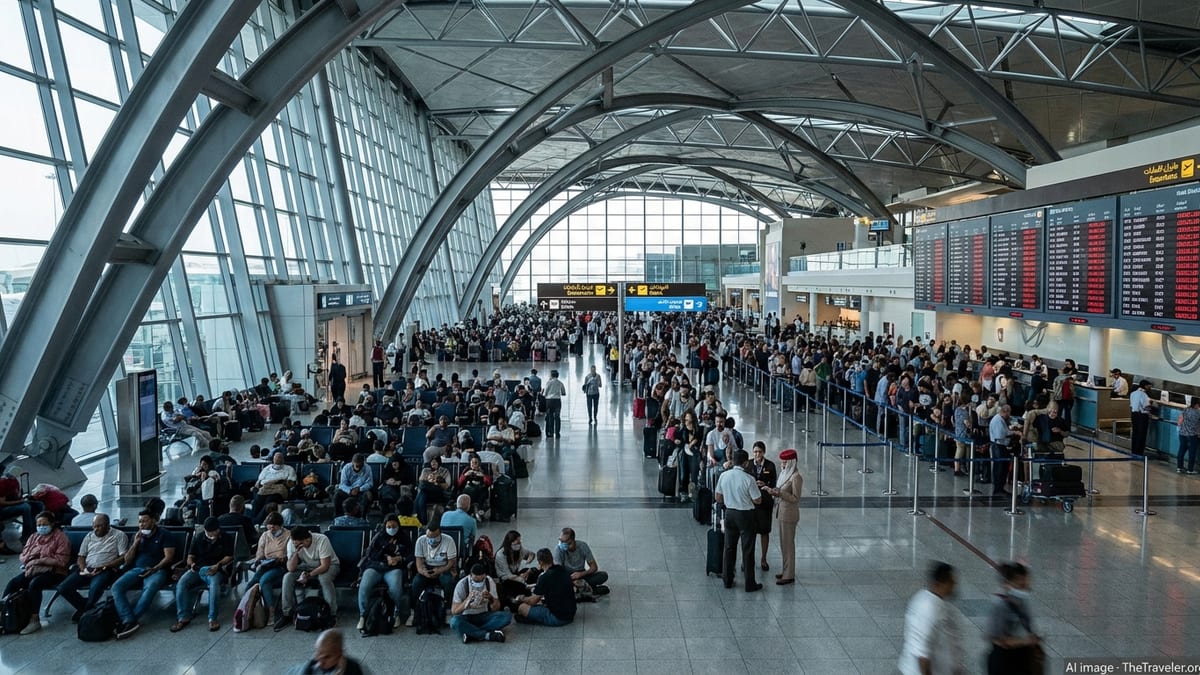
Patchy operations across Gulf hubs as carriers adjust schedules
Publicly available airport and airline information shows that Dubai, Abu Dhabi and Sharjah airports remain open, but timetables are being reshaped on a rolling basis. Reports from regional outlets in late September indicate that Emirates, Etihad Airways, flydubai and Air Arabia are all operating large parts of their networks, while trimming frequencies or suspending selected routes that cross the most sensitive airspace.
Coverage focused on departures from the United Arab Emirates on September 22 and 23 notes that some short haul links to Iran, Iraq and parts of the wider Gulf have been pulled from sale or temporarily halted, even as high demand persists on trunk routes to Europe, North America and Asia. Travellers heading to Dubai are being urged in airline alerts and airport notices to verify their individual flight status on the day of travel rather than relying on original booking confirmations.
Earlier this month, regional business media documented clusters of same day cancellations affecting services from Dubai and Abu Dhabi to cities such as Tehran, Kuwait City and certain points in Saudi Arabia, alongside lengthier routings for flights that would usually transit airspace over the Strait of Hormuz. Some India bound services have operated with revised flight paths that add flying time but avoid designated risk areas, reflecting a preference for longer routings over outright suspension wherever feasible.
For passengers, this has created a patchwork of experiences. Long haul flights to Europe and the United States have mostly departed close to schedule, albeit occasionally with extended block times, while some intra Gulf and Levant services have disappeared from departure boards with only a few hours’ notice. According to published airline guidance, rebooking options are generally being offered without additional charges when cancellations are directly linked to the security situation.
Conflict advisories and airspace warnings reshape routing
The latest disruptions have been framed by a series of conflict zone advisories from aviation regulators. In July, the European Union Aviation Safety Agency extended its warning to airlines about operations in the airspace of the United Arab Emirates, Bahrain, Qatar, Kuwait and parts of the Gulf of Oman, citing the risk of military activity and potential miscalculation at cruising altitudes. The advisory was initially applied through the end of August and referenced continuing hostilities between the United States and Iran.
Separately, safety alerts issued by the UAE’s General Civil Aviation Authority over the past year highlight a wider map of conflict affected flight information regions, urging operators to take account of rapidly changing conditions and to monitor notices to air missions when planning routings. The authority’s publications underscore the possibility that new conflict zones may emerge without significant lead time and stress that risk assessments must be updated whenever military activity changes.
International regulators outside the region maintain their own restrictions and cautions for Middle East overflights. The United States Federal Aviation Administration, for example, continues to list prohibitions and limitations for airspace adjacent to conflict zones such as the Damascus and Tripoli flight information regions, and has previously highlighted hazards associated with long range missile and air defense systems. While not all of these notices are specific to Gulf airspace, they feed into airline risk models for flights that might otherwise use the most direct great circle routes across the region.
As a result, many carriers are now threading a narrow set of approved corridors through the Gulf and northern Arabian Sea. Industry analyses published over the summer describe aircraft tracking data that shows east–west flows shifting further south or north to maintain separation from military activity, with some routes adding 30 minutes or more to typical flight times. For heavily trafficked hubs such as Dubai International Airport, these shifts can compress arrival and departure waves into tighter windows, increasing the risk of knock on delays.
UAE air traffic management prepares for surges and stoppages
To help manage these fluctuations, the UAE’s General Civil Aviation Authority has formalized several contingency tools for use during periods of disruption. An aeronautical information circular issued in April 2026 outlines a procedure that allows Emirates Area Control Centre to temporarily stop departures from specified regional airports bound for an affected UAE airport when arrival capacity is constrained by weather, security measures or airspace limitations.
The same circular explains that such ground delay programs are designed to prevent airborne holding and diversions when inbound flows suddenly exceed what a particular airport can safely handle. Under this concept, flights may be held at their point of origin for a defined period so that arrivals into Dubai or Abu Dhabi can be sequenced more smoothly once any restriction eases. Airlines are expected to receive these instructions via standard air traffic control and flight planning channels, then pass updated departure times on to passengers.
Another notice published in February 2026 describes the role of the UAE Airspace Coordination and Contingency Cell, a web based platform managed by Emirates Area Control Centre. According to the circular, this platform functions as a shared information hub where airlines, airports and other stakeholders can view and update data on parking availability, flow restrictions, spacing requirements and operational constraints during unusual events, including conflict related airspace issues.
Industry presentations delivered through the International Civil Aviation Organization in the past year show that these mechanisms were shaped by earlier incidents, including temporary partial closures of UAE airspace connected to regional conflict in 2025. Lessons highlighted in those materials emphasize rapid activation of emergency procedures, coordinated communication between civil and military authorities, and the need for clear criteria on when to resume normal operations once a threat has passed.
International airlines extend or modify Dubai and Middle East services
The impact of the latest tensions is not limited to Gulf based carriers. International airlines from Europe, Asia and North America have been adjusting their Middle East schedules since the outbreak of the current United States Iran confrontation earlier in 2026. Coverage from regional and global outlets in March detailed an initial wave of suspensions to destinations including Dubai, Doha and several Saudi Arabian cities following strikes on Iranian territory and subsequent retaliatory activity.
By July, some foreign airlines had partially restored services to the Gulf while extending suspensions on selected routes into the autumn. Reports on forward schedules noted that certain carriers had pushed back planned resumptions of flights to Dubai and other Middle East hubs into September and October, citing the need for sustained stability in the airspace environment before committing widebody capacity back to the region.
At the same time, several Asian and European low cost airlines serving secondary Gulf cities have adopted a more cautious stance, maintaining reduced frequencies or operating only limited rotations that can be quickly scaled down if conflict alerts intensify. Executive summaries prepared for the travel and hospitality sector in May highlighted that, although core Gulf carriers were generally quick to restart key routes after earlier airspace closures, some international brands preferred to wait for clearer regulatory guidance and insurance assessments.
This uneven recovery means that Dubai’s connectivity profile in late 2026 differs by region. Links to major European capitals and South Asian metros are comparatively robust, whereas nonstop options to certain Levant, Iraqi and Iranian destinations remain constrained. For connecting passengers, this can translate into longer journey times and fewer same day options when traveling onward from Dubai to parts of the wider Middle East.
What travelers flying through Dubai should expect now
For passengers planning itineraries through Dubai and neighboring hubs in the coming weeks, publicly available guidance from airlines, airports and regulators converges on several practical themes. Travellers are consistently advised to check live flight status before leaving for the airport, use official airline apps or customer channels for rebooking, and allow extra time in case security measures or air traffic flow controls trigger last minute gate or schedule changes.
Published coverage of recent disruption days shows that when airspace alerts have required sudden route adjustments, the most immediate effects have fallen on early morning and late night departure banks, as airlines work these flights into whatever corridors are available. Midday services, particularly on shorter regional sectors, have sometimes been cancelled outright when aircraft and crews are needed to keep long haul rotations on track.
For now, there is no broad closure of UAE airspace, and a statement from the country’s aviation authority in May confirmed that air traffic operations had fully resumed after precautionary measures earlier in the year. However, the combination of conflict zone advisories, evolving military dynamics and high seasonal demand means that disruptions can reappear with little warning. Travel industry analyses suggest that this pattern of intermittent delays and route specific suspensions is likely to persist as long as tensions remain elevated.
In this environment, flexible planning has become critical for anyone relying on Dubai or other Gulf gateways. Passengers booking new trips are encouraged by industry commentators to consider options with multiple daily frequencies, to register contact details with airlines for real time alerts, and to avoid tight self connections across separate tickets. While the region’s airports and carriers have gained significant experience in managing crisis related disruptions over the past several years, the latest tensions underline how quickly the Middle East’s role as a global aviation crossroads can be tested.