


More news on this day
Air travel across Dubai and the wider Middle East is entering a delicate transition period as airlines respond to a newly signed peace agreement between the United States and Iran that aims to end the war and reopen the Strait of Hormuz, a critical corridor for both aviation and global trade.
Get the latest news straight to your inbox!
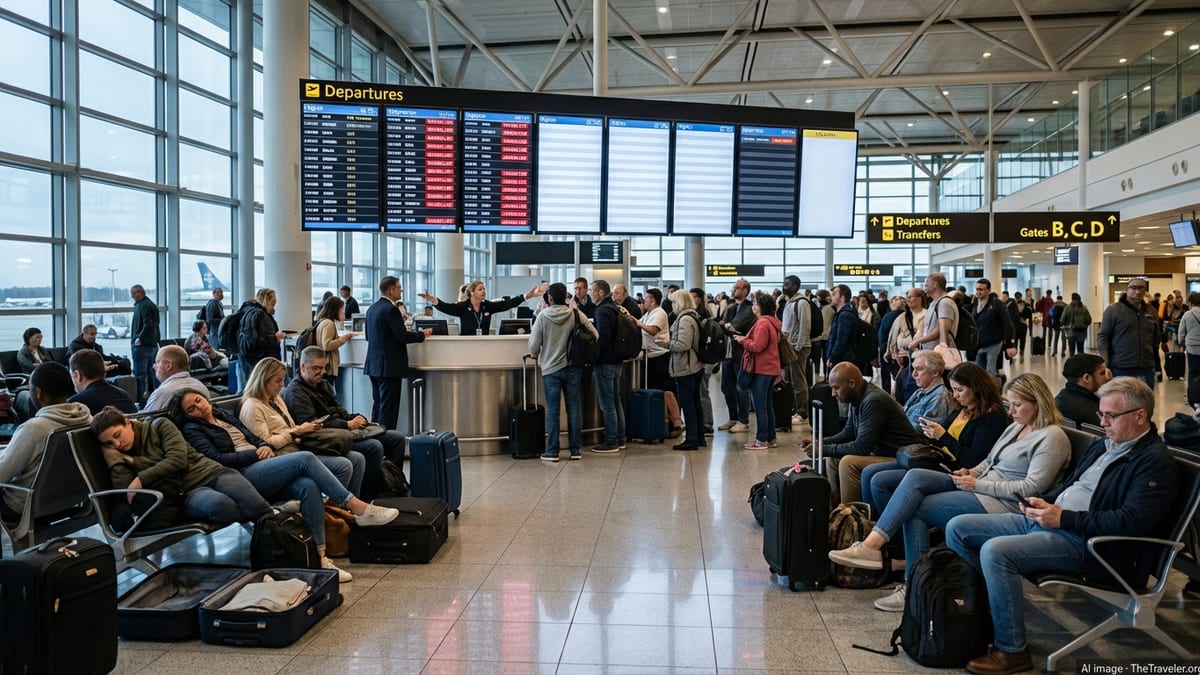
Airlines start to unwind detours over Gulf airspace
In the hours after the peace memorandum was signed, publicly available flight-tracking data showed gradual adjustments to routings over the Gulf, with some long-haul services beginning to edge closer to pre-war air corridors. During the height of the conflict, many carriers flying to and from Dubai, Doha and other Gulf hubs had shifted paths to skirt Iranian airspace and the Strait of Hormuz, adding time, fuel costs and complexity to operations.
Reports from regional aviation analysts indicate that major Gulf carriers are now reviewing contingency schedules that were introduced during the blockade and missile exchange phase of the war. For the moment, airlines are generally keeping conservative routings in place while monitoring how the ceasefire and reopening commitments are implemented in practice. Industry commentary suggests that any return to pre-crisis flight paths will be phased, with safety assessments dictating the pace rather than political announcements alone.
Operational notices published by regional air navigation authorities still reflect an elevated state of caution, even as restrictions begin to loosen. Carriers serving high‑density routes between Europe, the Middle East and Asia are prioritizing predictability over speed, keeping buffers in flight times until there is sustained evidence that the risks of renewed strikes or airspace closures have receded.
For passengers, this means that some of the extended flight times and occasional last‑minute reroutes that became common during the conflict may persist for several days or weeks, despite the diplomatic breakthrough. Travel planners describe the current period as one of “managed normalization,” in which airlines are unwilling to unwind their contingency playbooks too quickly.
Dubai hub balances rapid recovery with risk management
Dubai International Airport, consistently ranked among the world’s busiest hubs for international traffic, has been a focal point of the disruption throughout the war. During the most volatile weeks, airlines operating through Dubai faced a combination of elongated routings, tighter crew rostering rules and higher fuel burn, all of which dented on‑time performance and increased operating costs.
According to public scheduling data, airlines serving Dubai are now beginning to add back capacity that had been trimmed or temporarily reassigned to less exposed routes. The peace agreement’s provisions on reopening the Strait of Hormuz and relaxing naval activity in the area are viewed by industry observers as a turning point for the hub’s short‑term outlook. Nonetheless, executives and analysts quoted in regional business media have stressed that the focus remains on gradual recovery rather than an immediate surge.
Airport operations teams in Dubai are working with carriers to accommodate a probable wave of schedule changes as airlines test more direct routings and potentially reinstate suspended city pairs. Aviation consultancy assessments suggest that peak‑time congestion could intensify as revised schedules converge, even if overall seat capacity only increases modestly in the first phase of the peace implementation.
Hotels and ground transport providers in Dubai are also starting to prepare for a rebound in transit and stopover traffic. Travel industry reports highlight interest from tour operators in reviving multi‑destination Gulf itineraries that had been complicated by the risk of sudden airspace closures and insurance restrictions during the conflict.
Regional hubs from Doha to Muscat reposition
The shift triggered by the US Iran peace deal extends well beyond Dubai. Doha, Abu Dhabi, Muscat and other regional gateways have all built their networks around dense east‑west connectivity that relies heavily on stable access to Iranian and Gulf airspace. During the conflict, some of these hubs gained temporary advantages as carriers rebalanced their networks away from the most exposed corridors, while others saw a decline in transfer traffic.
Published coverage from regional business outlets indicates that airlines based in Qatar and Oman are now reassessing temporary gains and losses as they plan for a more normalized traffic pattern. If Iranian airspace and the Strait of Hormuz remain reliably open, competition on routes linking Europe and North America to South Asia and Australasia is expected to intensify, with pricing and schedule convenience becoming central differentiators again.
For secondary airports in the region, such as Sharjah and Ras Al Khaimah, the stabilization of airspace may bring more consistent charter and low‑cost operations. These airports had to accommodate abrupt schedule shifts and occasional diversions when tensions spiked, straining infrastructure and contingency planning. Industry commentary suggests they could now benefit from steadier growth, supported by leisure demand and migrant worker traffic.
At the same time, analysts caution that any localized flare‑ups involving non‑state actors or proxy groups could still cause short‑notice route suspensions. Insurance requirements for overflying certain areas are likely to remain tighter than they were before the conflict, adding a layer of cost that could shape which hubs and corridors grow fastest in the months ahead.
Strait of Hormuz reopening reshapes cargo and logistics
The peace memorandum’s commitment to reopen the Strait of Hormuz is particularly significant for air cargo and integrated logistics chains centered on the Gulf. During the naval blockade and associated security incidents, many shippers shifted volumes away from sea lanes near the strait and relied more heavily on air freight into and out of Dubai and neighboring hubs, pushing up rates and stretching capacity.
With the agreement in place, freight market data and commentary from logistics firms suggest that some cargo previously routed by air for security reasons is expected to revert to sea over the coming weeks. This could ease pressure on freighter operations at Dubai World Central and Dubai International, while also bringing down spot air cargo rates on certain sectors that surged during the height of the crisis.
However, the normalization of maritime traffic does not necessarily imply a rapid decline in air freight demand. E‑commerce flows, high‑value electronics and time‑sensitive pharmaceuticals that migrated to alternative routings during the conflict may continue to favor air for reliability, especially while shippers assess how consistently the new security arrangements in the Strait of Hormuz are implemented.
For multinational logistics providers with Gulf hubs, the priority now is to rebalance modal mix and warehouse inventories while maintaining flexibility in case of setbacks in the peace process. Analysts note that the experience of sudden closures and missile threats has led many firms to build more redundancy into their supply chains, a trend that could sustain higher‑than‑prewar levels of air cargo activity through Dubai even as sea lanes reopen.
Traveler guidance as peace process moves from paper to practice
For individual travelers, the signing of the US Iran peace agreement does not instantly erase the operational knock‑on effects of a months‑long conflict. International aviation organizations and consumer travel advisories emphasize that schedules remain subject to change as airlines adjust routings and regulators update safety assessments. Passengers booked on flights to or through Dubai and other Gulf hubs are being encouraged, in public advisories, to monitor their bookings closely for updated departure times and possible aircraft swaps.
Published travel industry guidance also notes that booking conditions introduced during the conflict, including more flexible change policies on certain routes touching the region, may remain in place for a transition period. Some carriers are using these policies to encourage early bookings while reassuring customers that they can adjust plans if the security outlook shifts again.
Travel insurers are updating their coverage language to reflect the new environment, with some policies expected to adjust risk classifications for overflights near Iran and the Strait of Hormuz. Until these revisions filter through, travelers may encounter residual exclusions or higher premiums on certain itineraries, even as the overall threat level recedes.
Overall, the latest developments mark the start of a complex normalization rather than an immediate return to prewar patterns. Dubai and its regional peers are positioned to benefit from the easing of tensions, but the speed of recovery in flight networks will depend on how firmly the commitments in the US Iran peace memorandum take hold in the skies above the Gulf.